
NYC First-Time Home Buyer Mortgages — Your Guide to Affordable and Confident Home Financing
We'll help you secure the right mortgage for your first home in NYC, avoiding costly financing mistakes and ensuring you buy within a budget that supports your long-term financial goals
SMOOTH TRANSACTION
With limited risk throughout the buying process.
NO PRESSURE
No pressure to overpay or purchase within a specific timeframe.
ONGOING SUPPORT
A dedicated team that remains available even after the transaction is complete.
NYC Brownstone Mortgages: Complete Financing Guide for Buyers
Financing an NYC brownstone is rarely as straightforward as getting a mortgage for a condo or a typical single-family house. The property's age, condition, renovation needs, legal occupancy status, and purchase price all create layers of complexity that many buyers don't anticipate until they're deep into the process. As a buyer's agent who has spent over 15 years guiding clients through brownstone purchases across Manhattan and Brooklyn, I've seen how the right financing preparation can make the difference between a successful closing and a deal that falls apart. This guide shares everything I tell my clients before they start shopping for a brownstone-so you can walk into lender conversations informed, prepared, and confident.
Why NYC Brownstone Buyers Trust Stanley Montfort
Over 15 years specializing in Manhattan and Brooklyn brownstone purchases
Helped 200+ buyers navigate complex brownstone financing and acquisition processes
Deep relationships with lenders experienced in historic property financing
Proven track record of successful closings on properties requiring specialized mortgage products
Why Brownstone Buyers Choose Stanley for Financing Guidance
One of the first conversations I have with buyers is about why brownstone financing demands a different approach than what they may have experienced with condos or co-ops. The reality is that every brownstone requires its own financing strategy-shaped by the building's condition, its mixed-use configurations, renovation needs, and how the property fits within the lender's underwriting guidelines.
Expert understanding of property-specific challenges: I help buyers see how a brownstone's condition, landmark status, rental income potential, and legal occupancy affect which loan programs are available and what lenders will require. Many buyers are surprised to learn that buying a brownstone requires higher property maintenance responsibilities than a co-op, and that this responsibility extends to everything from façade repairs to mechanical systems.
Strategic timing for pre-approval and inspections: Brownstone deals move on their own timeline. Closing can take longer for renovation loans due to property evaluation complexity, and appraisal challenges specific to historic properties can delay underwriting. I guide clients through the sequencing so nothing catches them off guard.
Avoiding common financing mistakes: One financing mistake I frequently see is buyers counting rental income from non-legal units or assuming they can qualify based on unpermitted configurations. I help you identify these issues before you make an offer-not after a lender says no.
Comprehensive preparation for lender conversations: I make sure you have the right documentation, understand what lenders will ask, and know how to present your financial profile for the best possible outcome.
Our Brownstone Financing Guidance Services
Pre-Purchase Financing Strategy
Before you begin your property search, we work together to assess your financing readiness and mortgage capacity for a brownstone purchase. This includes:
Reviewing your financial situation-income, assets, credit history, and existing debt-to establish a realistic price range
Guidance on conventional vs. jumbo loan requirements and when portfolio lending makes sense
Down payment planning that accounts for purchase price, renovation costs, closing expenses, and reserve requirements
Introduction to qualified lenders who have a history of underwriting historic and mixed-use properties in New York
Many buyers assume a 20% down payment for brownstones will be sufficient, but the reality is often different. High-end brownstone purchases often require larger down payments-sometimes 25–30% or more-especially for jumbo loans or properties with condition issues. Down payment assistance programs like SONYMA may be available for eligible buyers, and I help clients explore every reasonable option.
Property-Specific Financing Analysis
When evaluating a brownstone, I analyze how the property itself affects your financing options:
Condition assessment: Lenders scrutinize the structural condition of the property during inspections. Outdated plumbing or electrical systems, deferred maintenance, roof deterioration, or brownstone façade issues can all change what loan programs are available and what terms you'll receive. Brownstones may reveal hidden challenges during inspection-things that aren't visible from the street.
Mixed-use and legal occupancy: If the brownstone includes a storefront, office space, or multiple residential units, lenders need documentation of legal occupancy. Certificates of occupancy are crucial for legal unit verification. I help buyers understand how these configurations affect underwriting before they commit to a purchase.
Renovation loan assessment: For properties requiring substantial work, I evaluate whether programs like FHA 203(k), Fannie Mae HomeStyle Renovation, or Freddie Mac CHOICE Renovation make sense. Renovation loans allow rolling renovation costs into the mortgage based on projected after-renovation value-a powerful tool for buyers willing to take on a project.
Rental income analysis: Multi-unit brownstones allow rental income to offset mortgage costs. Some lenders allow counting projected rental income to qualify for a mortgage, but this requires verified leases, legal unit status, and conservative underwriting. I help buyers understand what income a lender will actually count and what they won't.
Transaction Coordination
Once you're under contract, the financing process demands careful coordination:
Managing the mortgage timeline alongside inspection, appraisal, and attorney review
Communicating with lenders, attorneys, and inspectors throughout the process to prevent delays
Supporting appraisal challenges by providing comparable sales data and property-specific context to the appraiser
Organizing documentation so your loan submission is complete and accurate
How the Brownstone Financing Process Works
Step 1: Initial Financing Assessment
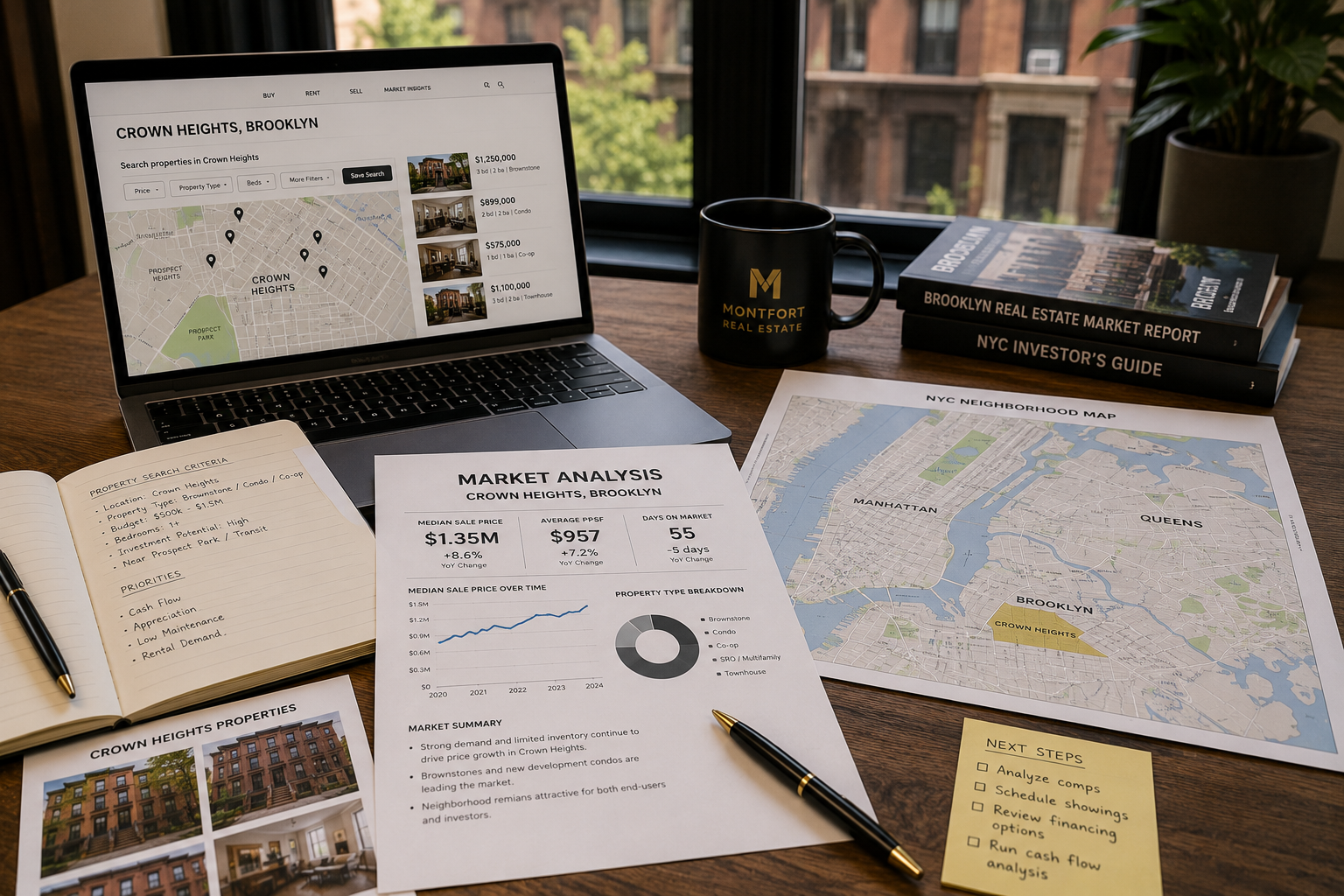
The process begins with a detailed review of your financial situation and brownstone purchase goals. Together, we identify appropriate lenders and mortgage products for your specific scenario-whether you're a first home buyer looking at a single-family townhouse in Harlem, an investor evaluating a multi unit building in Crown Heights, or a family seeking a multi-level brownstone in Park Slope.
We establish a realistic price range, estimate your down payment requirements, and discuss what reserves lenders will expect. For example, jumbo lenders often require 6–12 months of reserves (covering your monthly payment plus property taxes, insurance, and operating expenses). I want you to know these numbers before you fall in love with a property you can't comfortably finance.
Step 2: Pre-Approval and Property Search
I coordinate the pre-approval process with qualified lenders-professionals who understand the nuances of brownstone financing in this city. Pre-approval isn't just about getting a letter; it's about confirming that your lender can actually close on the type of property you're pursuing.
One question I always encourage buyers to ask their lender: "How many brownstone loans have you underwritten in the past year?" The answer tells you whether they'll be ready for the unique challenges these properties present.
With pre-approval in hand, we begin the property search with clear financing parameters. Every property I show you is evaluated not just for livability and value, but for financing feasibility-potential appraisal issues, legal occupancy concerns, renovation scope, and anything else that could affect your loan.
Step 3: Purchase and Closing
After your offer is accepted, we navigate inspection, appraisal, and underwriting together. This is where many brownstone deals hit complications:
Inspections may reveal foundation issues, outdated gas lines, or unpermitted work. Hire inspectors familiar with Harlem brownstones specifically-or whichever neighborhood you're buying in. A thorough inspection helps understand the property's actual value and informs your negotiating position.
Appraisals on unique properties often come in lower than expected because comparable sales are limited. I work with the appraiser by providing relevant comps and context about the property's features.
Underwriting can surface documentation requirements you didn't anticipate-especially for mixed-use properties or buildings with rental units.
I coordinate with all parties to address challenges as they arise and keep the closing on track. Thorough title searches are critical for older brownstones to check for liens and violations, and I make sure nothing falls through the cracks.
Brownstone Financing Success Stories
Over the years, I've helped buyers navigate nearly every financing scenario that NYC brownstones can present:
First-time buyers in Park Slope who successfully secured jumbo financing for a brownstone renovation project, using an FHA 203(k) loan to roll renovation costs into their mortgage and build equity from day one. They were surprised to learn that their lender would appraise the property based on its as-completed value-giving them more purchasing power than they expected.
Investors in Crown Heights who obtained portfolio lending for a multi-family property with a complex legal occupancy history. By working with a lender comfortable with DSCR underwriting, they qualified based on the property's cash flow rather than personal income-a critical distinction for experienced real estate investors.
A family in Harlem who used a renovation loan to restore a late 19th-century brownstone featuring original details like carved wood staircases and high ceilings. The property needed new mechanical systems and façade work, and the financing required careful coordination between the lender, contractor, and the Landmarks Preservation Commission. Brownstones in historic districts may require approval for renovations from the Landmarks Preservation Commission, which added time but ultimately protected the property's character and long-term value.
Buyers in Brooklyn Heights who overcame a significant appraisal gap on a landmarked property. The appraiser initially struggled to find comparable sales for a 22-foot-wide brownstone with original parlor-floor details. By providing additional comps and detailed condition adjustments, we helped the lender understand the property's true market value.
What Our Clients Say
Client testimonials will be added here. Stanley's clients consistently highlight his ability to prepare them for financing conversations, identify potential deal-breakers before they become problems, and coordinate complex closings involving renovation loans and mixed-use properties.
If you've worked with Stanley on a brownstone purchase, we welcome your feedback.
NYC Neighborhoods We Serve
I work with brownstone buyers across Manhattan and Brooklyn's most sought-after historic neighborhoods:
Manhattan: Harlem, Hamilton Heights, Washington Heights, Upper West Side historic districts. Many brownstones in Harlem are located in landmark districts, and Harlem brownstones are typically multi-level townhouses constructed with brown sandstone or similar masonry. Brownstones in Harlem were built mostly in the late 19th century and often have high ceilings and distinctive stoops.
Brooklyn: Park Slope, Prospect Heights, Crown Heights, Bedford-Stuyvesant, Fort Greene
Brooklyn: Carroll Gardens, Cobble Hill, Brooklyn Heights, Boerum Hill
Additional brownstone markets throughout Manhattan and Brooklyn-wherever the neighborhood has the historic housing stock and community character that draws buyers to this property type.
Each neighborhood has its own financing dynamics. Cap rates on prime Brooklyn mixed-use brownstones have been reported between approximately 4.0%–5.5%, while Harlem properties in landmark districts carry specific renovation requirements that affect both costs and timelines.
Frequently Asked Questions About NYC Brownstone Mortgages
What makes brownstone financing different from condo or co-op mortgages?
Brownstone financing is more complex for several interconnected reasons. First, the property's age and condition directly affect loan terms-lenders want to know about the foundation, roof, mechanical systems, and façade before they'll commit. Inspectors should evaluate foundations, roofs, and mechanical systems thoroughly, and brownstones often have deferred maintenance that impacts the appraised value.
Second, many brownstones are in landmark districts affecting renovations. Renovation plans must comply with local zoning laws and may require LPC approval, adding both time and money to the process.
Third, appraisal challenges are common. These properties are unique-varying in width, lot depth, interior configuration, and historic details. Automated valuation models often fail, and finding recent comparable sales in landmark districts is genuinely difficult. The appraiser needs experience with brownstones and townhouses to make appropriate adjustments.
Fourth, higher purchase prices in New York frequently push buyers into jumbo loans, which come with stricter underwriting requirements. Conventional loans are often not available for high-priced brownstones, and the 2026 conforming loan limit for a one-unit property in high-cost areas is $1,249,125. Anything above that becomes a jumbo loan.
Finally, mixed-use configurations-a storefront on the ground floor, for example-may require commercial lending or specialized programs. Properties with five or more units require commercial financing entirely, which is a different world from residential mortgage lending.
How much should I expect to put down on a NYC brownstone?
This depends heavily on the property type, loan program, and your financial profile. Here's what I typically see:
| Scenario | Typical Down Payment |
|---|---|
| Conventional Conforming Loan | 20–25% |
| Jumbo Loan | 25–30%+ |
| Mixed-Use Property | 25–30%+ |
| Brownstones with Four or More Units | 40% |
| Portfolio Lending (Complex Properties) | 25–40% |
Brownstones with four or more units require a 40% down payment from most lenders-a number that catches many buyers off guard. Beyond the down payment, you need enough cash for closing costs (including NYC's 1.675% mortgage recording tax on first mortgages), inspections, immediate repairs, and several months of reserves. Insurance for brownstones can be more complex due to potential requirement for replacement-cost coverage, which adds to your upfront and ongoing expenses.
For buyers who qualify, down payment assistance programs like SONYMA may help. I always recommend discussing these options with your lender early in the process.
Can rental income from a multi-family brownstone help with mortgage qualification?
Yes-but with important caveats. Lenders typically count 75% of verified rental income toward qualification. This means you need:
Executed leases: Not verbal agreements. Current, signed lease documents with tenant information.
Legal occupancy verification: The units generating rent must be legal according to the property's Certificate of Occupancy. Non-legal units should not count in DSCR calculations, and lenders will generally exclude that income entirely.
Rent roll documentation: A clear accounting of what each unit pays, vacancy history, and lease terms.
Property management experience: Some lenders, particularly for jumbo or investment scenarios, want to see that you have experience managing renters or a plan to hire professional management.
Vacant units require market rent analysis and conservative projections-lenders won't take your optimistic estimate at face value. For Debt Service Coverage Ratio loans, which focus on property income, not personal income, the math centers on Net Operating Income divided by Debt Service. DSCR loans can be powerful for investors, but they require stable, documented income streams.
Renting out a room can generate extra income for homeowners, and brownstones can be converted into multi-family units for rental income over time. Short-term rentals can provide income during owner vacations, though NYC's short-term rental regulations are strict. Landlords enjoy special tax breaks when renting out units-consult a tax professional about depreciation and deductible expenses.
One important reality check: evicting tenants in NYC can take years due to tenant protections. Factor this into your investment analysis. The income potential is real, but so are the responsibilities of being a landlord in this city.
What financing options exist for brownstones needing major renovations?
Renovation financing is one of the areas where I spend the most time educating buyers. Here are the primary options:
FHA 203(k) loans: FHA 203(k) loans are available for renovation financing. The Standard version covers structural work and major renovations; the Limited version handles non-structural improvements up to approximately $35,000. Funds are held in escrow and released with inspections. These require HUD-approved lenders and consultants.
Fannie Mae HomeStyle Renovation / Freddie Mac CHOICE Renovation: Conventional renovation programs that appraise based on "as-completed" value. More flexible than FHA in some respects and may allow investment properties. Private mortgage insurance applies if your loan-to-value exceeds 80%.
SONYMA RemodelNY / Remodel Historic NY: A New York State program that combines purchase and repair under one loan. The historic version offers tax credits of approximately 20% for eligible historic repair work, subject to maintaining historic appearance.
HPD CPAR: For buildings with 3+ residential units needing moderate rehabilitation, HPD's CPAR program offers up to $80,000 per unit in subsidy, combining public funding with private financing.
Portfolio lenders and bridge loans: For quick purchase followed by long-term refinancing, or for properties too complex for agency programs. Bridge loans carry higher interest but allow you to close fast and renovate before securing permanent financing.
Cash purchase with renovation financing: Some buyers with enough cash purchase outright, then secure renovation financing after closing-simplifying the purchase but requiring significant liquid assets.
The key thing I tell buyers: renovation loans add complexity, time, and cost. But for the right property, they let you build equity by purchasing below market value, completing the work, and emerging with a home worth significantly more than you paid. The trade-off is worth it if you go in with realistic renovation costs and a solid contractor.
What are the most common financing mistakes brownstone buyers make?
Over 200+ transactions, I've seen the same mistakes repeated:
Underestimating renovation costs: Many brownstones look good from the curb but have tens of thousands of dollars in deferred maintenance hiding behind the walls. Get detailed contractor estimates in writing before you make an offer. Buyers are responsible for all repairs and ongoing maintenance in brownstone ownership-there's no building management to share the costs.
Appraisal shortfall: Making an aggressive offer assuming the appraised value will follow. When it doesn't-and with brownstones, it often doesn't-you're left scrambling to cover the gap with additional cash or renegotiating the purchase price.
Ignoring legal occupancy: Counting on rental income from unpermitted units or assuming you can legalize them quickly. Lenders either reject that income or discount it heavily. Correcting non-legal units often requires architectural drawings, DOB sign-offs, and significant money.
Getting pre-approved with the wrong lender: A pre-approval letter from a lender who doesn't understand brownstone financing isn't worth the paper it's printed on. If your lender has never handled a mixed-use property or a building in a landmark district, you'll face surprises during underwriting that can kill the deal.
Not budgeting for the full picture: Your mortgage payment is just one piece. Factor in property taxes, insurance, maintenance, and potential vacancy if you're counting on tenant income. The total monthly payment on a brownstone-including all carrying costs-is almost always higher than buyers initially estimate.
Start Your Brownstone Purchase Journey
If you're serious about buying a brownstone in New York, the financing conversation should happen before you start attending open houses-not after you've found the property you love. I help buyers save time, manage expectations, and avoid costly mistakes by ensuring they understand their financing options from the very beginning.
Schedule a consultation to discuss your brownstone financing readiness and purchase strategy
Get connected with qualified lenders who have real experience with historic property financing in NYC
Receive personalized guidance throughout the entire purchase process, from pre-approval through closing
Whether you're a first-time buyer looking at an affordable entry point in Bed-Stuy, a family searching for space and character in Park Slope, or an investor building a portfolio of multi unit properties in Crown Heights, I bring the experience and relationships to help you navigate this complex market with confidence.
Phone: 1-646-970-1078 Email:[email protected] Address: 8 West 126th Street, New York NY 10027
Recent News & Realtor Advice
Stay in the loop on the latest events, news, & happenings in and around our community!
Upper West Side Townhouse Q2 2024 Market Report
On the Upper West Side, we observed a distinct trend that diverges from the citywide patterns. Speci…
Harlem Brownstone Q2 2024 Market Report
The Harlem brownstone market has seen an increase in sales activity since this time last year. In Q2…
Discover Your Dream Home: Explore Apartments for Sale on the Upper West Side
Are you searching for your dream home in one of New York City’s most sought-after neighborhoods? Loo…