
Selling Probate Properties in NYC — Trusted Representation for Executors, Heirs & Families
We help heirs, executors, and families navigate the probate process with confidence, avoiding costly mistakes while maximizing the value of inherited real estate
SMOOTH TRANSACTION
With limited risk throughout the buying process.
NO PRESSURE
No pressure to overpay or purchase within a specific timeframe.
ONGOING SUPPORT
A dedicated team that remains available even after the transaction is complete.
Selling Probate Properties in NYC
If you've recently lost a loved one and now face the responsibility of selling an inherited property in New York City, you're dealing with one of the most emotionally and logistically complex real estate transactions there is. Probate property sales in New York involve both estate administration and real estate law, and the process can feel overwhelming - especially when family members are grieving. I'm Stanley Montfort, and I've spent my career helping NYC families navigate exactly this situation: preparing, pricing, marketing, and selling inherited properties while coordinating with your estate attorney, the surrogate's court, and everyone else involved in the probate process.
Why NYC Families Trust Stanley Montfort
Licensed NYC real estate agent specializing in probate and estate property sales since 2010
Successfully helped over 300 families sell inherited properties across Manhattan, Brooklyn, Queens, the Bronx, and Staten Island
Works closely with probate attorneys, CPAs, and estate professionals throughout the five boroughs - support for probate sales often includes attorneys, real estate brokers, and CPAs working as a coordinated team
Average time from listing to accepted offer: 45–60 days for probate properties with proper legal authority in place
Why NYC Executors Choose Stanley Montfort for Probate Property Sales
One of the first conversations I have with every executor or administrator is about what makes selling probate property different from a standard property sale. It's not just about finding buyers - it's about understanding New York's surrogate's court procedures, coordinating with your probate attorney, and making sure every step happens in the right order so the sale holds up legally.
Surrogate's Court coordination: I understand how the local probate court works in each borough and help ensure the real estate side of your probate estate stays aligned with court timelines and requirements. Selling a property through probate in New York City requires navigating the Surrogate's Court, and I coordinate with your attorney familiar with these proceedings so nothing falls through the cracks.
Compassionate guidance: Families are making major financial decisions during one of the most difficult periods of their lives. I provide honest, patient communication - no pressure, no rushed decisions.
Flexible listing strategies: Whether the property needs significant repairs and must be sold as is, or it's in good condition and ready for the open market, I develop a strategy that fits the estate's situation and goals.
Transparent communication with all beneficiaries: Communication with beneficiaries can reduce disputes and help in quicker sales. I keep every heir and stakeholder informed throughout the process, because transparency prevents misunderstandings and delays.
Our Probate Property Services
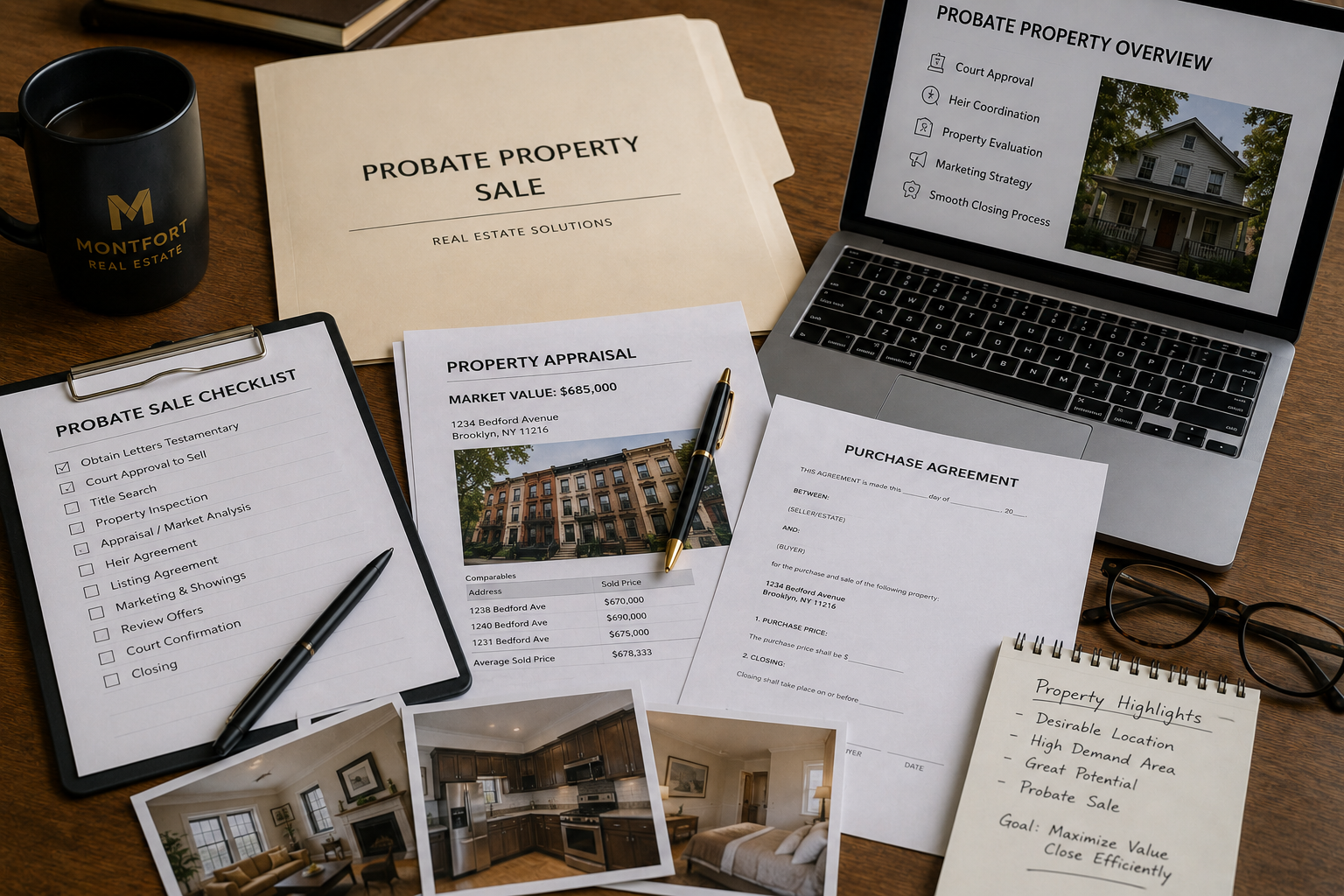
Every probate sale is different. The legal process, property condition, family dynamics, and market conditions all shape what approach makes sense. Here's how I help executors, administrators, and family members at each stage.
Pre-Probate Property Consultations
Before you even receive letters testamentary, there's important groundwork to lay. I meet with families to evaluate the property, provide a preliminary market analysis, and discuss options - should you sell or keep the inherited property? What's the realistic market value? What will net proceeds look like after commissions, taxes, repairs, and court costs?
One question I always encourage families to ask early: does the deceased person's will grant the executor named in it the authority to sell real property? If so, the sale can often move forward more quickly once the court issues letters testamentary. If not, additional court approval may be needed, and your experienced attorney should begin planning for that.
I also help families understand the step-up in basis - inherited property generally receives a new tax basis equal to its fair market value at the date of death, which can significantly reduce capital gains if you sell soon after. Obtaining a date-of-death appraisal is crucial for tax purposes during probate. I always recommend working with a CPA on the specifics.
Court-Supervised Probate Sales
A probate sale is court-managed in New York. When the will lacks sale power, when beneficiaries disagree, or when state law requires it, selling property requires a petition to the surrogate's court, appraisals, and sometimes an overbid process where interested buyers can submit competing offers at a public hearing.
This adds time - sometimes weeks for hearing notices and confirmation - but it also provides transparency and legal protection for the estate and all distributees. I prepare the required documentation, coordinate appraisals, and manage the court confirmation process alongside your probate attorney.
Probate sales require court approval in New York, and court approval is needed if beneficiaries object to the sale of a probate property. Heirs have 15 days to object after a sale notice is sent, so clear communication with family members well before any proposed action is essential.
Independent Administration Sales
When the executor has full legal authority under the will to sell real estate - and all beneficiaries are in agreement - the process is significantly more streamlined. No separate court petition for the sale is needed, and the timeline from listing to closing more closely resembles a standard NYC real estate transaction.
Even in independent administration, I coordinate with all beneficiaries for consent and transparency, because a fiduciary must act in the best interest of the estate during the sale process, and keeping everyone informed is the best precautionary step against future disputes.
As-Is Property Sales
Properties in probate are usually sold as-is without repairs. Many inherited homes and apartments haven't been updated in years, and heirs may disagree on repair expenses, affecting inheritance amounts. Selling as is eliminates upfront costs, reduces delays, and appeals to a specific pool of buyers - often a real estate investor or developer comfortable with property condition.
The previous homeowners cannot disclose property issues during sale in the typical way, since the estate may not have full knowledge of the property's history. I develop honest disclosure strategies that protect the estate from liability while giving buyers the information they need to move forward.
Probate properties often sell below market value due to low competition and condition issues, but with the right marketing strategy, I work to minimize that discount and attract the strongest possible offers.
How the Probate Property Sale Process Works
Selling probate property in New York is a multi-step process that requires coordination between your real estate agent, your estate attorney, the surrogate's court, and your family. Here's what to expect from start to finish.
Step 1: Initial Consultation and Property Assessment
I meet with the executor or family - often at the property itself - to understand the situation, timeline, and family goals. We walk through the property together so I can assess condition, identify any obvious issues (code violations, needed repairs, liens), and begin a preliminary market analysis.
One of the biggest challenges families face is aligning expectations: the difference between the listing price and the net cash heirs actually receive after commissions, taxes, transfer fees, court costs, and carrying expenses. I run through those numbers honestly at the very first meeting so there are no surprises later.
We also discuss legal requirements and coordination with your probate attorney. The executor cannot sell property until officially appointed by the court, so understanding where you are in the legal process shapes our entire timeline.
Step 2: Legal Authorization and Court Requirements
Before any property can be listed, the executor or administrator must have the proper legal authority. This means letters testamentary (if there's a will) or letters of administration (if intestate) must be issued by the surrogate's court.
If the will grants sale power, we can move toward listing once letters are in hand. If not, the estate administrator must file a petition with surrogate's court for authority to sell the real property. This is a step your attorney handles, but I coordinate on timing so the real estate side is ready to go the moment the court approves.
Common pitfalls in probate sales include listing before obtaining legal authority - this can void contracts and create serious legal complications. I always confirm legal authority is in place before we proceed.
Most properties require an examination of title, mortgages, and liens before selling. I help gather this information early so we can address any issues before they delay closing.
Step 3: Property Preparation and Marketing Strategy
Once legal authority is confirmed, we develop a pricing and marketing strategy based on three factors: the property's condition, current NYC market conditions, and the family's goals.
For properties in good condition, I may recommend minor improvements - cleaning, fresh paint, staging - that can expand the buyer pool and increase the sale price. For properties needing major work, I typically recommend selling as is and targeting buyers who understand probate properties and are comfortable buying in that condition.
I arrange professional photography, virtual tours when appropriate, and marketing materials that clearly communicate the property's status as an estate or probate sale. Buyers often get nervous when they see "probate sale" - clear, upfront information about what that means and what timeline to expect reduces friction and keeps serious buyers engaged.

Step 4: Listing, Showings, and Offer Evaluation
I actively market the property to qualified buyers, including both owner-occupants (for properties in good condition) and investors who specialize in buying probate property. My network includes buyers who understand court-supervised sales and won't be deterred by probate contingencies.
During showings, I manage buyer questions about probate status, timeline, and condition honestly. When offers come in, I present each one to the executor with a clear explanation of terms, contingencies, and implications - including how each offer aligns with the estate's obligation to achieve fair market value.
The executor generally needs to achieve fair market value for the property sold, so I provide comparable sales data and market analysis to support pricing decisions.
Step 5: Contract Negotiation and Court Approval
Negotiating a probate sale requires awareness of both real estate market dynamics and legal requirements. Purchase agreements need to protect the estate's interests and may include contingencies - for example, that the sale is subject to court approval if a court-supervised process is required.
Obtaining a court's approval may be necessary in certain circumstances, particularly when the will doesn't grant sale power or when beneficiaries have objections. When court confirmation is needed, I coordinate with your attorney on scheduling, required documentation, and managing any overbid procedure.
Buyers must typically put down at least 10% as a deposit in NYC probate sales - a a 10% deposit is typically required from buyers in probate sales, which demonstrates serious intent and protects the estate.
Step 6: Closing and Proceeds Distribution
At closing, I coordinate with the title company, attorneys, and court to ensure everything is properly documented. This includes resolving any outstanding liens, paying transfer taxes (including New York's real estate transfer tax and mansion tax for residential properties over $1 million), and ensuring the estate meets all obligations.
The estate must pay all debts before selling property - or more precisely, debts must be settled from the probate estate before sale proceeds can be distributed. Maintaining property taxes, insurance, and utilities is the estate's responsibility during probate, and these carrying costs are settled at closing.
Proceeds are distributed per the court order or the terms of the deceased person's will, and I provide final reporting to beneficiaries as required.
Understanding Costs, Taxes, and Financial Realities
One of the first things I walk families through is the financial picture. Many executors assume the listing price is close to what heirs will receive - but the reality involves several layers of costs.
What Executors Should Expect to Pay
| Cost Category | Typical Range | Notes |
|---|---|---|
| Real Estate Commissions | 5–6% of the sale price | Typically split between the listing broker and buyer's broker |
| Executor Commissions | SCPA statutory sliding scale (5% of the first $100,000, declining to 2% above $5 million) | For a $2 million estate, approximately $59,000 |
| Court Filing Fees | $200–$1,250+ | Varies based on estate value |
| Attorney Fees | Several thousand dollars | Higher for contested or complex estates |
| Transfer Taxes | Varies by sale price | NYC Real Property Transfer Tax (RPTT) plus NY State estate tax for estates exceeding $7,350,000 (2026 threshold) |
| Property Preparation | Varies | Cleaning, minor repairs, staging, and property presentation |
| Carrying Costs | Ongoing | Property taxes, insurance, utilities, and maintenance during probate |
The average cost of a probate sale varies by estate complexity, but total costs typically consume 2–7% of estate value in uncomplicated cases - on top of agent commissions. Typical seller closing costs are paid by the estate during probate.
New York has an estate tax that creates a lien upon death. For 2026, estates below $7,350,000 in total value are exempt from New York State estate tax. There is no inheritance tax in New York - beneficiaries do not pay tax simply by inheriting. However, families with properties in high-value Brooklyn or Queens neighborhoods should be aware that the "cliff" provision means exceeding the threshold even slightly can trigger taxation on the entire estate.
Selling As-Is vs. Making Improvements
| Approach | Advantages | Disadvantages | Best For |
|---|---|---|---|
| Sell As Is | Fast sale, low upfront costs, appeals to investors | Lower sale price and a smaller pool of potential buyers | Properties in poor condition or estates requiring a quick sale |
| Minor Repairs & Cosmetic Updates | Larger buyer pool, higher sale price, stronger property presentation | Upfront costs, project delays, and contractor coordination | Structurally sound properties in desirable neighborhoods |
| Full Renovation | Maximizes sale proceeds and attracts owner-occupant buyers | High costs, longer timeline, and risk of over-improving the property | High-value properties where heirs can invest additional time and capital |
Before listing an inherited property, I always recommend families think carefully about the cost-benefit of repairs. Sometimes a $15,000 investment in cleaning, painting, and staging returns $40,000 or more in sale price. Other times, the property's issues are so fundamental that selling as is to an investor is the smarter move.
What Our Clients Say
[Testimonials from real clients will be featured here. If you've worked with Stanley on a probate property sale and would like to share your experience, please contact us.]
When helping families sell probate property, the feedback I hear most often is about how much easier the process felt once they understood what to expect. That's what I aim for in every engagement - removing uncertainty so families can focus on what matters.
NYC Areas We Serve
I serve executors, administrators, and families selling probate property throughout all five NYC boroughs, including:
Manhattan: Upper East Side, Upper West Side, Midtown, Downtown, Washington Heights, Harlem, Inwood
Brooklyn: Park Slope, Bay Ridge, Williamsburg, Borough Park, Flatbush, Crown Heights, Sunset Park
Queens: Astoria, Flushing, Forest Hills, Jackson Heights, Long Island City, Bayside, Jamaica
Bronx: Riverdale, Fordham, Morris Park, Throggs Neck, City Island, Pelham Bay, Kingsbridge
Staten Island: St. George, Tottenville, Great Kills, New Dorp, Port Richmond, Eltingville
Each borough has its own surrogate's court, and while New York state law applies uniformly, local court practice and backlog vary. In Manhattan, for example, letters testamentary in uncontested cases may issue in 3–8 months; outer borough courts sometimes experience longer backlogs. Selling an NYC apartment also involves compliance with co-op or condo board requirements, which adds another layer of coordination I help families manage.
Frequently Asked Questions
When can we legally sell an inherited property in NYC?
A property cannot be sold until probate is completed - specifically, until the executor or administrator has been officially appointed by the court and received letters testamentary or letters of administration. If the deceased person's will grants the named executor authority to sell real property, listing can begin once letters are issued. If the will doesn't include sale power, or if there's no will at all, a separate petition for authority to sell must be filed with the surrogate's court.
Many executors assume they can list the property immediately - this is one of the most common mistakes. Listing before obtaining legal authority can void contracts and create serious legal exposure for the estate.
The probate process in New York typically takes 9–18 months for estates with real property and no disputes. Simple estates can clear probate in 6–9 months. Complex estates can take three years or more to probate.
Do all heirs need to agree to sell the property?
The executor has a fiduciary duty to act in the best interest of the estate, which sometimes includes selling real property even without unanimous agreement from all heirs. However, beneficiaries typically need to consent via waivers or receive formal citation. If a distributee objects, it can trigger a court hearing and significant delays.
Communication with beneficiaries should be transparent to prevent disputes. One of the biggest challenges families face is disagreement among siblings or heirs about whether to sell, when to sell, or at what price. I always encourage open communication early - it's the best way to avoid costly legal battles.
Court approval is needed if beneficiaries object to the sale of a probate property, and heirs have 15 days to object after a legal notice about the sale is sent.
What if the property needs major repairs or is in poor condition?
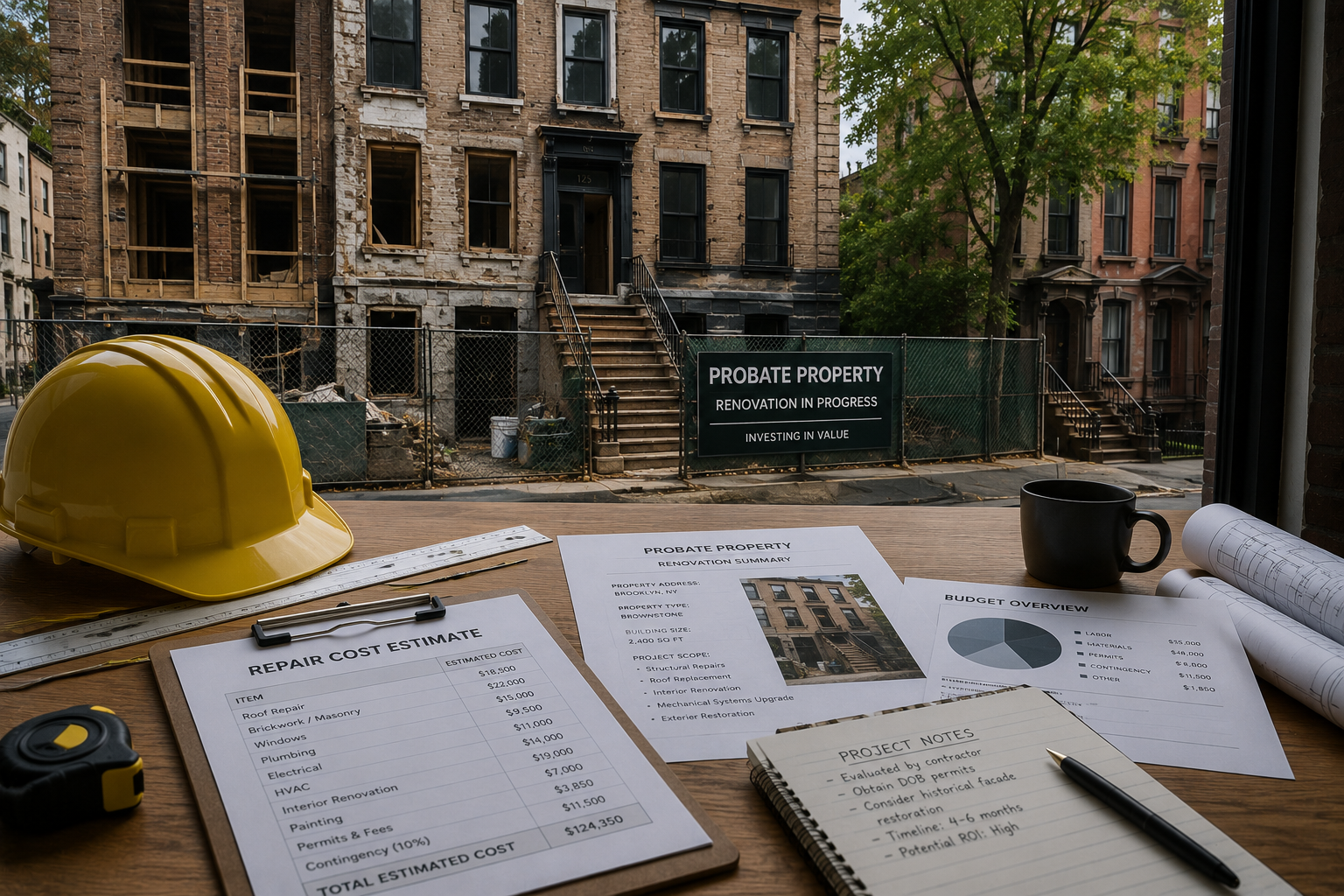
You have options. Properties in probate are usually sold as-is without repairs, and many estate sales go this route - it's faster, involves no upfront costs, and attracts investors who handle renovations themselves. The trade-off is that as-is probate properties often sell below full market value.
If the property is structurally sound and located in a desirable neighborhood, minor improvements - cleaning, painting, basic repairs - can meaningfully increase the sale price and expand the buyer pool. I walk through each property with the family to give an honest assessment of what improvements are worth making and what's better left alone.
Heirs may disagree on repair expenses, affecting inheritance amounts, so I help facilitate those conversations with clear cost-benefit data.
How long does it typically take to sell a probate property in NYC?
Probate sales can take seven to nine months in New York from start to finish, depending on the complexity of the estate, whether court approval for the sale is required, and property condition. Once the property is listed and a buyer found, closing typically takes 45–60 days for independent administration sales and longer for court-supervised sales (add several weeks for hearing notices and confirmation).
The biggest time variables are: how long it takes to receive letters testamentary, whether any heirs contest the will or the sale, title issues or liens that need resolution, and current court backlog in your borough. A lengthy process isn't inevitable, but families should plan for it.
What are the costs involved in selling inherited property?
Beyond standard real estate commissions (typically 5–6% of sale price), selling probate property involves several additional costs: court filing fees, attorney fees, executor commissions per SCPA 2307, appraisal fees, title search and clearance, transfer taxes, and carrying costs (property taxes, insurance, utilities) for the duration of probate.
The probate process must settle debts before selling property and distributing assets. For a $1 million estate with no complications, expect executor commissions of approximately $34,000 plus $1,250 in filing fees and several thousand in additional costs.
I provide families with a detailed net-proceeds estimate during our initial consultation so everyone understands what to expect.
Can we get an offer before probate is complete?
Yes - and this is something I encourage. While a property cannot be formally sold until the executor has legal authority, we can begin the preliminary market analysis, assess the property, and even attract early interest from buyers. Some buyers will submit offers contingent on the estate obtaining full probate authority ("subject to court approval"), which helps families plan and gives the executor a clearer picture of what the property will sell for.
Having a pre-listing consultation and early property evaluation doesn't commit you to anything - it simply reduces uncertainty and helps you make better-informed decisions as the legal process unfolds. This is an important precautionary step that gives the seller's family a strategic advantage.
Final Thoughts
Executor duties involve avoiding conflicts of interest and maintaining estate assets until closing - and selling inherited real property is one of the most consequential decisions an executor makes. The probate process is complex, the legal requirements are precise, and the emotional weight is real. But with the right team - an experienced real estate agent who understands probate, an experienced attorney who handles the legal process, and open communication among family members - families can move forward with confidence.
I don't provide legal or tax advice. What I do is help families prepare inherited properties for sale, develop strategies that reflect both market reality and family goals, coordinate with your probate team, and guide the transaction from listing through closing and distributing assets to beneficiaries.
If you're an executor, administrator, or family member facing the prospect of selling a probate house in New York, I'd be glad to sit down with you - no obligation, no pressure - and walk through your options.
Schedule Your Probate Property Consultation
Losing a loved one is hard enough. Selling their property shouldn't add to that burden. I'll give you an honest evaluation of your situation, a clear explanation of what comes next, and a realistic plan for moving forward - all at no cost for the initial consultation.
Phone: 1-646-970-1078 Email:[email protected] Address: 8 West 126th Street, New York NY 10027
Recent News & Realtor Advice
Stay in the loop on the latest events, news, & happenings in and around our community!
Upper West Side Townhouse Q2 2024 Market Report
On the Upper West Side, we observed a distinct trend that diverges from the citywide patterns. Speci…
Harlem Brownstone Q2 2024 Market Report
The Harlem brownstone market has seen an increase in sales activity since this time last year. In Q2…
Discover Your Dream Home: Explore Apartments for Sale on the Upper West Side
Are you searching for your dream home in one of New York City’s most sought-after neighborhoods? Loo…