
Park Slope Brownstones — Experts for Buying, Selling & Investing
We'll help you buy the right Park Slope brownstone by avoiding costly structural issues, hidden repair expenses, and overpaying in a competitive market
SMOOTH TRANSACTION
With limited risk throughout the buying process.
NO PRESSURE
No pressure to overpay or purchase within a specific timeframe.
ONGOING SUPPORT
A dedicated team that remains available even after the transaction is complete.
Park Slope Brownstone Realtor
If you're searching for a Park Slope brownstone to buy - or preparing to sell one - you already know this isn't a typical real estate transaction. Brownstones in Park Slope present a unique combination of challenges that most general agents simply aren't equipped to handle: historic district restrictions that govern what you can and can't change on a facade, legal configurations that may not match what you see on a walkthrough, block-by-block pricing swings that can mean hundreds of thousands of dollars in either direction, and renovation costs that catch even experienced buyers off guard. Whether you're a first-time brownstone buyer trying to understand what a Certificate of Occupancy actually means for your purchase, or a seller wondering how to price a property with an unpermitted garden unit, the decisions you make before signing a contract will define your outcome for years to come. Working with a Park Slope brownstone realtor who understands these layers - someone who evaluates legal use, structural condition, historic preservation rules, and neighborhood-level pricing before advising you - is the difference between a smart investment and an expensive lesson.
Why Park Slope Buyers and Sellers Choose Stanley Montfort
When selecting a Park Slope brownstone real estate agent, credentials and local track record matter more than broad market experience. Here's what Stanley brings to every transaction:
Deep specialization in Park Slope brownstone transactions - years of focused experience navigating the neighborhood's historic district regulations, pricing dynamics, and property types
Proven negotiation results in the Park Slope Historic District - including transactions involving complex legal configurations, LPC compliance, and competitive bidding scenarios
Specialized knowledge of NYC historic property regulations - from Landmarks Preservation Commission approval processes to Certificate of Occupancy verification and ADU legalization
Responsive, hands-on client communication - because in a market where well-priced brownstones can generate non-contingent cash offers within days, timing and access to your realtor are everything
What Sets Stanley Montfort Apart as Your Park Slope Brownstone Realtor
One of the first things I review when evaluating any Park Slope brownstone - whether for a buyer or a seller - is the gap between what a property appears to be and what it legally is. That distinction drives everything from offer strategy to long-term value.
Block-by-block pricing expertise that protects your investment. Even two blocks apart, brownstones in Park Slope can command significantly different prices. Proximity to Prospect Park, access to transit lines, school zones like PS 321, and the architectural consistency of a particular block all create measurable premiums. Stanley analyzes comparable sales at the block level, not the zip code level, so clients never overpay or underprice.
Legal configuration analysis that prevents costly surprises. Many buyers are surprised to learn that the brownstone they're touring has unpermitted units or a Certificate of Occupancy that doesn't match the actual layout. Stanley reviews CO documentation, zoning classification, and rental legality before clients make decisions - not after.
A curated network of brownstone specialists. From structural engineers who understand 130-year-old party walls to historic preservation contractors who work within LPC guidelines, Stanley's team of inspectors, attorneys, and restoration experts is assembled specifically for brownstone transactions.
Strategic pricing and marketing that reflect real market conditions. In the current Park Slope market, overpricing doesn't attract aspirational offers - it creates stigma. Well-priced brownstones attract competitive bids; overpriced ones sit and lose leverage. Stanley's approach is grounded in data, not optimism.
Park Slope Brownstone Real Estate Services
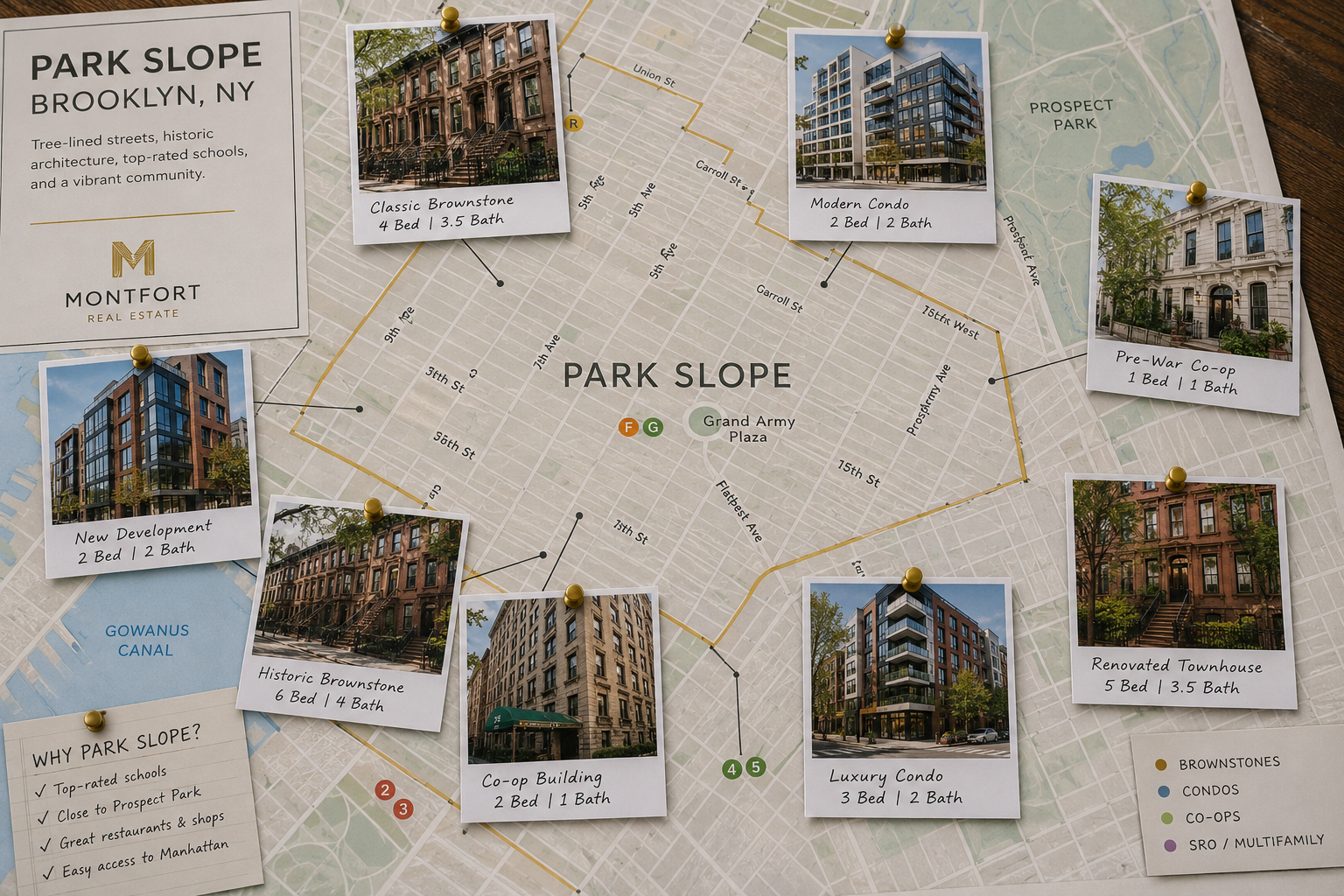
Stanley Montfort provides comprehensive buyer and seller representation designed specifically for the brownstone market in Park Slope, Brooklyn. Every service is built around the realities of buying, selling, or investing in properties within one of NYC's most architecturally significant and competitively priced neighborhoods.
Buyer Representation for Park Slope Brownstones
As your Park Slope brownstone buyer's agent, Stanley guides you from initial search through closing - and through every technical decision in between. Buyer representation includes identifying properties that match your criteria and budget, evaluating legal configurations and Certificates of Occupancy, coordinating inspections with brownstone-specialized engineers and contractors, analyzing renovation and restoration cost exposure, and negotiating terms that reflect condition, legal status, and true comparable sales.
This serves first-time brownstone buyers who need education on what to look for, experienced buyers moving within the neighborhood, and families relocating to Brooklyn who want to understand why Park Slope commands the prices it does. The typical outcome: clients buy with full knowledge of what they're getting - legal status, structural condition, renovation costs, and realistic resale potential - rather than discovering problems after closing.
Listing Services for Park Slope Brownstone Sellers
When evaluating a Park Slope brownstone for sale, Stanley's listing approach starts with what most agents skip: confirming that the property's legal use, CO, and physical condition are aligned and presentable to buyers. Listing services include pre-market property evaluation, strategic pricing based on block-level comparable sales, coordination of pre-listing inspections and violation resolution, professional marketing with photos that highlight architectural details and period features, and negotiation management through closing.
This serves sellers of every kind - from owners of inherited properties who may be unfamiliar with current market conditions to long-time residents ready to capitalize on Park Slope's strong demand. One mistake I frequently see from sellers: assuming that a beautifully renovated interior will compensate for unresolved open violations or a mismatched Certificate of Occupancy. Buyers' attorneys will find these issues, and they will cost you leverage.
Investment Property Analysis
For investors seeking brownstones with rental units in Park Slope, Stanley provides detailed investment analysis covering legal rental income potential, ADU opportunities under NYC's updated ADU regulations (Local Laws 126/127), operating cost projections, and cash flow modeling. This includes evaluating whether existing rental units are legally configured, whether basement or cellar units can be legalized, and how the building's classification under the Multiple Dwelling Law affects your investment thesis.
Expected outcomes include clear ROI projections, realistic renovation budgets for bringing units into compliance, and a strategy for maximizing rental income without exposing yourself to regulatory risk.
How Stanley Montfort Guides Your Park Slope Brownstone Transaction
Every brownstone transaction follows a structured process designed to surface risks early and protect your position throughout.
Initial Consultation and Strategy Development
During the first meeting, Stanley assesses your goals - whether you're buying, selling, or evaluating an investment - and establishes a strategic framework. For buyers, this means defining budget parameters, identifying target blocks, and understanding your tolerance for renovation. For sellers, it means reviewing the property's legal status, evaluating condition, and developing a pricing strategy grounded in recent comparable sales.
One question I always discuss with clients at this stage: what does the Certificate of Occupancy say versus what the property actually looks like? The answer shapes everything that follows.
Property Evaluation and Due Diligence
Stanley's systematic approach to evaluating brownstones goes well beyond a standard home inspection. For buyers, this includes coordinating a general home inspector ($800–$1,500), structural engineer ($1,500–$3,000), sewer scope ($300–$500), and environmental/mold inspections ($400–$600 for a full brownstone). Parapet inspections for a typical 3-story brownstone run $350–$500. Stanley also reviews facade condition, stoop integrity, roof and drainage systems, and party wall stability - common areas where 130-plus-year-old buildings reveal expensive surprises.
For sellers, due diligence means identifying and resolving issues before they become negotiation concessions. Foundation and party wall stabilization can cost $50,000–$150,000; facade restoration ranges from $85,000 to $250,000 or more depending on the brownstone's width and level of ornamentation. Stoop restoration or rebuild runs $18,000–$60,000, with vault waterproofing underneath adding another $12,000–$35,000. Knowing these numbers in advance - and addressing what's addressable - is what separates properties that attract competitive bids from those that linger.
Negotiation and Closing Support
Stanley handles negotiations with a reference point in data, not emotion. Offers reflect condition, legal status, and true block-level comparables. Sellers with clear legal use and proper permits have leverage; buyers who've done thorough due diligence know exactly where to push for concessions.
Closing costs in NYC typically run 2–4% for buyers (title fees, mortgage recording, title insurance) and approximately 6% for sellers (commission plus attorney fees and transfer taxes). In Park Slope, well-organized transactions can close in 30–60 days after acceptance, though properties with legal irregularities or LPC-related work may require longer timelines.
Understanding the Park Slope Brownstone Market
Current Market Conditions and Pricing
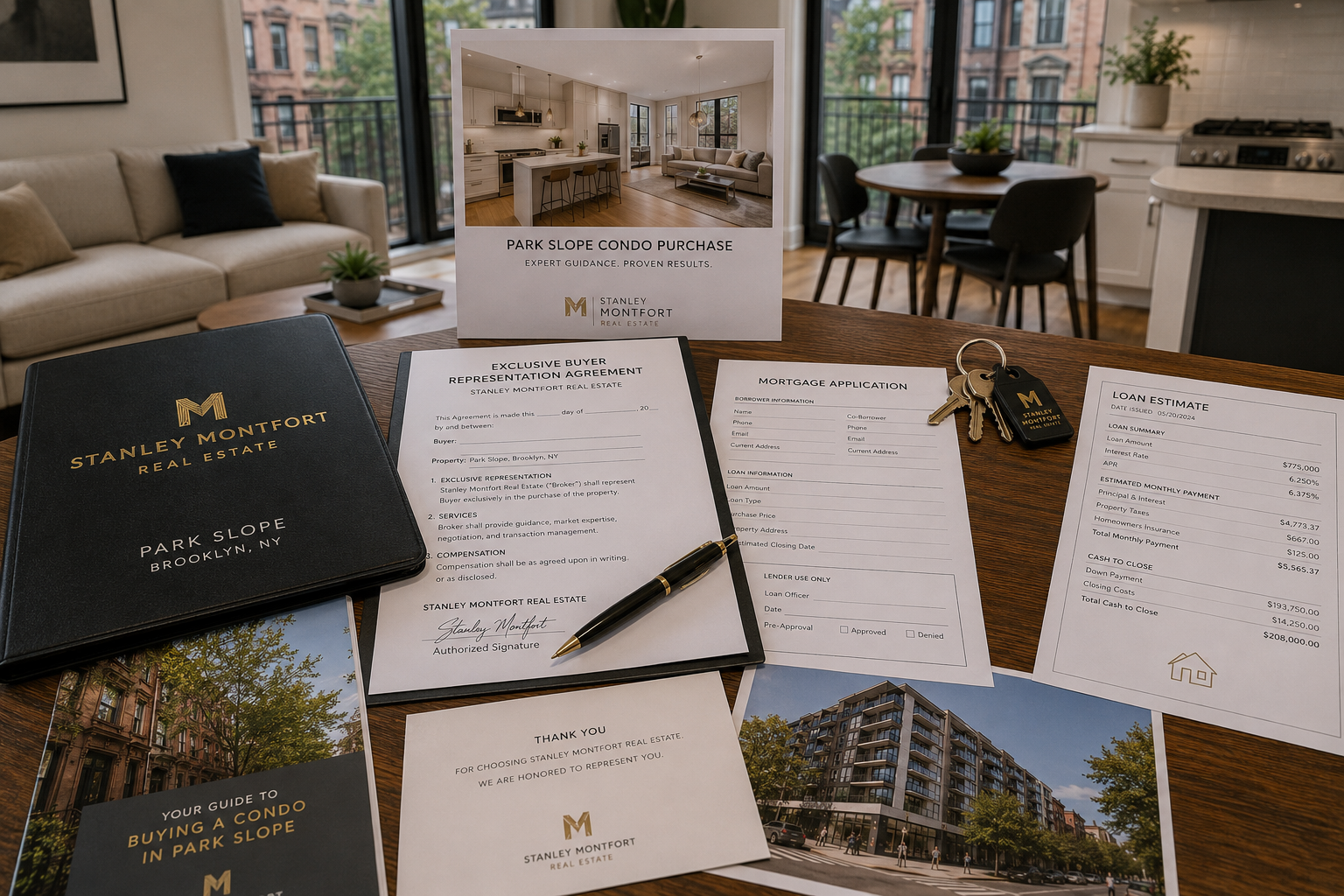
The Park Slope real estate market remains one of the most competitive brownstone markets in New York City. Over the three months ending May 2026, the median home price in Park Slope reached approximately $1.9 million - up roughly 12.8% year-over-year. Median price per square foot sits around $1,640, though other data sources place it closer to $1,364 depending on property mix.
Inventory remains constrained for brownstones specifically. Average days on market across all home types increased to approximately 47 days, up from 31 days the prior year - but well-priced, well-prepared brownstones still move faster, often generating non-contingent cash offers and sometimes bidding wars even for properties needing significant work.
Renovated Park Slope brownstones range from $3.2 million to $8 million or more depending on size, width, condition, and block. For contrast, a renovated 4-story brownstone in Park Slope sold for $4.85 million in February 2026, while a comparable property in Bed-Stuy sold for $1.35 million - illustrating the premium that this neighborhood commands.
How Block-by-Block Differences Drive Value
When evaluating a Park Slope brownstone, I always walk clients through the specific factors that create price variation between blocks that may be only minutes apart on foot:
| Value Factor | Premium Impact | What to Look For |
|---|---|---|
| Proximity to Prospect Park | High | Homes located between 1st and 7th Avenues near Prospect Park typically command the strongest price premiums. |
| School Zone | High | Properties within the PS 321 attendance zone consistently attract family buyers willing to pay premium prices. |
| Transit Access | Moderate–High | Walking distance to the F, G, R, and B/D subway lines improves convenience, resale value, and buyer demand. |
| Block Consistency | Moderate | Tree-lined streets with consistent building heights, well-maintained façades, and strong curb appeal. |
| Lot Dimensions | Moderate | Lot width (18–25 ft) and depth (40–50 ft) influence usable living space, expansion potential, and renovation flexibility. |
| Architectural Integrity | Moderate | Original stained glass, wood moldings, decorative mantels, and preserved parlor-floor details add measurable value. |
Moderate | Original details - stained glass, molding, mantels, parlor floors - add measurable value |
Park Slope is directly west of Prospect Park, and residents can walk to the park in minutes. Access to Prospect Park shapes daily life for residents and consistently drives buyer demand. The Prospect Park Alliance maintains a variety of recreational activities that keep the park central to the neighborhood's appeal. But from a realtor's perspective, "near Prospect Park" isn't specific enough - the exact block matters enormously.
Similarly, Fifth Avenue supports over 500 independently owned businesses - shops, dining, bars, and local services - while Seventh Avenue offers its own commercial corridor with a distinct character. Proximity to these avenues affects not just lifestyle but marketability and resale value.
Park Slope's Architectural Heritage and Its Market Impact
Park Slope's brownstones exhibit a collage of late-Victorian styles built predominantly between 1870 and 1900, with many constructed specifically between 1886 and 1888. The neighborhood's architecture reflects a Victorian style that evolved as the area transformed from farmland into wealthy residential districts in the late 19th century. Park Slope's development began in 1847 with Colonel Daniel Richards' plans, and the completion of Prospect Park in the 1860s made the slope desirable for middle-class residents. By 1890, Park Slope was the richest community in the U.S.
Today, many brownstones feature high ceilings and ornate interior details - original parlor mantels, stained glass transoms, and elaborate plaster moldings that reflect the era of their construction. The signature high stoop elevates the main entrance, a design feature that originally served to avoid street dust and noise but now defines the neighborhood's streetscape. Park Slope is known for its tree-lined streets and consistent building heights, creating the architectural cohesion that buyers and residents value.
From a real estate perspective, these details aren't just aesthetic - they're financial. Brownstones in Park Slope often feature original architectural details that directly influence appraisal values and buyer willingness to pay premium prices. Properties where period features have been preserved alongside modern system upgrades (plumbing, wiring, HVAC) command the strongest offers.
Historic District Considerations
The Park Slope Historic District was designated in 1973, with extensions added - including approximately 600 buildings designated in 2012. Today, Park Slope contains 2,575 buildings in its historic district across 40 city blocks.
The New York City Landmarks Preservation Commission strictly regulates exterior modifications of landmarked brownstones. Before making an offer on a brownstone within the Park Slope Historic District, buyers need to understand what this means practically:
Any exterior alteration affecting stoops, cornices, facades, windows, doors, or ornamentation requires a Certificate of Appropriateness (C of A)
Non-complex applications may receive staff-level approval on a faster timeline
Major work - additions, significant facade changes - requires full LPC board review, which can take three months or longer
Materials and design must be consistent with historic styles; you cannot simply replace brownstone with a modern composite without permission
One of the first things I tell buyers considering a brownstone in the historic district: factor LPC timelines and material requirements into your renovation budget. Facade restoration using approved materials costs $85,000–$250,000 or more. Repointing brick and stone joints runs $15–$35 per square foot - a 3-story front facade may cost $10,000–$25,000 just for joint work.
Gentrification accelerated in Park Slope during the 1980s and 1990s, and the neighborhood's population increased by 10.46% from 2010 to 2020, with current density at 70.4 inhabitants per acre. This continued demand, combined with historic preservation enforcement, means the supply of brownstones in the district will remain limited - supporting long-term values but also requiring ongoing investment in maintenance and restoration.
Park Slope Areas Stanley Montfort Serves
Stanley Montfort provides brownstone realtor services throughout Park Slope and the surrounding Brooklyn neighborhoods, with particular expertise in:
Prime Park Slope - The blocks between Flatbush Avenue and 7th Avenue, from Union Street south to 15th Street, encompassing the heart of the historic district and the most competitive pricing in the neighborhood
North Slope - The area north of Union Street toward Atlantic Avenue and the Barclays Center corridor, where residential brownstone blocks transition toward more mixed-use development and nearby transit hubs
South Slope - Below 15th Street extending toward Greenwood Heights, where brownstone inventory offers a different value proposition and renovation opportunities at a fraction of prime Slope pricing
Prospect Park–adjacent blocks - The most coveted addresses, where proximity to the park and the Grand Army Plaza Greenmarket create lifestyle appeal that directly translates to buyer demand
Fifth Avenue and Seventh Avenue corridors - Where commercial activity, dining, shops, and community life create walkable living that attracts both families and professionals
Park Slope is ranked as one of NYC's most desirable neighborhoods, and the micro-market dynamics within its boundaries make hyperlocal expertise essential. The difference between an informed purchase on the right block and an uninformed one on the wrong block can be measured in hundreds of thousands of dollars - and years of resale frustration.
Park Slope also hosts the Grand Army Plaza Greenmarket year-round and is home to the Brooklyn Public Library's Park Slope branch, community institutions that reinforce the neighborhood's appeal and support property values in the surrounding blocks.
Frequently Asked Questions About Park Slope Brownstone Transactions
How are Park Slope brownstones priced and what affects value?
Brownstone values in Park Slope are driven by a combination of location, lot dimensions, legal configuration, renovation level, and architectural integrity. Width matters significantly - a 20-foot-wide, 40-foot-deep 4-story brownstone offers substantially more usable square footage and renovation flexibility than a narrower building. The current median price in the neighborhood is approximately $1.9 million across all home types, but renovated brownstones typically range from $3.2 million to $8 million or more. When evaluating a Park Slope brownstone, I always pull block-specific comparable sales rather than neighborhood-wide averages, because even a couple of blocks can mean a large difference in value.
What should I know about legal configurations and Certificates of Occupancy?
A Certificate of Occupancy states a building's legal use and occupancy type - and many buyers are surprised to learn that the property they're touring has a CO that doesn't match how the building is actually configured. For brownstones built before 1938, a CO might not have been originally required unless the building was later altered. If the property has been divided into units that aren't reflected in the CO, those units may be considered illegal, which affects financing, insurance, and resale value. Under NYC's 2024 ADU laws, some one- or two-family brownstones may now add a legal accessory dwelling unit in a basement, cellar, or top floor - but this can trigger reclassification and additional code requirements under the Multiple Dwelling Law. Before making an offer, I always verify the CO, review zoning classification under NYC zoning rules, and assess whether any legal irregularities exist.
How do Historic District rules affect buying or selling a brownstone?
Within the Park Slope Historic District, any exterior work - from window replacement to stoop restoration to facade repair - requires approval from the NYC Landmarks Preservation Commission through a Certificate of Appropriateness. The LPC reviews proposed work for consistency with historic styles, materials, design, and texture. Non-complex changes may be handled at staff level relatively quickly, but major alterations require a public hearing and full board review that can take three months or longer. For sellers, unresolved LPC violations or non-compliant past work can complicate transactions. For buyers, understanding what you can and can't change on the exterior - and what it will cost - is essential before committing.
What's the difference between single-family and multi-unit brownstones?
A single-family brownstone is typically wider, with higher ceiling heights and the entire building configured for one household - parlor floor, upper floors, attic, and basement all under one family's use. Multi-family brownstones may be divided into two or three separate units, sometimes legally, sometimes not. Multi-family properties allow rental income generation - an owner's duplex upstairs with a garden or parlor-level rental unit, for example - but they are subject to additional building code, fire safety, egress, and zoning requirements, and must have a certified CO reflecting the actual unit count. Legal rental units add value; illegal ones represent risk that experienced buyers will discount or walk away from entirely.
How long do Park Slope brownstone transactions typically take?
After an offer is accepted, well-organized transactions in Park Slope can close in 30–60 days. However, properties with legal irregularities, open violations, or needed LPC approvals may take significantly longer. The due diligence period - inspections, CO verification, title review, financing - is where most delays occur. Having an experienced Park Slope brownstone real estate agent who coordinates these processes proactively, rather than reactively, is what keeps transactions on track.
Start Your Park Slope Brownstone Journey
Whether you're looking to buy a brownstone in Park Slope, sell one at the right price, or evaluate a property's investment potential, the details matter more here than in almost any other residential market in New York City. From legal configuration and historic district compliance to block-level pricing and renovation cost exposure, every decision benefits from working with a realtor who understands these properties inside and out.
Stanley Montfort provides buyer representation, listing services, brownstone valuations, and neighborhood-specific guidance throughout Park Slope, Brooklyn. Reach out for a consultation - whether you're ready to make a move or simply want to understand what your brownstone is worth in today's market.
Phone: 1-646-970-1078 Email:[email protected] Address: 8 West 126th Street, New York NY 10027
Recent News & Realtor Advice
Stay in the loop on the latest events, news, & happenings in and around our community!
Upper West Side Townhouse Q2 2024 Market Report
On the Upper West Side, we observed a distinct trend that diverges from the citywide patterns. Speci…
Harlem Brownstone Q2 2024 Market Report
The Harlem brownstone market has seen an increase in sales activity since this time last year. In Q2…
Discover Your Dream Home: Explore Apartments for Sale on the Upper West Side
Are you searching for your dream home in one of New York City’s most sought-after neighborhoods? Loo…