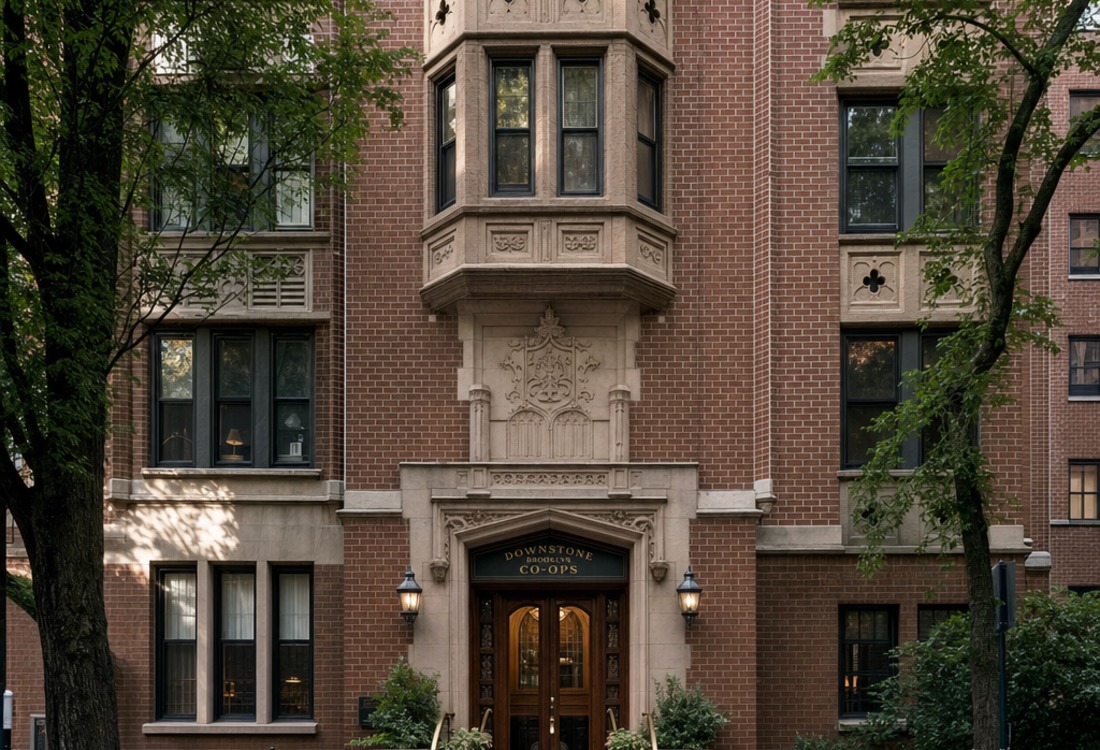
Condos and co-ops in the heart of Downtown Brooklyn, with clear guidance on value and timing.

Smooth transaction with limited risk
No pressure to over pay and buy within a certain time period
A team of people that will be with you even after the transaction is complete
Live listing data provided by OLR IDX. Need help? Contact us or log in to your customer account.
Whether you're buying your first Downtown Brooklyn condo, selling a resale unit in a high-rise tower, or weighing a sponsor sale against existing inventory, the decisions you face here are building-specific, financially layered, and unlike anything in most other New York real estate markets. Downtown Brooklyn consists heavily of modern high-rise luxury condos, but the area also includes co-ops, condops, converted warehouses, and mixed-use properties - each with distinct financial structures, board rules, and resale dynamics. Working with a Downtown Brooklyn realtor who evaluates individual buildings rather than relying on neighborhood averages is the difference between a confident transaction and an expensive miscalculation.
There are currently 118 homes for sale in Downtown Brooklyn, with average home prices ranging from $525,000 to $16,750,000. Ten homes sold in Downtown Brooklyn last month, and median days on market have stretched to 111 - nearly double the 58-day median from the same period last year. This is a market where preparation, building-level expertise, and strategic negotiation matter more than ever.

One of the first things I review when evaluating a Downtown Brooklyn condo isn't the listing photos or the asking price - it's the building's financial statements. An experienced Downtown Brooklyn real estate agent understands that two units with identical square footage and similar finishes can represent vastly different ownership propositions depending on their building's common charges, reserve fund health, assessment history, and competing inventory.
Buying properties in Downtown Brooklyn involves unique purchasing dynamics due to varied property types. Last month, 73 condos and 42 co-ops were for sale, with condo prices ranging from $505,000 to $16,750,000. Stanley's buyer representation covers every step of this process:
Many sellers price their Downtown Brooklyn property based on what they paid or what a unit in a neighboring building closed for - without accounting for the factors that actually drive buyer decisions in their specific building. Stanley's listing approach starts with the individual unit and works outward:
The search for a Downtown Brooklyn home - or the decision to sell one - begins with understanding where the market actually stands. During an initial consultation, Stanley reviews your budget, timeline, and specific Downtown Brooklyn preferences, then provides a market overview covering current inventory, pricing trends, and building-specific opportunities.
Transparent communication with a realtor is essential for a smooth buying process. Stanley establishes clear expectations about market conditions from the first meeting: with 118 homes currently for sale in Downtown Brooklyn and median asking prices around $1.42 million, understanding your competitive position shapes every subsequent decision.
Choosing a realtor requires finding someone with hyper-local neighborhood expertise - someone who can walk into a building lobby and tell you about recent assessments, management changes, or upcoming capital projects. Stanley's property search process includes:
Downtown Brooklyn's median sale price sits at approximately $1.4 million as of mid-2026, up roughly 3.2% year-over-year. But that headline number obscures the real story. Price per square foot has actually declined - approximately $1,553/sqft, down about 1.4% from last year - suggesting buyers are getting more space for their money, or that higher-priced compact units are facing resistance.
When comparing two units in Downtown Brooklyn, I rarely start with asking price. One mistake I frequently see condo buyers make is evaluating apartments based on listing price and finishes alone, without calculating what I call the "full monthly number" - mortgage payment plus common charges plus property taxes plus insurance. Two units listed at $1.2 million can differ by $800 or more per month in carrying costs depending on building amenity level, tax abatement status, and common charge structure.
Key market indicators for buyers and sellers:
| Metric | Current Data |
|---|---|
| Active Listings | ~118 homes for sale |
| Median Asking Price | ~$1.42M |
| Median Asking Price per Sq. Ft. | ~$1,619 |
| Recent Closed Sales (30 Days) | 10 homes sold |
| Median Days on Market | 111 days (vs. 58 last year) |
| Months of Supply | ~6.9 months (buyer's market) |
| Inventory Mix | ~69% condos, ~19% co-ops, ~12% condops |
| Listings with Price Reductions | ~24–25% |
These conditions create meaningful negotiation opportunities for buyers and demand strategic pricing from sellers. Stanley monitors these figures weekly and applies them to building-specific recommendations.
New development condos in Downtown Brooklyn attract buyers with modern layouts, contemporary finishes, and extensive amenity packages. Sponsor sales often include incentives - paid transfer taxes, first-year or multi-year common charge coverage, or mansion tax credits at certain price points. Front & York in DUMBO, for example, offers sponsor-paid transfer taxes, two years of common charges, and over 150,000 square feet of amenities including indoor and outdoor pools.
But before recommending a new development to a client, I evaluate several factors most buyers don't initially consider:

Resale condos offer what new developments cannot: established building financials, proven management, and a clear record of past sales by floor and exposure. For buyers, this means less uncertainty. For sellers, it means your property competes on verifiable data.
One of the first things I check in a resale building is the reserve fund. A building with inadequate reserves or looming capital expenditures - façade restoration, elevator modernization, roof replacement - may impose special assessments that significantly increase ownership costs. Buyers should request recent financial statements, reserve fund disclosures, and board meeting minutes before making an offer.
Resale units may also present renovation opportunities. A well-located unit with dated finishes in a financially healthy building can offer better long-term value than a new development unit with higher carrying costs and uncertain resale competition.
While condos dominate the market in Downtown Brooklyn, co-ops are found in adjacent areas - particularly toward Brooklyn Heights, Boerum Hill, and Fort Greene. Co-op purchases involve distinct financial requirements:
Properties include condos, co-ops, and single-family homes across the broader Downtown Brooklyn area. Stanley guides clients through every property type, ensuring they understand the financial and governance differences before committing.
Do not treat Downtown Brooklyn as one uniform real estate market. Individual buildings function as their own micro-markets, and property values vary significantly based on factors that go well beyond location:
Unit-Level Factors:
Building-Level Factors:
Market-Level Factors:
Many buyers compare asking prices but overlook monthly carrying costs. A unit with a lower purchase price but higher common charges and property taxes may cost more to own over five years than a higher-priced unit in a building with leaner operations and a healthy reserve fund. Stanley builds comprehensive ownership cost projections for every property a client considers seriously.
Local real estate agents provide insights on neighborhood differences that directly affect property selection, pricing, and resale demand. Downtown Brooklyn's sub-markets are distinct, and understanding these differences is essential for both buying and selling decisions.
The area bordering DUMBO and the Downtown-Fulton Ferry waterfront commands some of the highest price-per-square-foot figures in Brooklyn. Recent high-end transactions at 115 York Street include units closing between $1.4 million and nearly $3 million depending on floor and exposure. Buyers here pay premiums for waterfront views, large glass façades, and innovative building design - but also absorb correspondingly high carrying costs and property taxes. The buyer pool is narrow but motivated.
Properties adjacent to Brooklyn Heights blend historic charm with Downtown Brooklyn's newer building stock. Brownstone conversions and boutique condos offer character and lower common charges compared to full-service towers, while newer developments along the border deliver modern amenities with Brooklyn Heights walkability. Resale demand here is consistently strong due to the area's prestige, tree-lined streets, and proximity to the waterfront promenade.
The Boerum Hill border offers loft conversions, mid-rise condos, and historic properties with distinctive architectural character. Common charges tend to be lower in buildings without extensive amenity packages. Layout quirks are common - exposed brick and original details add charm but sometimes reduce functional square footage. This area attracts buyers who value neighborhood character over building amenities.
More mixed building stock characterizes this area - walk-ups, mid-rise condos, and newer developments along Flatbush Avenue. Price points are generally more accessible than DUMBO or Brooklyn Heights borders, making this area active for first-time buyers and investors. Trade-offs may include more street noise, higher density, and fewer premium views, but proximity to Fort Greene Park, BAM, and the Atlantic Terminal transit hub supports strong buyer demand.
The core around MetroTech, Borough Hall, and Jay Street–MetroTech station delivers unmatched transit accessibility. Newer condo towers here tend to offer full-service amenities - doormen, fitness centers, package rooms, roof decks - and attract buyers who prioritize commute convenience. Premium pricing reflects the transit advantage, though street-level activity and noise are factors buyers should evaluate in person.
Amenities have both value and cost. One consideration I always raise with buyers evaluating full-service Downtown Brooklyn buildings is the relationship between amenity scope and monthly carrying costs. A building with a doorman, concierge, gym, pool, roof deck, parking, and children's playroom will deliver a different lifestyle experience - but also generate significantly higher common charges through staffing, insurance, maintenance, and operational overhead.
Before recommending a high-amenity building, I help clients evaluate:
Buildings that focus on essential, well-maintained amenities tend to retain values better than those with extensive but underutilized facilities.
Stanley Montfort provides expert real estate representation across Downtown Brooklyn and its surrounding neighborhoods:
Whether you're searching for a one-bedroom condo near the Jay Street–MetroTech station or evaluating a penthouse with Manhattan skyline views, Stanley's coverage of Downtown Brooklyn's distinct micro-markets ensures you find the right property - or reach the right buyer.
New development condos come directly from the sponsor (developer) under an offering plan, often with incentives like paid transfer taxes or initial common charge coverage. Resale condos are sold by individual owners in established buildings with documented financial histories. The key comparison isn't just finishes and amenities - it's total acquisition cost, monthly carrying costs at maturity, future competing inventory from remaining sponsor units, and realistic resale demand. Stanley helps buyers evaluate both options side by side based on their specific financial profile and timeline.
Significantly. Common charges in Downtown Brooklyn condos typically range from roughly $1.00 to $2.00+ per square foot per month, depending on amenity level and staffing. Property taxes are billed separately by NYC and vary based on assessed value, classification, and whether the building carries an active tax abatement. Two buildings on the same block can produce monthly carrying cost differences of $500 to $1,000+ for comparable units. Always request the most recent common charge schedule and check the building's Notice of Property Value (NOPV) before making an offer.
Co-ops require board approval, which means submitting a detailed financial package - income documentation, asset statements, tax returns, letters of reference, and sometimes an interview. Many co-op boards require higher down payments (20–50%) and greater post-closing liquidity than condo buildings. Maintenance payments include property taxes and may include building debt service. Sublet policies vary from building to building, with some prohibiting rentals entirely. These requirements narrow the buyer pool, which can affect both purchase timing and future resale.
Before recommending an asking price, I analyze recent closed sales within the same building - not just neighborhood averages. I compare units by floor level, exposure, layout, condition, and view to establish a realistic price-per-square-foot range for the specific unit. I then evaluate competing active inventory: how many similar units are currently listed, at what prices, and how long they've been on market. With approximately 24–25% of Downtown Brooklyn listings currently carrying price reductions, accurate initial pricing is critical to avoid chasing the market downward.
Median days on market have increased to approximately 111 days, up from about 58 days in the same period last year. However, well-priced units in desirable buildings with strong fundamentals still sell faster than market averages. Overpriced listings, particularly those competing against newer inventory or sponsor units in the same building, tend to sit longer and ultimately sell at steeper discounts. Strategic pricing from day one is the most effective tool for minimizing time on market.
Key questions include: What are the current common charges, and how have they changed over the past three years? What is the building's reserve fund balance relative to upcoming capital needs? Have there been any special assessments in the past five years? Are there any pending capital projects (façade work, elevator modernization, roof replacement)? What is the building's rental cap? How many units are currently for sale in the building? These questions - and the information they reveal - often matter more than the listing price itself.
If you have questions about buying, selling, or evaluating Downtown Brooklyn real estate, Stanley Montfort provides the building-level market expertise and transparent communication that informed decisions require. Whether you're a first-time buyer navigating the condo vs. co-op decision, a seller preparing to list in a shifting market, or an investor analyzing your next Downtown Brooklyn opportunity, a focused consultation is the right starting point.
Educate yourself on these 15 costly mistakes — the difference between a successful purchase and a disastrous one.
Looking at a brownstone in Downtown Brooklyn? Taking the time to educate yourself on these 15 costly mistakes can make all the difference between a successful purchase and a disastrous one.

 Posted on Google
Stanley Montfort represented me in the sale of my home in Hamilton Heights. He is professional in his approach and brings his warm, personable demeanor into all his interactions. I selected Stanley to represent me after doing a thorough analysis of realtors in the Hamilton Heights area looking at number of closed tra…
 Posted on Google
Stanley was great to work with. He worked with our schedule, took the time to understand our priorities, showed us a range of properties in different areas that could suit our needs and helped us strategize our approach. He was also a great resource in helping us find local connections for inspections, repairs, etc.…
 Posted on Google
Thank you for a streamlined process from start to finish ensuring the right place was found and secured without haste!
 Posted on Google
We had a great experience working with Stanley. He taught us a lot about the specific market we were looking in, which enabled us to make a very good decision on purchase of a new home.
 Posted on Google
Stanley was the dream real estate agent we didn’t know we deserved! From the beginning he was attentive to our curiosity to help us figure out what type of property we wanted - and could afford. Throughout the process he was a calm and patient presence in our lives, offering us sincere and sage perspectives to keep u…
 Posted on Google
Stanley is amazing! No one knows the Harlem market better than him, and his deep expertise was a tremendous resource. He taught me along the way how to spot 'red flags' and talked me out of making an offer on a place that seemed amazing but had, upon his close inspection, evidence of poor workmanship and lots of cut co…
 Posted on Google
Stan is extremely knowledgeable and professional. He also has the utmost patience! He helped me sell my home and purchase a condo at the same time. My home had all types of special contingencies but he was able to find me a buyer and get me very close to the price I wanted. I was very specific in terms of the property…
 Posted on Google
Stanley is the consummate professional! He made sure my listing has excellent and consistent foot traffic and quality candidates for our showings. This sale had some challenges, but Stanley never wavered. Ultimately we were successful and I’ll use him again and again for future real estate transactions.
Practical guides from Stanley Montfort on buying, selling, and pricing NYC homes.
A step-by-step guide to inspections, renovation planning, and pricing a brownstone.
How to prepare, price, and sell a NYC brownstone.

Estimate closing costs, compare renting and buying, and plan carrying costs.