
Upper East Side Realtor
Buying or selling real estate on the Upper East Side requires a broker who understands how property values shift from one avenue to the next, how co-op board financials affect long-term ownership costs, and why two apartments with identical square footage in the same building can trade at prices 20–30% apart. The Upper East Side spans from 59th to 96th Street and contains distinct submarkets; choosing a realtor in the UES requires more than finding a licensed agent. It demands someone who reads building financials, prepares board packages that get approved, and advises on pricing based on floor level, exposure, renovation quality, and competing inventory rather than neighborhood-wide averages.
Why Upper East Side Buyers and Sellers Trust Stanley Montfort
Licensed Manhattan real estate broker with 15+ years specializing in Upper East Side transactions
Over 200 successful Upper East Side sales and purchases completed since 2011
95% co-op board approval rate across UES buildings
Property valuations delivered within 24 hours, backed by building-specific comparable sales data
Why Upper East Side Clients Choose Stanley Montfort as Their Realtor
Navigating the Upper East Side real estate market requires specialized local expertise that extends well beyond listing information provided on search portals. Stanley's building-specific knowledge covers board requirements, financial health, and buyer profiles across 500+ UES buildings, from the grand pre-war co-ops of Carnegie Hill to the newer condos in Yorkville along the East River.
Hyper-local neighborhood knowledge impacts property values in the UES because an individual property's worth depends on its building, block, floor, and exposure. Stanley's negotiation strategies account for these variables. When comparing two Upper East Side properties at the same price, the one with lower maintenance, stronger building reserves, and a more favorable board policy will hold its value better over time.
His due diligence process evaluates not just the apartment but the cooperative corporation or condo association behind it: reserve funds, assessment history, underlying mortgage, operating budget trends, and pending capital projects such as Local Law 11 façade work. One overlooked financial metric in a building's audit can cost a buyer tens of thousands in future assessments.
A broker's transaction history in the UES is a key factor to consider. Stanley's track record reflects consistent results across co-ops, condos, and townhouses in every UES micro-market.
Upper East Side Real Estate Services
Stanley provides buyer and seller representation services built around property-specific guidance. Real estate agents help clients buy, sell, and rent properties, but an Upper East Side real estate agent must go further: evaluating building financials, preparing co-op board applications, analyzing micro-market pricing, and advising on renovation ROI for specific buyer pools. It is advisable to interview several agents before making a decision; Stanley welcomes the comparison.
Upper East Side Buyer Representation
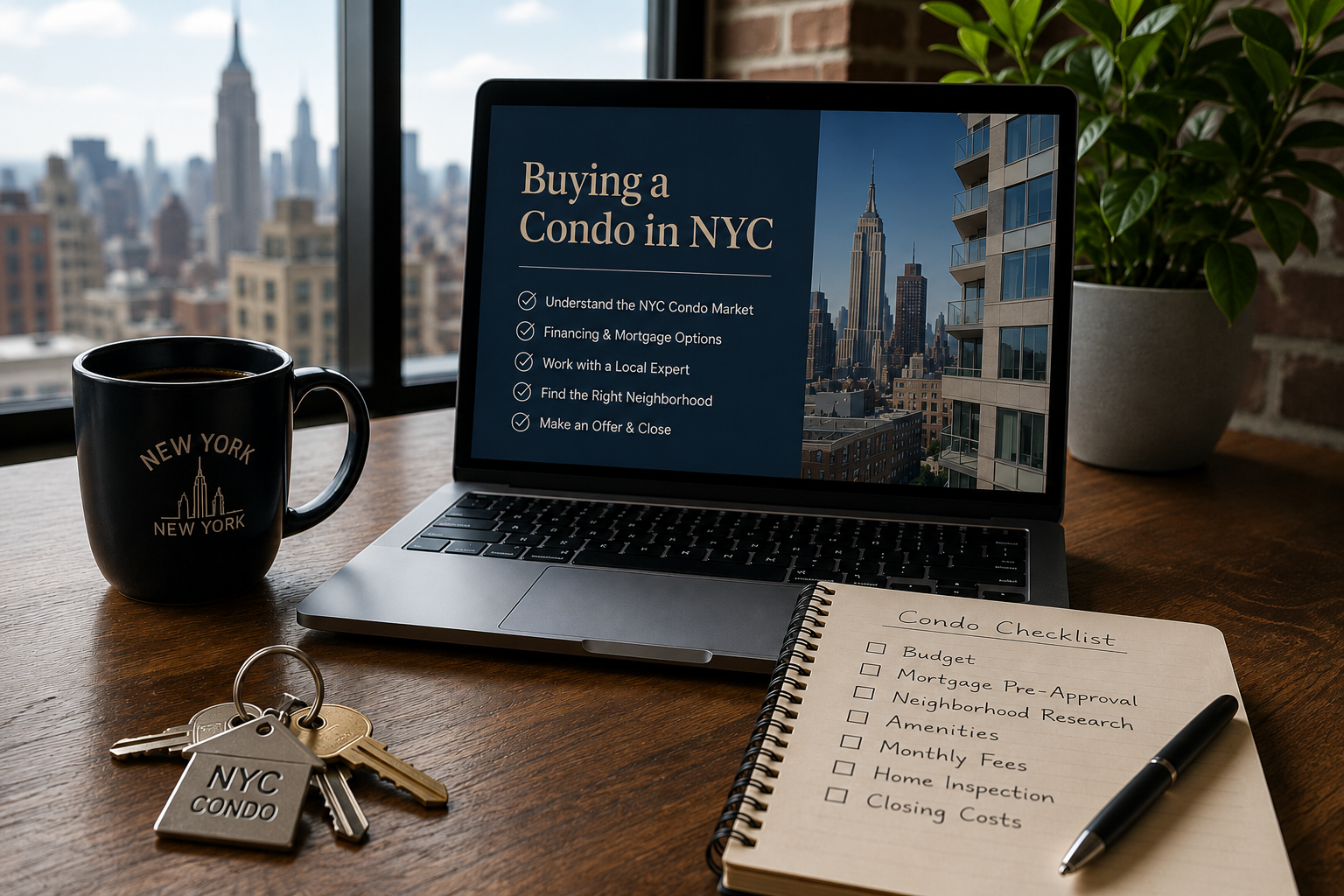
One of the first things I review when evaluating an Upper East Side apartment for a buyer is total monthly cost, not just the asking price. For a $1.5–2.5 million co-op, maintenance fees typically run $2,000–$5,000 per month depending on size, location, amenities, and building condition. Large assessments can add $30,000–$50,000 or more at once.
Buyer representation includes:
Property search and evaluation across all UES building types, from studios starting around $400,000 to townhouses averaging $10.5 million in H1 2026
Building financial analysis: audited statements, per-unit reserves, assessment history, underlying mortgage, operating margin, and maintenance trends
Board requirement assessment for co-ops, including down payment thresholds (typically 20–40%), debt-to-income expectations (25–30% of gross income), and post-closing liquidity requirements (12–24 months of carrying costs)
Negotiation strategy informed by specific building dynamics, seller motivations, and current competition; Stanley's purchase clients have averaged 3.2% below asking price
Get pre-approved for a mortgage before house-hunting. Stanley can connect you with lenders experienced in Upper East Side co-op and condo financing, where building-specific loan restrictions often apply.
Upper East Side Seller Representation
Before recommending an asking price, I analyze recent sales within the same building, competing listings in comparable buildings on the same avenue, and the specific characteristics that drive buyer demand for that property type and price range.
In Q2 2026, Upper East Side properties averaged roughly a 7% discount from list price. Well-priced properties in excellent condition sell closer to asking; those with deferred maintenance, high carrying costs, or aggressive pricing linger. Average time on market across the neighborhood runs 50–55 days, but Stanley's listings have averaged 28 days.
Seller services include:
Comparative market analysis using building-specific sales data rather than neighborhood-wide price-per-square-foot averages
Strategic pricing that accounts for floor level, views, exposure, renovation quality, and the monthly cost profile prospective buyers will evaluate
Professional staging and photography optimized for Upper East Side buyer expectations, including virtual tours, floor plans, and video walkthroughs
Marketing strategy targeting qualified buyers for the specific property type and price range, including outreach through New York's Residential Listing Service (RLS) and direct broker networks
One question I always discuss with sellers: timing. Spring and summer generate stronger buyer activity on the upper east side; fewer contracts close in winter. Listing strategically can mean the difference between multiple offers and months of sitting.
Upper East Side Property Valuation
Neighborhood-wide statistics offer a starting point, not a conclusion. The UES median home sale price in mid-2026 sits at approximately $1.4 million, up roughly 15% year-over-year, with Q2 2026 averaging about $2.39 million across 602 sales. But those numbers mask the range: condos averaged $2,129 per square foot while co-ops averaged $1,263 per square foot in the same period. Two apartments on the same floor of a pre-war building can diverge by 20–30% in price per square foot based on exposure and renovation status alone.
Stanley's valuation process includes:
Analysis of comparable sales within the same building and competing properties on the same avenue
Assessment of renovation quality, layout efficiency, natural light, and improvement potential
Evaluation of building financials, monthly carrying costs, and board policies that affect marketability
Market timing recommendations based on seasonal trends, interest rate conditions, and upcoming building projects
Upper East Side Co-op Expertise
The UES is heavily dominated by cooperative buildings, especially pre-war properties along Park Avenue, Fifth Avenue, and Madison Avenue. Expertise in co-op board processes is crucial for agents in the UES because a failed board application wastes months and can cost a buyer their deposit on a new home.
Many buyers focus on the apartment but underestimate the importance of the building's cooperative corporation. Stanley's co-op services include:
Board package preparation: assembling REBNY financial statements, two to three years of tax returns, pay stubs, brokerage and bank statements, employer letters, personal and professional references, and any required gift letters or guarantor documentation
Financial qualification assessment: evaluating whether a buyer's profile meets the building's specific down payment requirements (20–40%+), debt-to-income targets (25–30%), and post-closing liquidity thresholds (12–24 months of total carrying costs)
Building financial analysis: reviewing audited financials, operating budgets, board minutes, reserve fund adequacy, and assessment history; buildings with large reserve shortfalls or pending façade repairs carry measurable risk
Resale considerations: evaluating sublet policies, flip taxes, alteration restrictions, sponsor control, and how these factors affect future sale value and buyer pool size
Membership in the Real Estate Board of New York facilitates co-broking and commission sharing, giving Stanley's buyers access to the full inventory of listed properties across the city. A well-connected broker may also offer access to off-market opportunities before they enter the public market.
How Working with an Upper East Side Realtor Works
Every engagement starts with a detailed consultation to understand your goals, timeline, and the specific property types or buildings that match your criteria.
Initial Consultation and Market Assessment
For buyers, this means defining your budget (including total monthly cost, not just purchase price), preferred neighborhoods within the UES, building type preferences, and non-negotiable requirements. For sellers, it means reviewing your property's position in the current market, identifying the likely buyer profile, and establishing realistic pricing expectations based on recent closed sales rather than aspirational listing prices.
Property Search or Marketing Strategy
Buyers receive a targeted search filtered by building type, financial requirements, location, and lifestyle priorities. Stanley evaluates each property's building financials, board policies, and physical condition before recommending a showing. Visit open houses to gather information on properties, but rely on your broker's analysis of the building behind the apartment.
Sellers receive a preparation plan that may include targeted improvements (paint, flooring, lighting, hardware), professional staging, and a marketing timeline. Professional marketing strategies are essential for selling properties in the UES; the buyer pool for a $1.2 million Yorkville condo differs from the pool for a $6 million Park Avenue co-op, and the outreach strategy must reflect that.
Negotiation and Transaction Management
Contract negotiation on the upper east side accounts for building-specific factors: board approval timelines, financing contingencies that vary by co-op policy, and competitive dynamics that shift by the week. For co-ops, Stanley manages the entire board application process from document assembly through interview preparation. Communications style and quick response times are crucial in real estate transactions, and Stanley's team maintains same-day responsiveness throughout every transaction phase.
Upper East Side Real Estate Results
28 days average on market for Stanley's seller listings, compared to 50–55 days neighborhood average
98.5% of asking price achieved for seller clients in 2025–2026
3.2% average savings below asking for purchase clients
95% co-op board approval rate across UES buildings
Q2 2026 context: UES total sales volume reached approximately $1.44 billion across 602 transactions, up 16% year-over-year
Upper East Side Real Estate by Area
The Upper East Side has distinct submarkets that vary in prestige, accessibility, housing stock, and price. Understanding these differences is central to any buying or selling decision.
Carnegie Hill (90th to 96th Street, Fifth Avenue to Lexington Avenue) Known for elegant pre-war co-ops with large floor plans, high ceilings, and architectural detail. Townhouses here are among the most sought-after in the city. Luxury condos are less common but carry a premium where they exist. Proximity to the Solomon R. Guggenheim Museum and the upper reaches of Museum Mile supports buyer demand. Families are drawn to the area for its residential character and school options.
Lenox Hill (60th to 77th Street, Fifth Avenue to the East River) A diverse mix of pre-war and post-war buildings with stronger condo inventory than Carnegie Hill. Proximity to the Metropolitan Museum of Art, world-class fine dining, and upscale shopping along Madison Avenue drives demand. More real estate activity from medical professionals given the hospital corridor. Pricing varies widely by block and avenue.
Yorkville (77th to 96th Street, Lexington Avenue to the East River) The best value within the Upper East Side. Newer condos with modern amenities, East River views, and Second Avenue Subway access appeal to buyers interested in the UES lifestyle at a lower price per square foot than avenues closer to Central Park. This area has seen growing buyer interest, and new development condos continue to attract both owner-occupants and investors.
Fifth Avenue Corridor (Central Park East, 59th to 96th Street) The most prestigious address on the upper east side. Units with direct park exposure command premiums of 20–50% above equivalent units east of Park Avenue. Price per square foot in luxury buildings here regularly exceeds $2,000. Properties in desirable locations along Fifth Avenue tend to hold their value well across market cycles.
Park Avenue Gold Coast (59th to 96th Street) Grand pre-war co-ops with white-glove service, doormen, and large classic layouts. Park Avenue addresses carry prestige, though exposure is less dramatic than Fifth Avenue's Central Park views. Buildings here tend to have strict board requirements and the highest financial thresholds for prospective buyers.
Madison Avenue District (59th to 96th Street) A step east of Park Avenue in pricing but still synonymous with quality and wealth. More variety in building type and price point. Buyers here often trade proximity to Central Park for more space or lower monthly costs while remaining in a premium neighborhood.
The neighborhood is known for its cultural institutions and fine dining; Museum Mile is a key cultural highlight that influences buyer demand along Fifth Avenue and the blocks surrounding it. Central Park is a major recreational area that adds measurable value to every property with proximity or views. Upper East Side offers pre-war co-ops and modern condos, luxury townhouses and historic apartments, and the right choice depends on your priorities, financial profile, and long-term plan.
Frequently Asked Questions About Upper East Side Real Estate
How much should I expect to pay in monthly costs for an Upper East Side co-op?
Monthly maintenance for a UES co-op typically includes property taxes and common charges combined into one payment. For a $1.5–2.5 million apartment, expect $2,000–$5,000 per month depending on apartment size, building location, amenities (doorman, gym, roof deck, storage), and the building's financial condition. Pre-war buildings with older mechanical systems, deferred boiler or façade repairs, or underfunded reserves tend to carry higher maintenance and greater risk of special assessments. Always review the building's audited financial statements and recent board minutes before making an offer.
What are the typical co-op board requirements for Upper East Side buildings?
Most UES co-ops require a minimum down payment of 20–25%, with the most prestigious buildings expecting 30–40% or more. Boards evaluate total debt-to-income ratio, targeting 25–30% of gross income when combining mortgage, maintenance, and all other obligations. Post-closing liquidity requirements typically range from 12 to 24 months of total carrying costs in cash or securities. The board package includes REBNY financial statements, two to three years of tax returns, recent pay stubs, bank and brokerage statements, an employer letter, and personal references. Some elite buildings require liquidity well above standard thresholds. Stanley's 95% board approval rate reflects careful financial pre-qualification and package preparation before submission.
How do Upper East Side property values compare between different avenues?
Fifth Avenue units with Central Park exposure command the highest prices, typically 20–50% above equivalent apartments east of Park Avenue, depending on floor level and views. Park Avenue co-ops are the next tier in prestige, with large classic layouts and white-glove service. Madison and Lexington Avenues offer lower price per square foot while maintaining an upscale address. Yorkville, east of Lexington toward the East River, provides the most competitive pricing in the UES. In mid-2026, the overall UES median sale price sits around $1.4 million, but this number is nearly meaningless for an individual property decision. A two-bedroom on a high floor of a Fifth Avenue condo and a two-bedroom in a walkup east of Third Avenue occupy entirely different markets.
What's the difference between pre-war and newer Upper East Side buildings?
Pre-war buildings (generally constructed before 1940) typically feature higher ceilings, larger room proportions, architectural detail (moldings, herringbone floors, wood-burning fireplaces), and thicker walls. They also tend to carry higher maintenance costs, have older mechanical and plumbing systems, and face more frequent capital projects. Newer buildings offer modern layouts, efficient HVAC, better insulation, contemporary amenities (fitness centers, children's playrooms, rooftop terraces), and more flexible ownership rules. Condos are more common in newer construction; co-ops dominate the pre-war stock. Consider future resale value when buying a home: pre-war charm appeals to a specific buyer, while newer buildings attract buyers who prioritize convenience, amenities, and lower maintenance risk.
How long does it typically take to sell an Upper East Side property?
Average days on market across the UES runs 50–55 days, but this varies by property type, condition, and pricing accuracy. Well-priced condos in desirable buildings with strong amenities can sell in under 30 days. Co-ops with demanding board requirements, high maintenance, or properties needing renovation may take 75–90 days or longer. Stanley's listings have averaged 28 days on market, reflecting strategic pricing, professional presentation, and targeted marketing to qualified buyers. Sellers who overprice by more than 5% typically see their listing sit, accumulate days on market, and ultimately sell at a steeper discount than if priced correctly from the start.
What commission should I expect when selling on the Upper East Side?
Agents typically earn 5% to 6% of the home sale price. Agents usually split commissions with the buyer's agent, meaning the seller's broker and the buyer's broker each receive a portion. Real estate agents cannot manage their own businesses without a broker, so every agent operates under a licensed brokerage. The commission structure, marketing investment, and negotiation results should all factor into your broker selection. Real estate transactions in the UES require knowledge of building finances and board requirements that goes well beyond what a consumer's personal online search can provide.
Start Your Upper East Side Real Estate Journey
Whether you're buying your first Upper East Side co-op, selling a Park Avenue classic six, or evaluating a Yorkville condo purchase, the right Upper East Side realtor makes the difference between a smooth transaction and a costly mistake. Stanley Montfort provides market analysis, property valuation, negotiation, and transaction management grounded in 15+ years of UES-specific experience.
Phone: 1-646-970-1078 Email:[email protected] Address: 8 West 126th Street, New York NY 10027
Want the full market report for Upper East Side?
We want to ensure that you have all the information needed to make the best decisions when it comes to your home goals. When you enter your info below you will get instant access to the area's latest market report, complete with sales and demographic trends.
Local News & Advice
Read helpful resources and articles related to the area.
Upper West Side Townhouse Q2 2024 Market Report
On the Upper West Side, we observed a distinct trend that diverges from the citywide patterns. Specifically, the…

Harlem Brownstone Q2 2024 Market Report
The Harlem brownstone market has seen an increase in sales activity since this time last year. In Q2…

Discover Your Dream Home: Explore Apartments for Sale on the …
Are you searching for your dream home in one of New York City’s most sought-after neighborhoods? Look no…