
NYC 2 Family Homes for Sale — Find the Right Property with Confidence
We’ll help you make a smart two-family home purchase by maximizing rental income potential while avoiding costly maintenance, legal, and building compliance issues.
SMOOTH TRANSACTION
With limited risk throughout the buying process.
NO PRESSURE
No pressure to overpay or purchase within a specific timeframe.
ONGOING SUPPORT
A dedicated team that remains available even after the transaction is complete.
2 Family House for Sale NYC: Your Complete Buyer's Guide
If you're searching for a 2 family house for sale in NYC, you're not just buying a home-you're evaluating an income-producing asset in one of the most complex real estate markets in the country. The difference between a smart purchase and a costly mistake often comes down to understanding legal configuration, realistic rental income, financing options, and the dozens of details that don't show up in a listing photo. I'm Stanley Montfort, a NYC buyer's agent specializing in multifamily properties, and this guide walks you through everything I tell my clients before they make an offer on a two-family house anywhere in the five boroughs.
Why NYC Buyers Trust Stanley Montfort
When you're making what is often a $750,000 to $1,000,000+ purchase that doubles as both your residence and your investment portfolio, you need an agent who understands both sides of that equation.
Specialized expertise in NYC two-family house transactions across all five boroughs
Deep knowledge of NYC zoning laws, Certificate of Occupancy requirements, and building permit history - the details that determine whether a property is legally what it claims to be
Rapid property evaluations with thorough market analysis, so you can move confidently in a competitive market
Proven track record helping first-time buyers, owner-occupants, and investors navigate multifamily purchases from initial search through closing
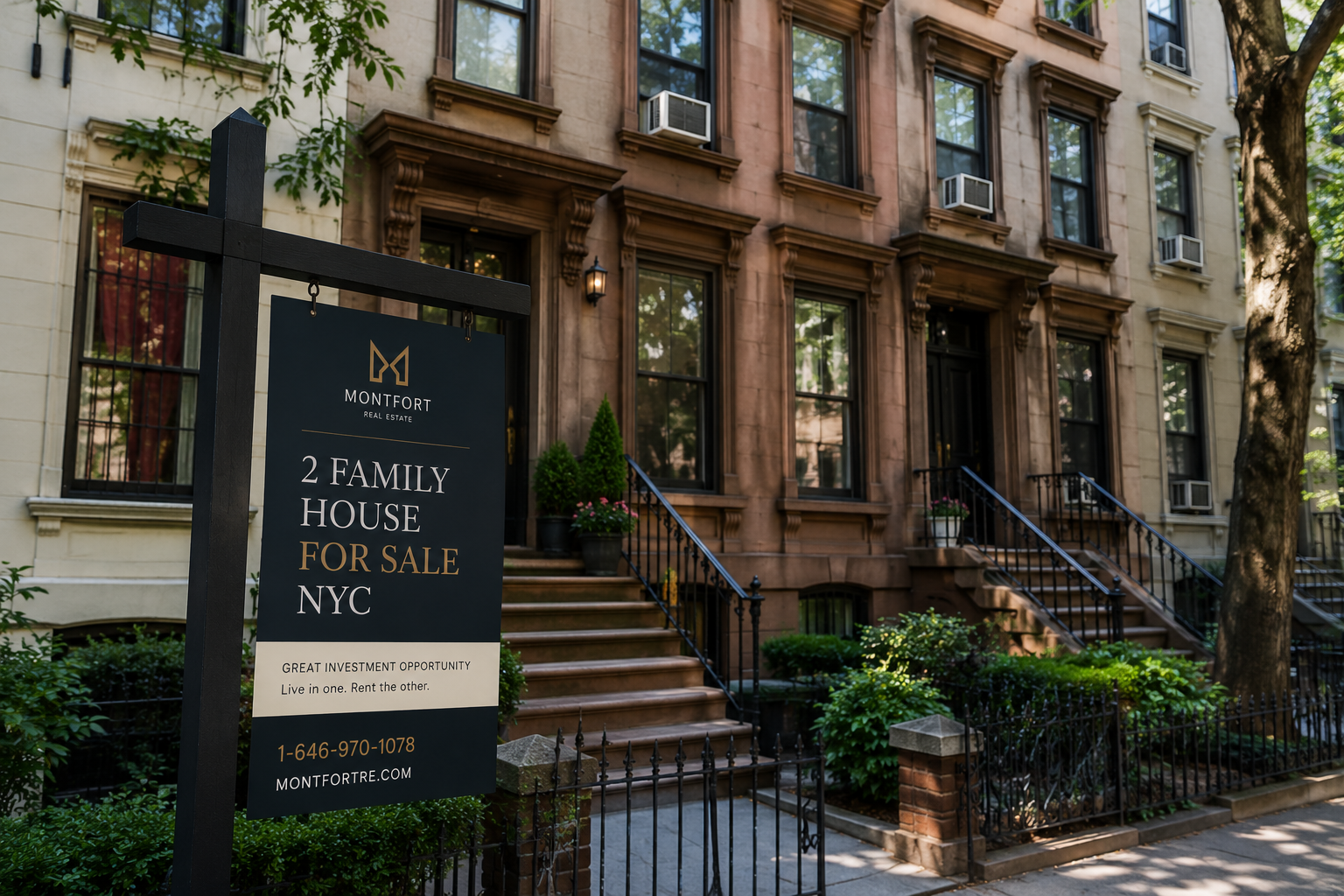
Why Choose Stanley Montfort for Your 2 Family House Purchase
One of the first things I tell buyers is that purchasing a two-family house requires a fundamentally different evaluation process than buying a single-family home. You're analyzing residential appeal and investment performance simultaneously, and most listing agents aren't equipped to help you with both.
Working with an experienced Multifamily Real Estate Agent can help you evaluate both the property's residential appeal and its long-term investment performance.
Investment analysis built into every showing: I evaluate cap rates, realistic rental income, and operating expenses before we even discuss making an offer - so you understand the financial picture from day one
Legal verification expertise: I review Certificate of Occupancy records, building permits, and alteration history to confirm that every unit is legally configured before you commit
Neighborhood rental demand knowledge: Understanding what tenants actually pay - and how quickly units rent - in specific NYC neighborhoods is essential to projecting your real return
Strategic guidance for your situation: Whether you plan to live in one unit and rent the other, or purchase purely as an investment, the financing, tax implications, and property evaluation criteria are different, and I tailor my approach accordingly
What Qualifies as a Legal 2 Family House in NYC
Many buyers assume that if a property is listed as a two-family home, it must be legally configured that way. That assumption has cost people tens of thousands of dollars.
According to NYC zoning and building codes, a legal two-family dwelling is a building containing no more than two dwelling units, each providing independent living facilities - including separate cooking, sanitary, and sleeping space. But the listing description doesn't make it legal. The Certificate of Occupancy does.
Certificate of Occupancy Requirements
A CO confirms that a building complies with the NYC Building Code, zoning resolution, plumbing, fire safety, and electrical standards. One question I always encourage clients to ask before scheduling a showing: Does this property have a valid Certificate of Occupancy that matches its current use as a two-family dwelling?
Buildings constructed before 1938 may be exempt from requiring a CO but can seek a Letter of No Objection to confirm lawful use. Any building that underwent major alteration or conversion after that date likely needs an amended or new CO. I always pull records from the DOB's Buildings Information System (BIS) and DOB NOW public portal to verify.
Zoning Compliance and Unit Configuration
In certain zoning districts - such as R3A, R3X, R4A, and R4-1 - two-family residences must follow specific layout rules. For example, at least 75% of the area of one unit must be directly above or below the other. Setback requirements, lot width minimums, and floor area ratios all vary by district.
A mistake I frequently see buyers make is falling in love with a property before confirming it sits in a zone that permits two-family use. Always verify the zoning district and confirm that the physical layout matches what the zoning resolution requires.
Building Permits and Alteration History
Unpermitted alterations - adding a kitchen, subdividing rooms, converting a basement - can break a property's legal status entirely. I review DOB permit history for every property my clients consider, checking for open violations, mismatched planned versus actual use, and any alteration work that was never signed off.
Common Disqualifiers
The most common issues I encounter that disqualify properties as legal two-family homes include:
Basement or cellar units without proper permits, egress windows, or ceiling height
Kitchens or bathrooms added without building permits
Properties listed as two-family but with a CO for single-family use
Open DOB violations that must be resolved before sale or financing
Units that don't meet fire safety and egress requirements
Benefits of Owning a 2 Family Property in NYC
When I walk clients through the advantages of a two-family purchase, the conversation always comes back to one core idea: you're building wealth while living in your investment.
Living in One Unit While Generating Rental Income
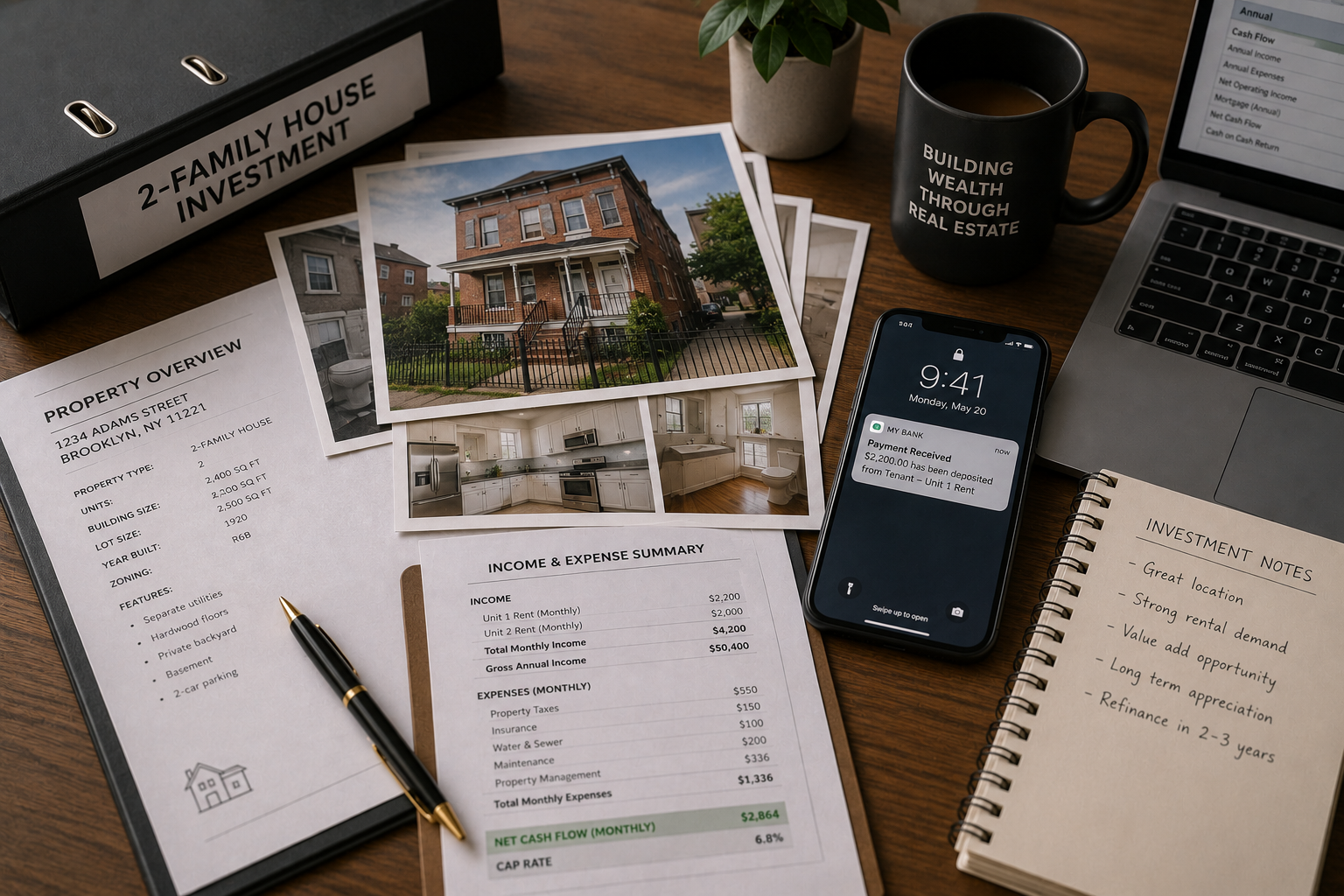
This is the strategy that makes two-family houses so appealing to NYC buyers. You occupy one unit and rent the other, using that rental income to offset your mortgage, taxes, and insurance. In Queens neighborhoods like Ozone Park and Richmond Hill, average rental income per unit runs approximately $2,000–$2,600/month depending on size and condition. That income can dramatically reduce your effective housing cost.
Long-Term Investment and Appreciation
NYC real estate has historically appreciated over time, and two-family houses in emerging neighborhoods offer both current income and future value growth. You're building equity in two units rather than one, and the property's income-producing nature makes it attractive to future buyers as well.
Tax Advantages
Property owners can deduct mortgage interest, property taxes, insurance premiums, repair costs, and depreciation on the rental portion of the property. Capital improvements are handled differently - they're depreciated over time rather than deducted immediately - so understanding the distinction matters when budgeting renovations.
Equity Building
Every mortgage payment builds equity across the entire property, while your tenant's rent helps cover that payment. Over a 10- to 15-year hold period, this combination of appreciation, principal reduction, and rental income can produce significant wealth - without requiring a separate investment property purchase.
The 2 Family House Buying Process
Step 1: Initial Consultation and Property Search
Before looking at a single listing, I sit down with every client to understand their goals. Are you planning to owner-occupy? Is this purely an investment? What neighborhoods align with your budget and lifestyle? These answers shape everything from financing strategy to search criteria.
Determining investment goals and owner-occupancy plans - this single decision affects your down payment, interest rate, loan qualification, and tax treatment
Getting pre-approved for multifamily financing - lenders treat two-family purchases differently than single-family, so working with a lender experienced in NYC multifamily is essential
Establishing search criteria - neighborhood, property condition, rental income potential, proximity to transit, and school districts all factor in
Step 2: Property Evaluation and Due Diligence
This is where most of my value as a buyer's agent shows up. When evaluating a two-family house, I'm looking at far more than finishes and floor plans.
Comprehensive property inspection - structural integrity, roof condition, plumbing age, electrical capacity, HVAC systems, and foundation assessment. For older two-family houses, hidden structural or systems issues can lead to large unbudgeted repair costs
Rental income analysis - I pull comparable rents in the immediate area, review current lease agreements, and project realistic vacancy rates. Many buyers assume the seller's quoted rent is achievable long-term without verifying market conditions
Tenant occupancy review - existing leases, tenant payment history, and lease transfer procedures. Understanding what you're inheriting matters
Deferred maintenance assessment - major capital improvements like roof replacement, plumbing upgrades, or electrical panel replacement can cost $15,000–$50,000+. I help clients budget for these before making an offer
Operating expense verification - real property taxes (approximately 0.88% to 1.2% of assessed value in many boroughs), insurance, utility splitting arrangements, and maintenance reserves
Step 3: Offer Strategy and Negotiation
Before making an offer, I run a complete market analysis comparing the property against recent two-family house sales in the same neighborhood. But I also evaluate investment metrics that most agents overlook:
Cap rate calculation - in Queens two-family homes, cap rates generally range from 5–8% before accounting for vacancy and major repairs
Price per unit and price per square foot comparisons against local inventory
Strategic offer positioning that accounts for property condition, necessary repairs, and current tenant situation
Negotiating repair credits, closing cost contributions, and contingency terms that protect your investment
Step 4: Contract to Closing
Once we have a signed contract, the process involves coordinating multiple parties - and catching issues before they become problems.
Attorney review and contract modifications - your real estate attorney reviews all terms and negotiates modifications during the review period
Final inspections and walk-through - confirming the property's condition matches what was agreed upon
Lender coordination - ensuring appraisals, title searches, and underwriting proceed on schedule
Closing preparation - reviewing the closing disclosure, confirming all financial figures, and preparing for property management responsibilities from day one
Financing Considerations for 2 Family Houses
Financing a two-family house in NYC involves options that many buyers don't know exist - and pitfalls that can cost thousands if you choose the wrong loan product.
Owner-Occupied Financing
If you plan to live in one unit, you gain access to significantly better financing terms:
FHA 203(b) loans allow purchasing a two-unit owner-occupied property with as little as 3.5% down if your credit score is 580 or higher. For a credit score between 500–579, 10% down is required. The property must pass FHA appraisal standards for safety, soundness, and security
SONYMA Low Interest Rate Program offers competitive fixed-rate 30-year mortgages for low- and moderate-income first-time buyers, financing up to 97% LTV for one- to four-family dwellings including existing two-family homes older than five years. Their Down Payment Assistance Loan (DPAL) can serve as subordinate financing
NYC's HomeFirst Down Payment Assistance Program provides up to $100,000 in forgivable loans toward down payment or closing costs for first-time buyers purchasing 1-4 family homes in NYC. You must meet income eligibility (≤120% AMI), owner-occupy the property, and complete homebuyer counseling. HUD purchase price limits for existing two-family homes as of December 2025 include approximately $936,000 in Brooklyn, $894,000 in Queens, and $846,000 in the Bronx
Investment Property Financing
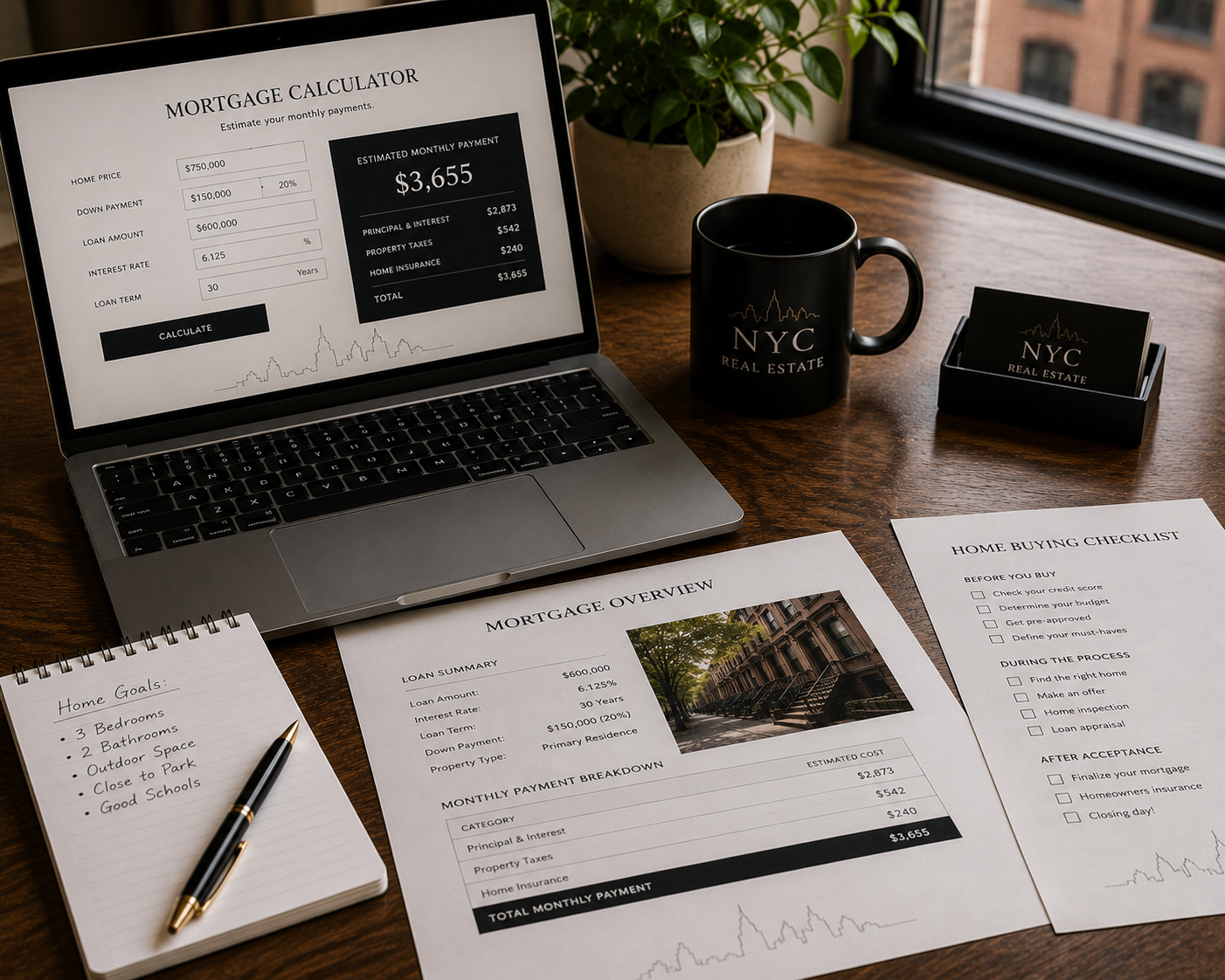
Conventional loans for two-family investment properties (not owner-occupied) typically require 15–25% down, carry higher interest rates, have stricter credit requirements, and impose higher reserve requirements. The difference is substantial - on an $850,000 purchase, that's approximately $127,500–$212,500 down versus roughly $29,750 with FHA owner-occupied financing.
Using Rental Income for Qualification
Most lenders allow projected rental income from the second unit to help you qualify, though they typically count only 75% of the projected rent to account for vacancy and collection loss. I work with lenders experienced in NYC multifamily financing who understand how to properly structure these applications.
Real-World Financing Example
Consider buying a legal two-family house in Ozone Park for $850,000 using FHA with 3.5% down - approximately $29,750 in down payment. You live in one unit and rent the other for approximately $2,200/month. That rental income offsets a significant portion of your mortgage, taxes, and insurance. With conventional investment financing instead, you'd need $127,500–$212,500 down for the same property - making the FHA owner-occupied approach far more accessible for many buyers.
NYC Neighborhoods We Serve
Two-family house inventory varies dramatically across NYC's boroughs. Here's where I help buyers find opportunities:
Brooklyn - Bedford-Stuyvesant, Crown Heights, Sunset Park, Bay Ridge, East Flatbush, and Canarsie offer solid two-family stock, though prices are generally higher than outer borough alternatives, which can compress cap rates
Queens - The largest inventory of legal two-family houses among the boroughs. Neighborhoods like Ozone Park, Richmond Hill, Jackson Heights, Astoria, Elmhurst, and Long Island City provide a range of price points. Many two-family houses in Queens fall between approximately $750,000 and $1,100,000
Bronx - Fordham, University Heights, Tremont, Morris Park, and Throggs Neck offer more affordable entry points with strong rental demand
Manhattan - Rare opportunities exist in upper Manhattan and fringe neighborhoods, typically at premium prices
Staten Island - Multiple communities with two-family house inventory at lower price points, though rental demand varies more by micro-location
Each neighborhood has its own rental demand dynamics, tenant profiles, and appreciation trajectories. I provide clients with detailed neighborhood comparisons based on current sale prices, achievable rents, vacancy rates, and investment metrics.
Common Buyer Mistakes to Avoid
After years of guiding buyers through two-family house purchases, I've seen the same mistakes repeatedly. Here are the ones that cost the most:
Assuming all 2-family houses are legally configured. Many properties show tax or Department of Finance classification as multi-family but may only be legal for fewer units. The mismatch between tax class and Certificate of Occupancy is one of the most common - and expensive - surprises buyers face. Always verify legal status independently through DOB records.
Overestimating rental income without market research. Listing agents often quote aspirational rents. I reference actual comparable rental data in the immediate area, factoring in unit condition, size, and current market demand, to project realistic income.
Underestimating maintenance and management responsibilities. As a rule of thumb, budget 1–3% of property value annually for maintenance and repairs. For an $850,000 property, that's $8,500–$25,500 per year. Older two-family houses frequently need major capital improvements - roof, plumbing, electrical, HVAC - within the first few years of ownership.
Failing to account for vacancy and turnover costs. Rental income is never constant. Budget for at least one month of vacancy per year, plus turnover costs including painting, cleaning, and minor repairs between tenants.
Not reviewing building permits and alteration history. Unpermitted work doesn't just create legal risk - it can make the property unfinanceable. I've seen deals collapse because the server of DOB records revealed open violations that the seller never disclosed.
Ignoring the ADU regulatory landscape. NYC added legal framework through LL126 and LL127 of 2024 allowing Accessory Dwelling Units on lots with one- or two-family homes. Adding an ADU to a two-family home may trigger reclassification as R-2 and subject the building to Multiple Dwelling Law. Understanding these rules before purchasing can affect your long-term plans.
What Our Clients Say
Client testimonials will be added here from verified two-family house buyers. Each testimonial will include the client's neighborhood and purchase type to provide local reference and relevance.
If you've worked with Stanley Montfort on a two-family house purchase and would like to share your experience, please request to submit your testimonial.
Frequently Asked Questions
How much can I expect to earn from rental income?
Rental income varies significantly by neighborhood, unit size, condition, and market demand. In Queens, average rents for two-family house units currently range from approximately $2,000–$2,600/month. Brooklyn units in comparable neighborhoods may command higher rents but typically come with higher purchase prices. I provide every client with a detailed rental income analysis using current market data - not projections based on best-case scenarios - so you can access realistic numbers before making a decision.
What are the typical maintenance costs for a 2-family house?
Operating expenses include property taxes (approximately 0.88%–1.2% of assessed value in many boroughs), homeowner's insurance, utilities (depending on how metering is configured), and ongoing maintenance. Budget 1–3% of property value annually for repairs and maintenance. Major systems - roof, boiler, plumbing, electrical - can require $10,000–$50,000+ when replacement is needed. If you're financing with FHA, mortgage insurance premiums add ongoing monthly cost as well.
Can I live in one unit while renting the other immediately?
Yes, and this is the most common strategy for two-family house buyers. FHA and SONYMA financing require owner-occupancy, meaning you must live in one unit as your primary residence. The second unit can be rented immediately. If the property has existing tenants, you'll need to review current lease agreements - tenants generally have rights to remain through the end of their lease term. I help clients navigate tenant transition during every sale.
How do I verify a property is legally configured as a 2-family house?
Start by requesting the property's Certificate of Occupancy through the NYC Department of Buildings website or BIS portal. The CO should explicitly state the building's approved use and number of dwelling units. Cross-reference this with the physical layout during inspection. Check for open violations, permit history, and any alteration applications. Buildings built before 1938 may not have a CO but can obtain a Letter of No Objection. This verification is standard in every property evaluation I conduct.
What should I look for during property inspections?
Beyond standard home inspection items, two-family house inspections should evaluate:
Separate utility meters - electrical, gas, and water metering affects how you allocate expenses between units
Legal unit configurations - each unit must have its own kitchen, bathroom, sleeping area, and proper egress
Structural systems - foundation condition, roof age, plumbing material and age, electrical panel capacity
Signs of unpermitted work - additional kitchens, converted basements or attics, sealed-off doorways
Fire safety compliance - smoke detectors, carbon monoxide detectors, fire-rated separations between units
Deferred maintenance indicators - water damage, outdated electrical, aging HVAC systems, deteriorating masonry
I attend every inspection with my clients and provide a reference checklist specific to two-family properties so nothing gets overlooked.
Start Your 2 Family House Search Today
Finding the right two-family house in NYC requires more than browsing a website - it requires an experienced buyer's agent who understands legal configuration, realistic investment analysis, neighborhood rental demand, and the dozens of details that separate a smart purchase from an expensive lesson.
I provide every client with strategic guidance from initial consultation through closing, ensuring you understand exactly what you're buying, what it will cost to operate, and what it can realistically earn before you sign a contract.
Phone: 1-646-970-1078 Email:[email protected] Address: 8 West 126th Street, New York NY 10027
Recent News & Realtor Advice
Stay in the loop on the latest events, news, & happenings in and around our community!
Upper West Side Townhouse Q2 2024 Market Report
On the Upper West Side, we observed a distinct trend that diverges from the citywide patterns. Speci…
Harlem Brownstone Q2 2024 Market Report
The Harlem brownstone market has seen an increase in sales activity since this time last year. In Q2…
Discover Your Dream Home: Explore Apartments for Sale on the Upper West Side
Are you searching for your dream home in one of New York City’s most sought-after neighborhoods? Loo…