
3 Family Houses for Sale in NYC — Expert Guidance for Homebuyers & Investors
We’ll help you find the right three-family property in NYC, so you can build equity, generate rental income, and avoid expensive surprises after closing.
SMOOTH TRANSACTION
With limited risk throughout the buying process.
NO PRESSURE
No pressure to overpay or purchase within a specific timeframe.
ONGOING SUPPORT
A dedicated team that remains available even after the transaction is complete.
3 Family House for Sale NYC: Complete Buyer's Guide
Why Buying a 3-Family House in NYC Requires Specialized Guidance
Purchasing a three-family house in New York City is one of the most rewarding real estate decisions you can make-and one of the most complex. You're not just buying a home. You're acquiring an income-producing property with three separate dwelling units, each with its own lease, its own tenants, its own set of maintenance demands, and its own legal requirements. The financial upside is real, but so are the risks if you don't know exactly what to look for before signing a contract.
A three-family house is fundamentally different from a single-family or two-family purchase. The operational responsibility is greater. The financing requirements change. The due diligence goes deeper. You're subject to NYC's tenant protection laws, zoning regulations, and building code requirements in ways that simply don't apply to smaller residential properties. Many buyers walk into a sale expecting it to feel like buying a house, and they're caught off guard when it starts to feel like buying a small business-because in many ways, that's exactly what it is.
I'm Stanley Montfort, a New York City buyer's agent who specializes in helping clients evaluate, negotiate, and purchase multifamily properties. My role isn't to sell you a property. It's to make sure you understand every dimension of what you're buying-the rental income potential, the operating costs, the legal compliance status, the condition of shared building systems, and the tenant situation-before you make an offer.
If you're searching for a three-family house for sale in NYC, I'd encourage you to schedule a consultation before you start touring properties. The information you gather before your first showing will shape the quality of every decision that follows.
Why NYC Buyers Trust Stanley Montfort
Experienced NYC buyer's agent with deep specialization in multifamily residential properties across all five boroughs
Proven track record of identifying Certificate of Occupancy discrepancies, unpermitted work, and zoning compliance issues before they become costly problems
Specialized knowledge of NYC building codes, rent regulation frameworks, and tenant protection laws that directly affect three-family house purchases
Strategic approach to financial analysis-evaluating each property based on realistic rental income, true operating expenses, and long-term capital improvement needs
Why Choose Stanley for Your 3-Family House Purchase
When buyers come to me looking for a three-family house, they're usually balancing two goals: finding a home they want to live in and making a sound investment. Those goals don't always point to the same property, and my job is to help you find the one where both align.
Expert rental income evaluation: I analyze each unit's income potential based on actual neighborhood comparables, not the seller's pro forma. Many buyers underestimate how much vacancy, rent regulation, and tenant turnover affect real numbers.
Comprehensive due diligence: One of the first things I review on every three-family property is the Certificate of Occupancy, the building's alteration history, and the status of every open permit and violation. A mistake I frequently see investors make is assuming a property is a legal three-family just because it has three kitchens.
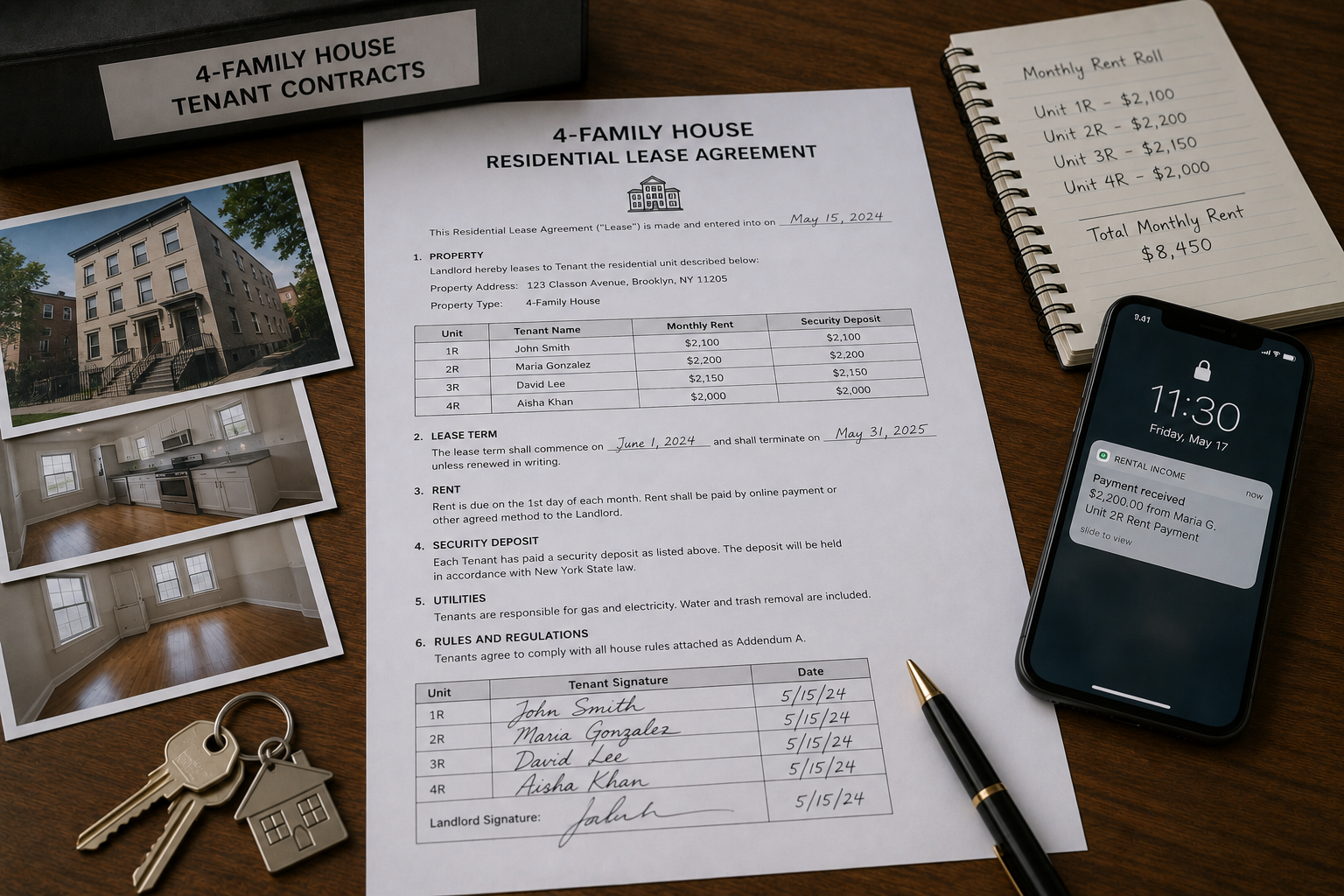
Tenant situation analysis: If the property is tenant-occupied, I dig into every lease-rent amounts, stabilization status, lease terms, security deposits-so you know exactly what you're inheriting before you're contractually obligated.
Strategic negotiation for multifamily: The leverage points in a three-family purchase are different from a single-family sale. Deferred maintenance, below-market rents, and regulatory compliance gaps all become negotiation tools when you know how to use them.
Post-purchase guidance: My relationship with clients doesn't end at closing. I help new multifamily owners plan for tenant transitions, capital improvements, and long-term property management.
Types of 3-Family Houses Available in NYC
Not every three-family house in this city is the same. The property type, legal status, occupancy situation, and financing implications vary widely depending on what you're looking at. Here's how to think about the major categories.
Legal Three-Family Houses
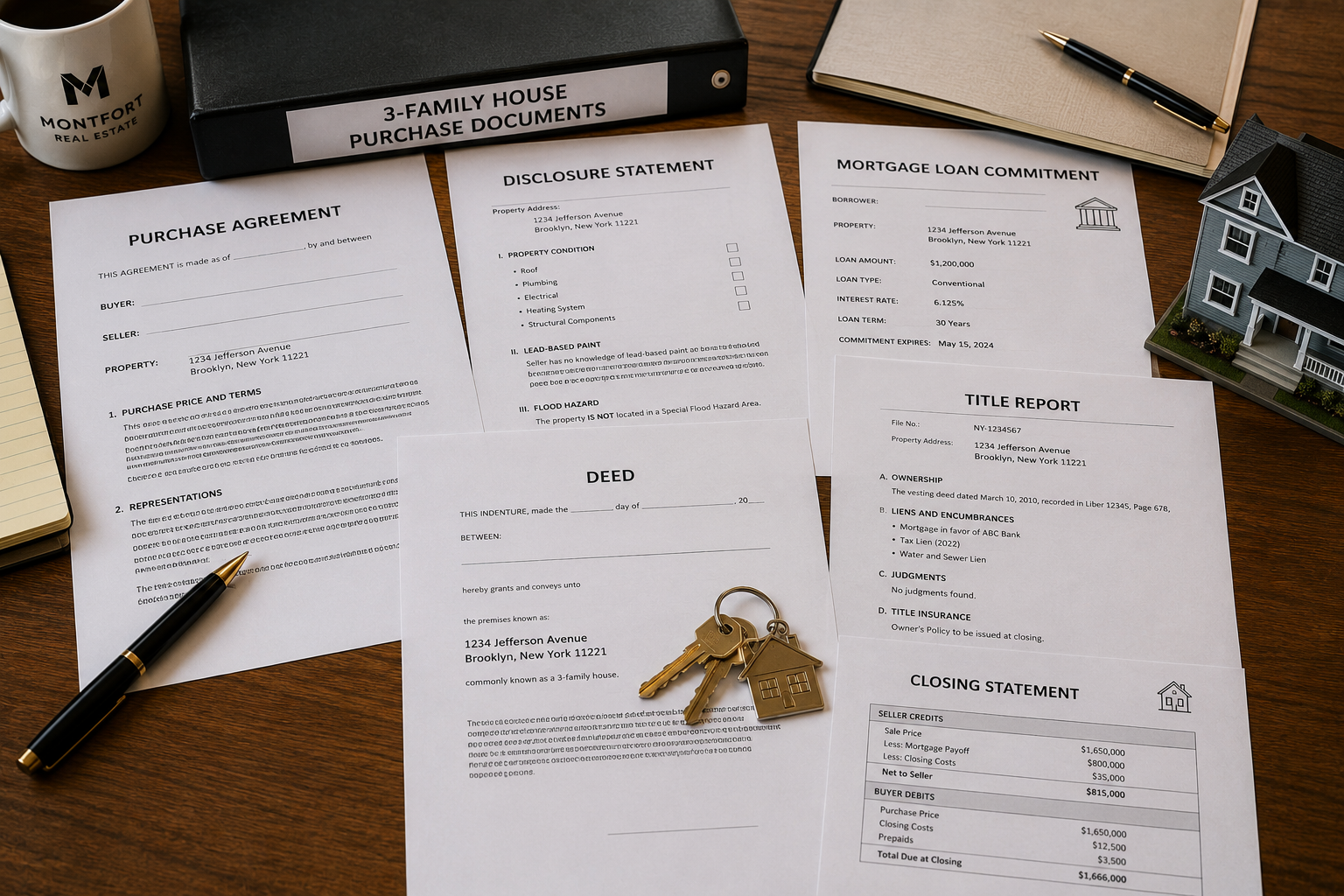
A property only qualifies as a legal three-family house if the Certificate of Occupancy (CO) explicitly lists three dwelling units. The CO is the single most important document in any multifamily purchase. It defines the number of units, the permitted use, the occupancy classification, and the means of egress.
Buildings constructed after 1938 are required to have a CO. Older buildings may be exempt if no modifications were made, but if any work changed the layout, use, or number of units, a CO or a Letter of No Objection becomes necessary.
One question I always encourage buyers to ask: Has any work been done on this property without permits? If the CO lists two units but the property is physically configured as three, you're looking at a building that may not be legally sellable as a three-family-and you could face fines, financing denial, and an inability to collect rent on the third unit. I always pull the full permit and alteration history through the NYC Department of Buildings before recommending any property to a client.
Owner-Occupied vs Investment Properties
If you plan to live in one of the three units, you're purchasing an owner-occupied multifamily property. This distinction matters enormously for financing. Owner-occupied buyers generally qualify for lower down payments (often 15–20%), more favorable interest rates, and access to loan programs like FHA financing, which permits up to four units for residential use.
If you're purchasing strictly as an investment, lenders shift their focus to the property's Debt Service Coverage Ratio (DSCR)-essentially, whether the rental income covers the mortgage payments with margin. Down payments for investment properties typically run 25–30%, and documentation requirements are heavier.
The tax implications differ as well. Owner-occupants may qualify for homestead exemptions and certain deductions that pure investors cannot access. Before making an offer, I always recommend sitting down with a CPA who understands NYC multifamily tax treatment.
Tenant-Occupied Properties
Many three-family houses come to market with tenants already in place. This can be an advantage-immediate rental income from day one-or a significant complication, depending on the lease terms and regulatory status.
When evaluating a tenant-occupied property, you need to understand whether each unit is rent-stabilized or market-rate. NYC has nearly 1 million rent-stabilized apartments. Rent-stabilized units are subject to annual rent increase limits set by the NYC Rent Guidelines Board. For leases beginning October 1, 2025 through September 30, 2026, the approved increases are 3% for one-year renewals and 4.5% for two-year renewals. For leases starting October 1, 2026 through September 30, 2027, the Board approved a rent freeze-0% for both one-year and two-year renewals.
The Housing Stability & Tenant Protection Act of 2019 (HSTPA) further tightened rules. It eliminated vacancy bonuses, restricted rent increases tied to Major Capital Improvements (MCIs) and Individual Apartment Improvements (IAIs), and made it harder to deregulate units. If any of the units in the property you're considering are stabilized, these limits directly affect your income projections.
Additionally, NYC's Good Cause Eviction law strengthens protections for tenants in non-regulated units, limiting rent increases to a "local rent standard" tied to inflation-currently approximately 8.79%.
How the 3-Family House Buying Process Works
Buying a three-family house in NYC isn't a casual search-it's a structured process that rewards preparation. Here's what to expect when we work together.
Initial Consultation and Property Search
Every engagement starts with a detailed conversation about your goals. Are you planning to live in one unit and rent two? Are you buying purely for investment? What neighborhoods are you targeting? What's your financing situation?
I help clients get pre-qualified for multifamily financing early, because the lending landscape for three-unit properties is different from what most buyers expect. We then narrow the search based on neighborhoods with strong rental demand, good transit access, and realistic appreciation potential-not based on marketing hype or speculative assumptions.
Property Evaluation and Due Diligence
This is where most three-family purchases are won or lost. When evaluating a property, I conduct a comprehensive review that goes far beyond a standard home inspection:
Building systems: Condition and remaining useful life of boilers, hot water systems, electrical panels, roofing, and the building facade. In NYC, Local Law 11 requires exterior wall inspections every five years-and facade repairs on older buildings can be extraordinarily expensive.
Rental income analysis: I run realistic projections based on comparable rents in the neighborhood, not the seller's optimistic numbers. I factor in vacancy allowances, collection losses, and the impact of any rent-regulated tenants.
Operating expenses: For multifamily properties in NYC, operating expenses (taxes, insurance, maintenance, utilities, management) typically consume 30–50% of gross rental income-and that's before capital expenditures. Many buyers underestimate this ratio dramatically.
Legal compliance: I verify the CO, check zoning to confirm three units are permitted on the lot, review all open permits and violations, and confirm that exits and egress meet code requirements.
Tenant review: I collect and analyze every existing lease-rent amount, lease term, stabilization status, security deposits, tenant history. A change in ownership doesn't erase tenant rights, and inheriting a problematic lease without understanding it is one of the most common mistakes I see.
Offer Strategy and Closing
Before making an offer on a three-family property, I develop a strategy based on everything the due diligence revealed. Deferred maintenance, below-market rents, open violations, and regulatory constraints all inform the offer price and terms.
For tenant-occupied properties, the offer terms often include specific provisions around lease assignments, security deposit transfers, and tenant notification requirements. The closing process involves coordination between attorneys, lenders, title companies, and sometimes the tenants themselves. I guide clients through every step so there are no surprises on closing day-or the day after.
Key Factors That Set Successful 3-Family House Buyers Apart
After helping clients purchase dozens of multifamily properties across New York City, I've noticed clear patterns that separate buyers who build wealth from those who end up frustrated.
They understand true operating costs. Your mortgage is only one line item. Property taxes, insurance premiums, utilities for common areas, routine maintenance, and management costs add up fast. Successful buyers budget for operating expenses at 30–50% of gross rental income-and they set aside reserves for capital improvements.
They project rental income conservatively. A mistake I frequently see investors make is using the seller's asking rents or "potential" rents as their baseline. Experienced buyers use actual neighborhood comparables, apply a vacancy allowance of 5–8%, and factor in the reality that rent-stabilized units may see a 0% increase in a given year.
They recognize deferred maintenance. That "turnkey" three-family house may have a boiler that's 25 years old, a roof that needs replacement within five years, and an electrical panel that can't support modern loads. These aren't minor details-they're five- and six-figure expenses that directly affect your return.
They plan for tenant management. Three units mean three sets of tenants, three leases, three potential maintenance requests at 2 AM. Successful buyers either have a realistic plan for self-management or budget for professional property management from day one.
What Our 3-Family House Clients Say
Client testimonials will be added here. Each testimonial will include the buyer's name, the neighborhood where they purchased, the property type, and specific ways that Stanley's guidance helped them navigate the complexities of their three-family house purchase.
Best NYC Neighborhoods for 3-Family Houses
The supply of legal three-family houses varies dramatically across the city. Understanding where to focus your search saves time and improves outcomes.
Brooklyn - Neighborhoods like Bushwick, Crown Heights, and Bed-Stuy have some of the highest concentrations of three-family houses in the city. Many are older brownstones or rowhouses, some converted from two-family configurations. These areas have seen strong rent growth, but buyers need to be especially vigilant about deferred capital costs-facade work, structural repairs, and outdated plumbing are common in this building stock.
Queens - Astoria, Sunnyside, and parts of Southeast Queens offer larger lots and more purpose-built three-unit houses. Rental demand is strong, particularly in areas with good subway access. Queens properties tend to have more manageable per-unit renovation costs compared to Brooklyn brownstones.
Bronx - Riverdale, Kingsbridge, and sections of the West Bronx offer earlier-stage investment opportunities. Property prices relative to rental income can be more favorable here, though buyers need to evaluate school quality, services, and neighborhood trajectory carefully.
Upper Manhattan - Legal three-family houses are rare in central Manhattan. In Harlem and Washington Heights, you'll find pre-war buildings that may be configured as three-unit properties, but many are technically apartment buildings rather than standalone houses. Always verify the CO and zoning classification.
One question I always encourage buyers to ask about any neighborhood: Is the rental demand here based on fundamentals-jobs, transit, schools-or on speculation? Properties in areas with strong employment access and good transportation tend to yield both stable occupancy and long-term appreciation.
Frequently Asked Questions
What financing options are available for 3-family houses?
Owner-occupied buyers can often secure conventional or FHA financing with down payments of 15–20%. FHA loans permit up to four units for residential use, making three-family houses eligible. Investment-only purchases typically require 25–30% down, and lenders focus heavily on the property's DSCR-usually requiring at least 1.15, meaning the net operating income must cover debt payments with a 15% margin.
NYC also offers specialized programs. HPD's Multifamily Housing Rehabilitation Loan Program (HRP) provides below-market loans and tax exemptions for existing multifamily rental buildings of three or more units, with loan terms up to 30 years and up to $50,000 per unit for rehabilitation. NYSERDA's clean energy financing programs can help subsidize energy retrofits, reducing long-term operating costs.
For buyers needing fast acquisition or renovation capital, hard money and bridge loans are available but carry significantly higher interest rates and shorter repayment terms. I generally recommend these only as a last resort or for experienced investors with a clear exit strategy.
How do I evaluate the rental income potential?
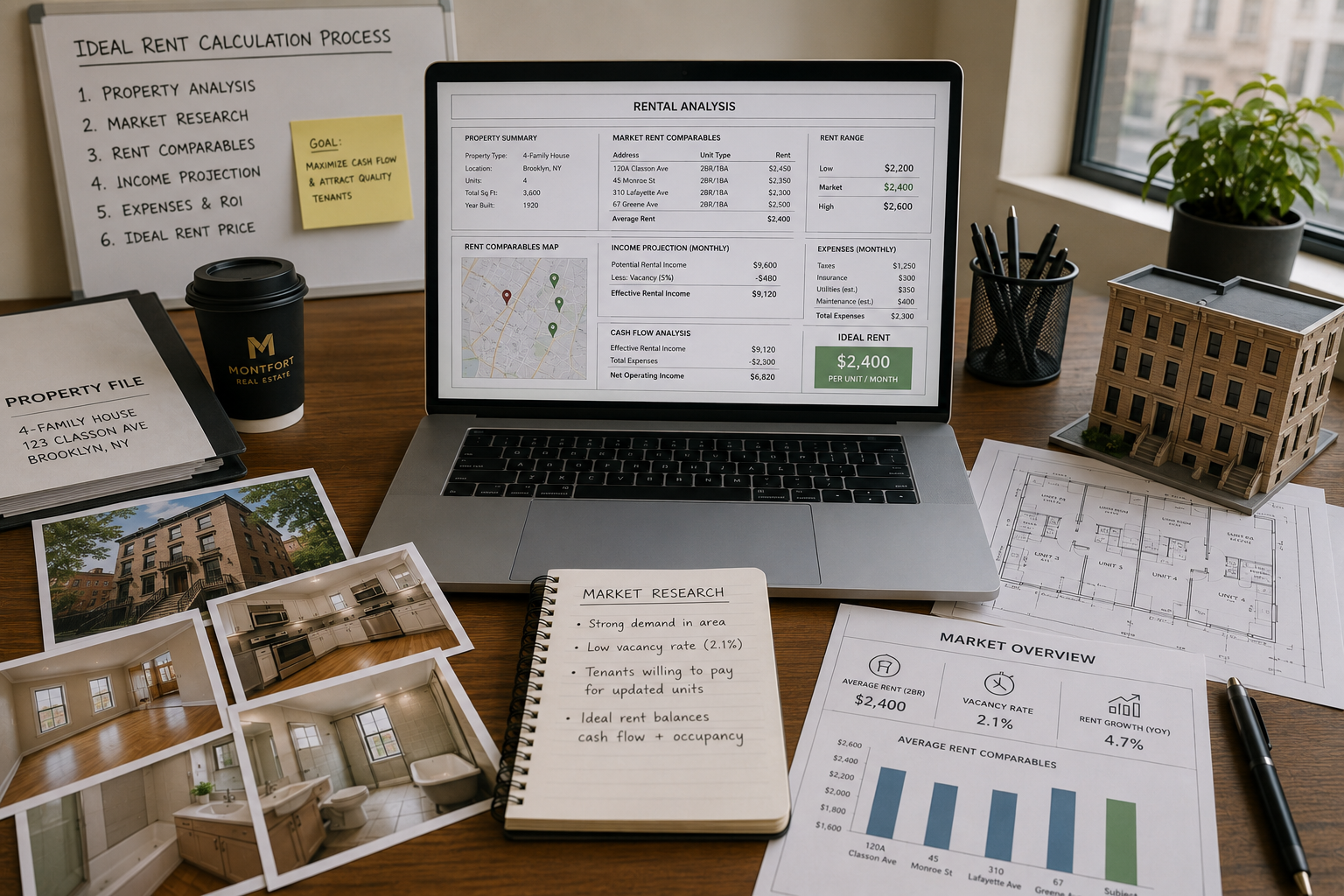
Start with actual market rents for comparable units in the same neighborhood-not what the seller says the units could rent for. Look at unit size, bedroom count, condition, and amenities. Then apply a realistic vacancy allowance (5–8% in most NYC neighborhoods) and a collection loss factor.
For rent-stabilized units, your income growth is capped by the Rent Guidelines Board's annual decisions. With a rent freeze approved for leases renewing between October 1, 2026 and September 30, 2027, projecting income growth on stabilized units requires particular caution.
Calculate your Net Operating Income (NOI) by subtracting all operating expenses from your effective gross income. Lenders and experienced investors use this number-not gross rent-to evaluate whether a property makes financial sense.
What are the common maintenance and operating costs?
For a three-family house in NYC, expect operating expenses to consume 30–50% of gross rental income. This includes:
Property taxes - based on assessed value; can increase substantially after a sale
Insurance - premiums for small multifamily dwellings are higher than single-family, especially in older buildings or those with claims history
Heating and hot water - boiler maintenance, fuel costs, and eventual replacement (a new boiler can cost $15,000–$30,000+)
Plumbing and electrical - aging systems in pre-war buildings require ongoing attention
Facade and roof - Local Law 11 compliance for exterior walls, plus roofing replacement every 20–25 years
Common area maintenance - hallway lighting, stairwell upkeep, shared entryway repairs
Management - whether self-managed or professional (typically 8–10% of gross rent for professional management)
Many buyers underestimate the impact of deferred maintenance. A building that looks good on the surface may be one winter away from a $40,000 boiler replacement or a $60,000 roof job.
How do I handle existing tenants during purchase?
In New York City, tenants have significant protections during property sales. Existing leases transfer to the new owner-you cannot terminate a lease simply because you purchased the building. Security deposits must be properly transferred and accounted for.
For rent-stabilized tenants, your obligations are even more defined. These tenants have the right to lease renewals, and you're subject to the same rent increase limits as the previous owner. The HSTPA eliminated vacancy bonuses and tightened deregulation rules, so don't assume you can raise rents to market rate when a stabilized tenant eventually moves out.
My recommendation: request copies of all leases, rent rolls, and tenant correspondence during due diligence-before you're under contract. Understanding who lives in the building, what they're paying, and what their rights are is not optional information. It's foundational to every financial projection you'll make.
Start Your 3-Family House Search with Stanley Montfort
Finding the right three-family house in New York City takes more than browsing listings on a website. It takes someone who knows how to evaluate the legal status, financial performance, physical condition, and tenant situation of every property you consider-and who will tell you honestly when a deal doesn't make sense.
If you're ready to begin a serious search for a three-family house in NYC, I'd welcome the opportunity to help you navigate this process with confidence. Every engagement starts with a detailed consultation to understand your goals, your financing position, and the neighborhoods and property types that match your criteria.
Phone: 1-646-970-1078 Email: [email protected] Address: 8 West 126th Street, New York NY 10027
Recent News & Realtor Advice
Stay in the loop on the latest events, news, & happenings in and around our community!
Upper West Side Townhouse Q2 2024 Market Report
On the Upper West Side, we observed a distinct trend that diverges from the citywide patterns. Speci…
Harlem Brownstone Q2 2024 Market Report
The Harlem brownstone market has seen an increase in sales activity since this time last year. In Q2…
Discover Your Dream Home: Explore Apartments for Sale on the Upper West Side
Are you searching for your dream home in one of New York City’s most sought-after neighborhoods? Loo…