
Upper West Side Co-Ops Realtor
Buying or selling a co-op on the Upper West Side requires more than finding the right apartment - it demands an experienced realtor who understands cooperative corporation financials, board approval requirements, and the building-by-building nuances that determine whether a transaction actually closes. With 319 co-ops for sale in Upper West Side right now and co-ops accounting for more transactions than condos across the neighborhood, the difference between a smooth closing and months of frustration often comes down to the guidance you receive before you ever submit an offer.
Stanley Montfort provides Upper West Side co-op buyer representation, listing services, valuation, board-package coordination, and transaction guidance for cooperative apartments across every major corridor in upper west side Manhattan - from Central Park West to Riverside Drive, Lincoln Square through the West 90s.
Why Upper West Side Clients Trust Stanley Montfort
Specialized experience in Manhattan cooperative transactions spanning pre-war and post-war buildings across the west side
Building-level knowledge of board requirements, financial standards, sublet policies, and financing restrictions across dozens of Upper West Side co-ops
Proven track record of successful board approvals and closings in buildings with rigorous buyer qualification standards
Professional credentials verified through years of active practice in Manhattan NY real estate
Why Choose Stanley Montfort as Your Upper West Side Co-Op Realtor
Finding an Upper West Side co-op realtor who can evaluate both the apartment and the cooperative corporation is essential. Many buyers focus on apartment finishes before reviewing whether their financial profile fits the building's requirements. Many sellers price based on comparable sales without accounting for how their building's policies narrow the realistic buyer pool.
Dual-layer property evaluation: Every co-op I assess involves reviewing the apartment - floor level, exposure, layout, condition - alongside the cooperative corporation's financials, reserve fund, maintenance history, assessment schedule, and board policies. A beautiful apartment in a building with weak reserves or an upcoming major assessment presents a fundamentally different ownership proposition than the same layout in a financially strong cooperative.
Buyer financial qualification guidance: Before pursuing a specific property, I help buyers understand whether their debt-to-income ratio, post-closing liquidity, and financing structure appear compatible with a building's stated requirements. UWS co-op boards often require a debt-to-income ratio under 25%, and two years of housing payments in liquid assets is a common co-op standard at the higher end. Knowing this before making an offer prevents wasted time and rejected applications.
Board package preparation and coordination: A comprehensive board package is required for co-op approval. I coordinate every component - financial disclosures, reference letters, employment verification, proof of funds - to present a complete, accurate submission. Co-op boards can reject applications without providing a reason, so the quality and consistency of the package matters enormously.
Pricing and market positioning for sellers: Before recommending an asking price, I analyze same-building sales, unit line, floor, exposure, condition, maintenance charges, assessments, and building reputation. For a co-op seller, the strength of an offer involves more than price - it includes buyer financial qualification, likelihood of board approval, and transaction certainty.
Upper West Side Co-Op Real Estate Services
Whether you're entering your first co-op search or preparing to list a cooperative apartment you've owned for decades, the transaction demands are distinct from condos and townhouses. Co-ops involve buying shares in a corporation rather than deeded real property ownership, which changes every phase of the transaction - from financing and due diligence to board approval and closing costs.
Upper West Side Co-Op Buyer Representation
One of the first things I review when evaluating an Upper West Side co-op for a buyer is the intersection between their financial profile and the building's published requirements. This starts well before property tours:
Financial preparedness assessment: Review income, assets, debts, down payment source, and liquidity against typical UWS co-op standards. Co-ops usually require a minimum 20% down payment, with many buildings expecting 25–30% or more. Some buildings have specific guidelines for pre-approved lenders and may limit the maximum financing ratio.
Building evaluation: For each co-op under consideration, I review the cooperative's audited financials, reserve fund status, recent assessment history, maintenance trajectory, sublet policies, renovation rules, and flip tax structure. Building financials should be reviewed before buying a co-op - a building with low maintenance today but a major capital project on the horizon presents a very different financial picture.
Offer strategy: In co-op transactions, a strong offer isn't just about price. Offers backed by documented liquidity, financing pre-approval from a building-accepted lender, and organized board-package materials carry substantially more weight. Many co-ops often close near 97% of asking price in well-maintained pre-war buildings, so offer strategy often centers on demonstrating buyer strength rather than aggressive discounting.
Board approval coordination: Board package assembly, submission, follow-up, and interview preparation. The board interview assesses an applicant's financial responsibility and understanding of rules - everything discussed must align perfectly with the submitted documentation.
Upper West Side Co-Op Listing Services
Selling a co-op on the Upper West Side requires pricing and marketing that accounts for both the apartment and the building's buyer qualification requirements:
Comparative market analysis using same-building sales and closely comparable co-op transactions - adjusted for unit line, floor level, exposure, views, condition, and renovation quality. The median sale price for co-ops is $1.4M on the Upper West Side, but two similarly sized apartments in the same building can differ 20–30% based on condition, views, and floor.
Buyer qualification and screening: Because co-op boards can reject applicants, I evaluate prospective buyers' financial profiles early. A slightly lower offer from a buyer whose finances clearly meet the building's requirements may represent a stronger transaction than a higher offer from someone likely to face board scrutiny.
Marketing strategy that highlights both apartment features and building strengths - lobby condition, doorman services, building reputation, financial stability, and policy flexibility that broadens buyer appeal.
Transaction coordination from accepted offer through board approval and closing. Co-ops often take 3 to 4 months to close, and coordinating the board package, interview scheduling, and closing logistics requires persistent attention.
Co-Op Valuation and Market Analysis
Valuing an Upper West Side co-op accurately requires analyzing variables that don't apply to condos or most other real estate types:
Apartment-specific factors:
Floor level and ceiling height - pre-war buildings may offer 10–12 foot ceilings that dramatically affect the feel and value of comparable square footage
Exposure, natural light, and views - a high-floor Central Park exposure commands a meaningful premium over an interior-facing unit on a lower floor
Layout quality - separate dining rooms, windowed kitchens, gracious entry foyers, and logical room flow
Renovation condition - kitchens, bathrooms, flooring, and systems upgrades relative to the market
Building and cooperative corporation factors:
Reserve fund adequacy, operating budget trends, underlying mortgage obligations
Current and recent assessments - amount, purpose, duration, and remaining responsibility
Maintenance charges - what's included, how they compare with similar buildings, and trajectory
Board policies on financing, subletting, renovations, and flip taxes
Building condition - façade, roof, boiler, elevator, lobby, common areas
Micro-market positioning within Upper West Side:
Properties near Lincoln Square and Columbus Circle tend to achieve higher price per square foot
Riverside Drive and West End Avenue buildings often offer larger layouts with higher maintenance
West 80s and 90s present a broader range of co-op types and price points
Central Park West commands premium positioning, but exact exposure and floor determine actual value impact
The median sale price in Upper West Side overall is $1.85M, with co-ops at approximately $1.4M and condos at a median sale price of $2.4M in 2026. Upper West Side's median price per square foot is $1,677, though co-op-specific figures tend to range between $1,150 and $1,260 depending on building quality and apartment condition.
How Working with an Upper West Side Co-Op Realtor Works
The cooperative purchase process involves layers of evaluation and approval that don't exist in condo or townhouse transactions. Understanding this timeline helps buyers and sellers set realistic expectations.
Initial Consultation and Financial Assessment
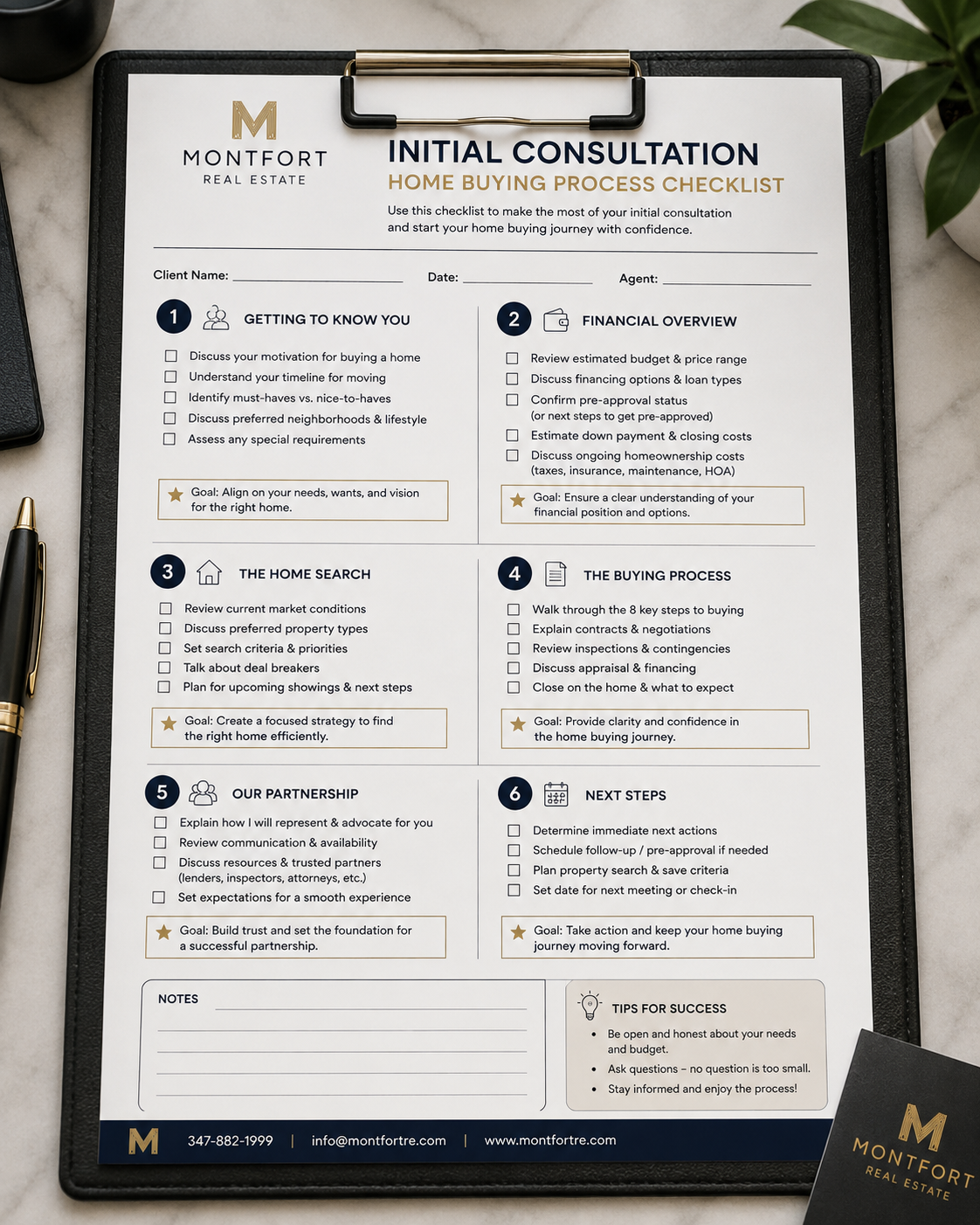
Before beginning a property search, I review the buyer's complete financial picture - income, existing debts, assets, down payment sources, and liquid reserves. This review determines which Upper West Side co-ops are realistic targets based on each building's published requirements.
Many buyers are surprised to learn that post-closing liquidity - the liquid assets remaining after down payment and closing costs - can be a determining factor in board approval. Some UWS cooperatives expect buyers to retain 12 to 24 months of combined mortgage and maintenance payments in liquid reserves after closing. In luxury pre-war buildings, two years is increasingly common.
This isn't about discouraging buyers - it's about ensuring every property they pursue is one they're positioned to close on. Pursuing apartments in buildings whose financial requirements don't match the buyer's profile wastes time and creates unnecessary risk.
Property Search and Evaluation
With clear financial parameters established, the search focuses on properties where both the apartment and the building align with the buyer's objectives:
Building financial review: I request and review the co-op's audited financial statements, recent board meeting minutes, current assessments, and capital improvement plans. A building with a healthy reserve fund, stable maintenance, and no imminent major projects presents less financial risk. Buildings with upcoming façade work or structural projects may carry significant future assessment exposure.
Apartment assessment: Layout, condition, exposure, views, natural light, ceiling height, room proportions, storage, and renovation needs. A pre-war two-bedroom with original kitchen and bath in the West 80s represents a very different purchase proposition than a recently renovated unit in the same building - even at comparable square footage.
Policy evaluation: Sublet policies, renovation rules, flip tax structure, pet policies, and financing restrictions. Many UWS co-ops restrict subletting and renovations - a buyer who may need relocation flexibility in three years should understand sublet limitations before purchasing. Real estate attorneys should review offering plans and house rules before purchase.
Offer Strategy and Board Approval
For co-ops, the offer must position the buyer for board success, not just price negotiation:
Negotiation strategy considers not only price and terms but how the buyer's financial profile will present to the board. A clean, well-documented offer with strong liquidity can be more compelling than a higher bid from a buyer whose financing or documentation raises questions.
Board package coordination: Local real estate agents assist with compiling financial disclosures and reference letters. I coordinate every element - tax returns, bank statements, employment letters, personal and professional references, and supplemental documentation - to ensure accuracy and completeness before submission.
Interview preparation: Board interviews vary from conversational to formal. I prepare buyers for the types of questions commonly asked - occupancy plans, renovation intentions, pets, understanding of house rules - so that nothing contradicts the written application.
Timeline management: Board approval typically takes 2 to 6 weeks after package submission, though delays from missing documents or scheduling conflicts can extend this. From accepted offer through closing, co-ops often take 3 to 4 months.
Upper West Side Co-Op Transaction Results
In the past month, 139 homes sold in Upper West Side, with co-ops accounting for 319 transactions - substantially more volume than condos. Co-op price per square foot on the Upper West Side has held between $1,150 and $1,260 recently, with average co-op prices rising nearly 9.6% year-over-year into 2026.
The co-op market on the Upper West Side currently shows approximately 4.4 months of supply - compared to roughly 6.9 months for condos - indicating stronger demand and faster absorption for cooperative apartments. Only 51 new condo units are expected by 2028 in Upper West Side, which further reinforces the co-op market's central role in neighborhood inventory.
A recent example illustrates how condition and exposure justify premium pricing: a pre-war co-op two-bedroom with high ceilings and Central Park exposure sold for $1,920,000 after approximately 161 days on market - higher days on market for the price tier, but achieving near-ask pricing because the apartment's quality and views supported valuation.
When comparing co-ops in the same building, I've seen renovated units on high floors with park exposure trade at 25–30% premiums over unrenovated lower-floor units in identical lines. This is why same-building comparable analysis - not just neighborhood averages - drives accurate pricing.
Upper West Side Areas We Serve
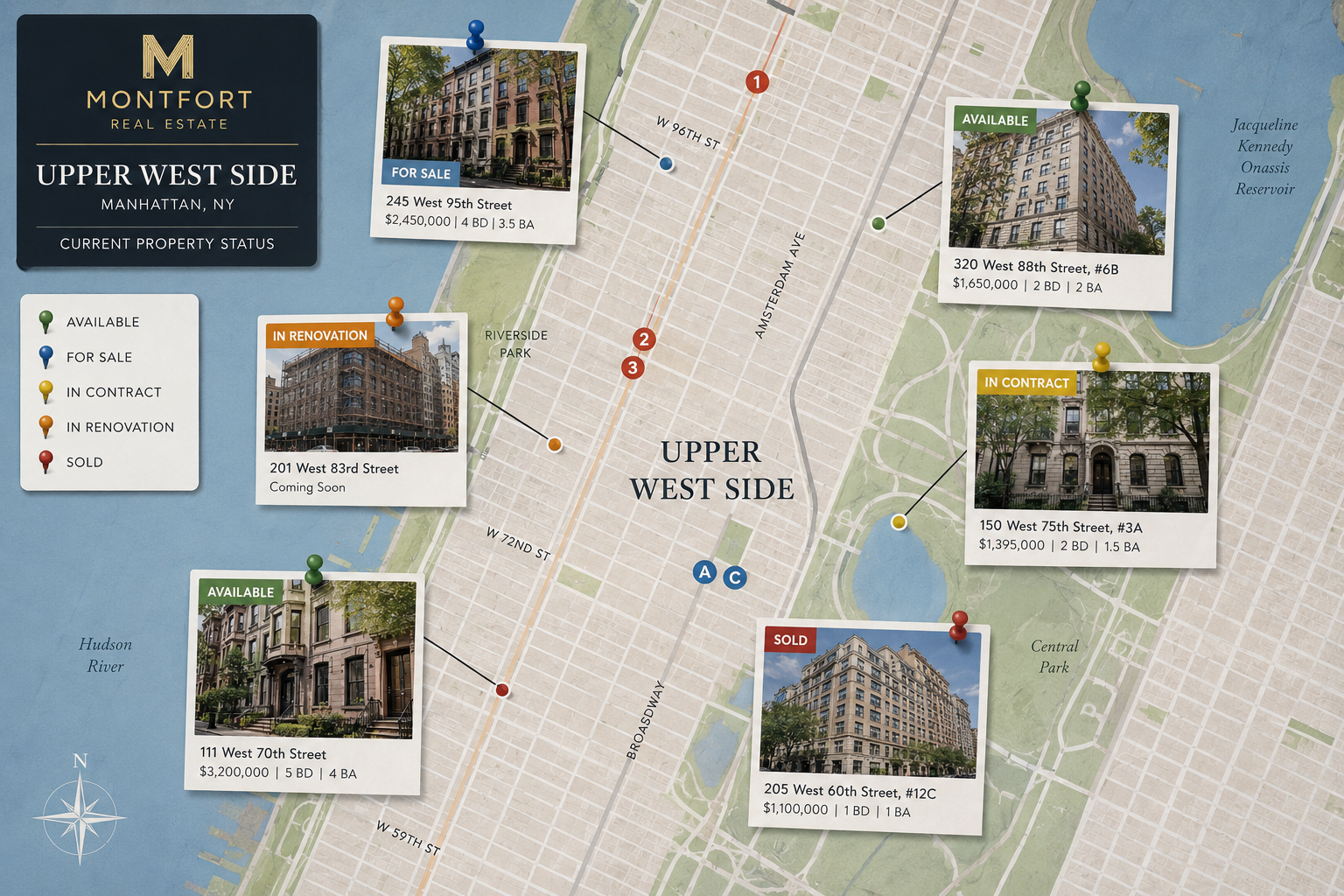
The Upper West Side is not a single co-op market. Building type, cooperative policies, maintenance levels, buyer demand, and price points shift meaningfully across even a few blocks.
Lincoln Square and Columbus Circle: Premium pre-war co-ops with flagship buildings, strong doorman services, and proximity to Lincoln Center. Higher price per square foot and more competitive buyer pools. Buildings here tend to have stricter financial requirements and higher post-closing liquidity expectations.
West 70s Corridor: A mix of building sizes and co-op types - from intimate pre-war brownstone conversions to larger full-service cooperatives. Strong demand from buyers seeking proximity to both Central Park and Riverside Park. Building-specific policies vary considerably across this narrow geographic band.
West 80s and West 90s: The broadest inventory of cooperative apartments on the upper west side, spanning classic pre-war buildings with gracious layouts and more compact post-war properties. This area offers a wider range of price points and can represent better value for buyers willing to be a few blocks further from Columbus Circle. Proximity to excellent schools strengthens family demand.
Riverside Drive and West End Avenue: Known for larger apartment layouts, many with original architectural details and river views. Maintenance charges tend to be higher in these buildings - often reflecting larger staff, older building systems, and more extensive common areas. Buyers seeking space and character often find strong options here, though monthly carrying costs require careful analysis.
Central Park West: Among the most coveted co-op addresses in Manhattan. Unobstructed park views on high floors command significant premiums, but not every Central Park West apartment enjoys those views. Ground-floor and rear-facing units in CPW buildings may price more comparably to strong West End Avenue properties. The assumption that every park-adjacent apartment deserves the same premium doesn't hold up under building-level analysis.
Northern Upper West Side (above 96th Street): Emerging value for buyers willing to explore beyond traditional UWS boundaries. Co-op inventory here can offer larger apartments at lower price per square foot, with improving neighborhood amenities, transportation access, and growing demand from the types of buyers who would have focused further south five years ago.
Frequently Asked Questions About Upper West Side Co-Ops
What financial requirements do Upper West Side co-op boards typically have?
Requirements vary by building - there is no universal standard. Most UWS co-ops require a minimum 20% down payment, though many buildings expect 25–30% or more. UWS co-op boards often require a debt-to-income ratio under 25%, calculated against total monthly housing costs including mortgage and maintenance. Post-closing liquidity expectations range from 12 months to two years of housing costs in liquid assets after closing, with luxury pre-war buildings trending toward the higher end. Some buildings have specific guidelines for pre-approved lenders and limit maximum financing ratios. Building-specific rules can vary significantly between different co-ops, which is why reviewing a building's requirements before making an offer is essential.
How long does the co-op board approval process take?
After the board package is submitted, approval typically takes 2 to 6 weeks. The timeline depends on board meeting schedules, interview availability, the completeness of the submitted documentation, and whether the board requests additional information. Co-ops often take 3 to 4 months to close from accepted offer through completed transaction. Delays most commonly result from incomplete financial documentation, missing references, or scheduling complications - all of which can be minimized with thorough preparation before submission.
How do maintenance charges affect co-op affordability?
Monthly maintenance fees cover taxes, mortgage (the building's underlying mortgage, if applicable), insurance, staff salaries, building upkeep, and reserve contributions. Maintenance is a critical component of co-op affordability because it's a recurring monthly obligation that directly affects the buyer's debt-to-income calculation and overall housing cost.
Lower maintenance doesn't automatically represent better value. A building with unusually low maintenance may have deferred necessary capital projects, underfunded reserves, or upcoming assessments. Conversely, higher maintenance in a well-managed building may reflect superior services, strong reserves, and fewer surprise costs. When comparing similarly priced apartments, I always analyze what maintenance includes, how it compares with similar buildings, and whether the trajectory suggests future increases or stability.
What's the difference between pre-war and post-war Upper West Side co-ops?
Pre-war co-ops on the Upper West Side typically feature higher ceilings (often 10–12 feet), larger rooms, separate formal dining rooms, more architectural detail, and grand common areas. They tend to carry higher maintenance reflecting older building systems, larger staff, and more infrastructure needs. Buyers drawn to architectural character and room proportions often prefer pre-war, though renovation costs can be substantial depending on apartment condition and alteration rules.
Post-war co-ops generally offer more standardized layouts, sometimes updated amenities like gyms or laundry rooms, and potentially lower maintenance. Layouts may be more efficient but can lack the ceiling height and room scale of pre-war apartments. Neither type is universally superior - the right fit depends on the buyer's priorities regarding space, character, monthly costs, renovation appetite, and specific building quality.
How do co-ops differ from condos on the Upper West Side?
Co-ops involve buying shares in a corporation, while condos are deeded real property ownership. This distinction affects financing, approval requirements, closing costs, and ongoing ownership flexibility. Condos typically allow a minimum 10% down payment, while co-ops usually require at least 20%. Condos generally do not require a board interview; co-ops do. Co-ops have different closing costs compared to condos due to share purchases rather than deed transfers. Co-ops commonly charge a flip tax upon sale - an additional cost sellers must factor into net proceeds. The proprietary lease grants the right to occupy the apartment in a co-op, rather than a deed.
In 2026, UWS condos had a median sale price of $2.4M compared to $1.4M for co-ops, reflecting both product differences and the broader buyer access that condo ownership provides. In the past month, 439 condos were sold in Upper West Side alongside the co-op volume, but co-ops accounted for more total transactions.
Get Expert Upper West Side Co-Op Guidance
Whether you're entering the Upper West Side co-op market as a buyer or preparing to list a cooperative apartment for sale, the transaction requires a realtor who understands the building as thoroughly as the apartment. Stanley Montfort provides co-op buyer representation, listing services, valuation, board-package coordination, and negotiation for cooperative properties across every Upper West Side corridor.
Contact Stanley to discuss your specific Upper West Side co-op buying or selling objectives - including building-level analysis, financial preparedness review, and market positioning for your property or search.
Phone: 1-646-970-1078 Email:[email protected] Address: 8 West 126th Street, New York NY 10027
Recent News & Realtor Advice
Stay in the loop on the latest events, news, & happenings in and around our community!
Upper West Side Townhouse Q2 2024 Market Report
On the Upper West Side, we observed a distinct trend that diverges from the citywide patterns. Speci…
Harlem Brownstone Q2 2024 Market Report
The Harlem brownstone market has seen an increase in sales activity since this time last year. In Q2…
Discover Your Dream Home: Explore Apartments for Sale on the Upper West Side
Are you searching for your dream home in one of New York City’s most sought-after neighborhoods? Loo…