
Park Slope co-ownership— Experts realtor for Buying, Selling & Investing
We'll help you buy the right Park Slope Co-ownership by avoiding costly structural issues, hidden repair expenses, and overpaying in a competitive market
SMOOTH TRANSACTION
With limited risk throughout the buying process.
NO PRESSURE
No pressure to overpay or purchase within a specific timeframe.
ONGOING SUPPORT
A dedicated team that remains available even after the transaction is complete.
Park Slope Co-Ownership Realtor
Co-ownership in Park Slope starts with one question: does this property actually work for multiple buyers? Not every brownstone, condo, or co op that fits a combined budget supports shared ownership well. The layout may lack privacy. The building's reserve fund may be nearly empty. The board may reject applications from unrelated co-buyers. A Park Slope co-ownership realtor evaluates these factors before you make an offer, not after.
Why Park Slope Buyers Trust Stanley Montfort for Co-Ownership Real Estate
Licensed Brooklyn real estate broker with co-ownership transaction experience since 2015
Completed 150+ shared ownership property evaluations across Park Slope
Average response time within 24 hours for co-ownership consultations
Track record helping co-buyers navigate brownstone, condo, and co op purchases together
Why Co-Buyers Choose a Dedicated Park Slope Co-Ownership Real Estate Agent
Choosing the best real estate agent for a co-ownership purchase depends on experience and results with multi-buyer transactions. A conventional agent handles a single buyer or seller. A co-ownership real estate agent in Park Slope manages the added complexity of aligning multiple buyers' finances, preferences, and long-term goals around one property.
Stanley Montfort's practice is built around this difference. When evaluating a Park Slope property for shared ownership, I assess the building's physical condition, financial health, and governance rules alongside whether the unit layout, outdoor space, and carrying costs actually support the intended arrangement.
Property suitability analysis for multiple owners. Not every home that fits a combined budget works for co-ownership. I evaluate floor plans for privacy, separate entrances, soundproofing quality, and how shared versus private spaces are configured.
Local housing stock knowledge. Park Slope is known for its historic brownstones and tree-lined streets, but its housing stock varies from prewar co ops along Prospect Park West to modern condos near Fourth Avenue. Each property type carries different implications for shared ownership.
Financing and ownership structure planning. Before we start looking at properties, I connect co-buyers with lenders experienced in multi-borrower applications and attorneys who structure ownership agreements, whether the group is considering tenancy in common, an LLC, or another arrangement.
Due diligence protecting all co-owners' interests. I review building financials, reserve fund balances, special assessment history, and infrastructure condition reports so that co-buyers understand the real carrying costs before committing.
Park Slope Co-Ownership Real Estate Services
Buying Property Together in Park Slope
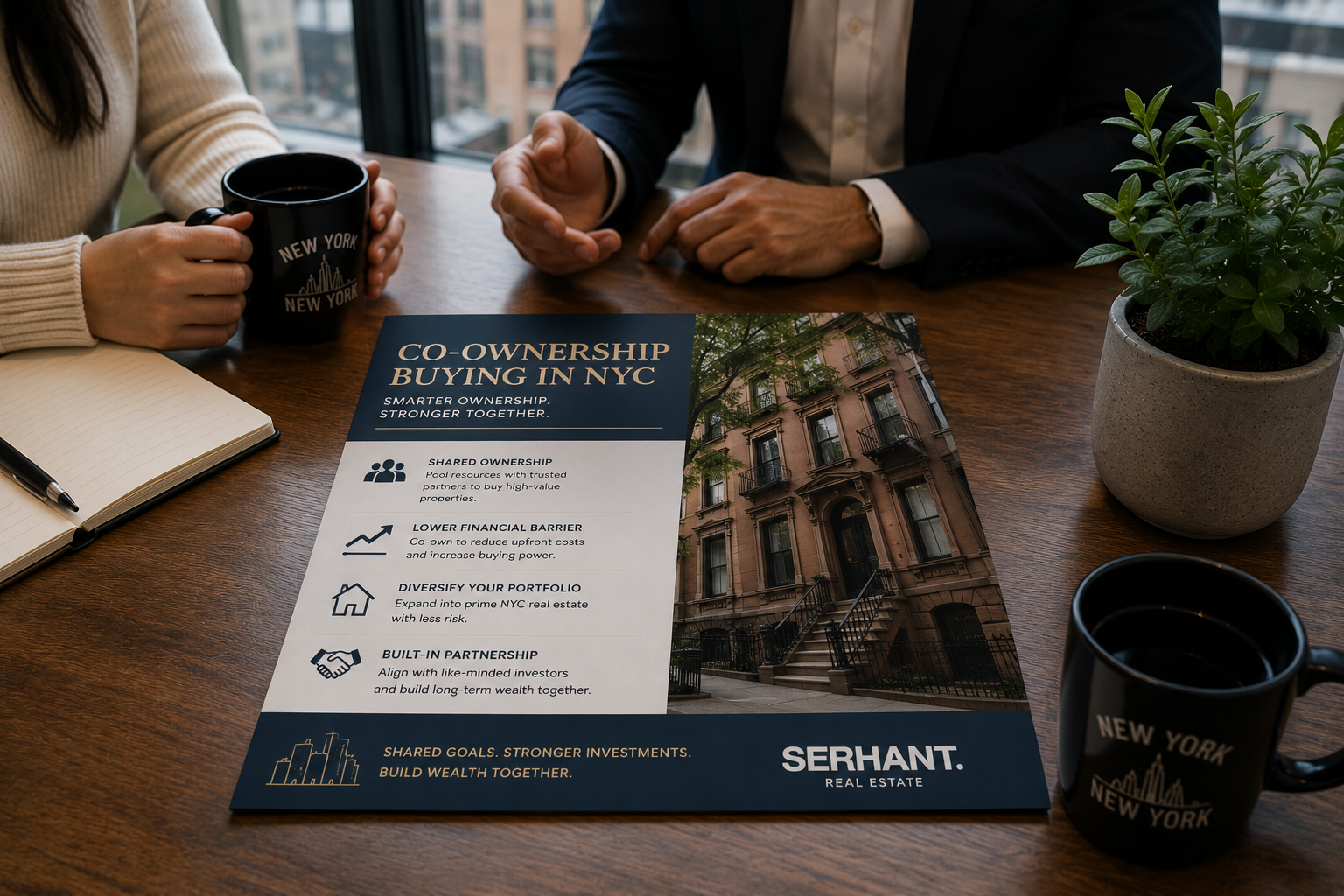
Co-ownership in Park Slope usually means buying a multi-family home with others, though the strategy applies to condos, co ops, and converted brownstones as well. Co-buying typically involves legal agreements detailing exit strategies and cost-sharing, but the real estate decision comes first: is this property physically, financially, and structurally suited for multiple owners?
I evaluate each property against co-ownership criteria, including unit configuration, building financial health, board or association rules, and current market pricing. With 217 homes currently for sale in Park Slope, the inventory spans a range of property types, but only a subset of those listings will support shared ownership well.
One of the first conversations I have with co-buyers covers how they plan to use the property, how long they expect to hold it, and what happens if one person needs to exit. These answers shape the entire search.
Brownstones and Townhouses for Co-Ownership
Townhouses are highly sought-after in Park Slope. Multi-family brownstone conversions, typically 3 to 8 units per building, offer co-buyers the chance to own in a neighborhood where single-buyer entry prices can exceed $6 million for multi-family townhouses.
Park Slope has many prewar and historic apartment buildings, and brownstone conversions carry specific risks. In a 4-unit brownstone, a $120,000 roof replacement means $30,000 per owner. Many small brownstone condos operate with minimal or no reserve funds, so large expenses arrive as special assessments without warning.
What I evaluate for co-ownership suitability in brownstones:
Layout and privacy. Do units occupy separate floors? Are there independent entrances? Interior walls in older conversions can be thin; I check for soundproofing between units.
Outdoor space allocation. Garden-level units, roof terraces, and shared yards require clear maintenance and use agreements. Differences in outdoor access affect ownership percentages and unit pricing.
Historic district compliance. Exteriors in landmark-protected areas are regulated. Facade changes require Landmarks Preservation Commission approval, adding time and cost to renovations.
Infrastructure age. Original plumbing, electrical systems, and cast-iron pipes in buildings from the 1920s through 1940s may need replacement within a few years of purchase. I flag these during property evaluation so co-buyers can factor the costs into their offer.
Condos and Co Ops for Shared Ownership
Condominiums in Park Slope are popular for modern living, with the average price of a condo in Park Slope at $1,070,000. Condos allow owners to hold title to a specific unit plus shared ownership of common spaces. Association rules tend to be less restrictive than co op board policies regarding sublets, alterations, and resale.
Co ops are available throughout Park Slope, reflecting the ownership type's market significance. Park Slope has numerous co op listings across the neighborhood. Buying into a co op means you do not own real estate directly; you purchase shares in a corporation that owns the building, plus a proprietary lease for your unit.
Park Slope co ops enforce strict guidelines regarding subletting and renovations. Co op boards require exhaustive financial disclosures for approvals, and co op boards generally demand a down payment of 20% to 25%. A local expert can help identify co op boards with lenient rules regarding multiple co-buyers on a single application.
One mistake I frequently see co-buyers make: assuming that any co op will accept an application from unrelated purchasers. Some boards reject multi-buyer arrangements outright. I research board policies before scheduling a showing, saving the group time and application fees.
Monthly maintenance fees in co ops can increase incrementally over time. Co op carrying costs cover building-wide expenses including mortgage and property taxes. Prospective buyers need to consider building financial health and maintenance fees as part of the total ownership cost, not just the purchase price.
| Factor | Co-op | Condo | Brownstone Conversion |
|---|---|---|---|
| Ownership Structure | Shares in a corporation + proprietary lease | Title to individual unit + shared common elements | Title to individual unit in a small converted building |
| Board / Association Approval | Required; often strict | Usually less restrictive | Varies; often self-managed |
| Typical Down Payment | 20–25% often required by the board | 10–20% typical | Varies by lender and building |
| Sublet Flexibility | Often restricted | Generally more flexible | Depends on condo documents and building rules |
| Reserve Fund Risk | Larger buildings typically have stronger reserves | Varies by building | Greater risk of underfunded reserves in small buildings |
| Entry Price per Sq. Ft. | Generally lower than comparable condos | Generally higher than comparable co-ops | Varies significantly by condition and location |
Co-Owned Property Valuation and Resale Strategy
Selling a home begins with understanding today's market, and co-owned properties add layers to that analysis. When multiple owners must coordinate on timing, pricing, and showings, the sale process takes longer and requires more planning.
The market often discounts properties with unusual ownership structures. If one co-owner wants to sell while others do not, the available options depend on the legal framework established at purchase. Buyout provisions, valuation methods, and dispute resolution should be defined before purchase, not negotiated under pressure.
Home pricing depends on location, size, and condition, but for co-owned properties, the building's governance and financial history also affect what buyers will pay. A brownstone condo with a history of special assessments and no reserve fund will sell at a discount compared to a similar unit in a building with stable finances. Comparable sales in similarly structured buildings need to be used carefully; I pull comps from the same building type, unit configuration, and ownership structure to give co-sellers an accurate picture.
How Park Slope Co-Ownership Real Estate Works
Initial Co-Ownership Consultation
Before we start looking at properties, I meet with the full group of co-buyers. The goals of this first session:
Assess each buyer's financial readiness, including income, credit, savings, and risk tolerance
Discuss property type preferences: brownstone, condo, or co op, and the trade-offs of each
Clarify how the group plans to use the property, whether as a primary residence, investment, or combination
Provide referrals to attorneys experienced in co-ownership agreements and lenders who handle multi-borrower applications
One question every group should discuss before making an offer: what happens if one person needs to exit in two years? The answer shapes the ownership structure, the property type, and the buildings I recommend.
Property Search and Evaluation
I filter available inventory against co-ownership criteria. In a market where inventory remains low and well-priced brownstones attract over 75 groups of buyers at open houses, targeted search matters.
For each property, I evaluate:
fFloor plan suitability for the number of co-owners (bedrooms, bathrooms, separate living areas)
Building financial statements, reserve fund balance, and recent capital expenditures
Infrastructure condition: roof age, facade compliance with Local Law 11 for taller buildings, plumbing, electrical, and waterproofing
Board or association rules regarding multiple owners, sublets, and alterations
Monthly carrying costs and how they would be allocated among co-buyers
Offer Strategy and Transaction Management
Coordinating an offer from multiple buyers requires clear representation. I present a unified offer on behalf of the group, handle negotiations on price and terms, and manage the transaction through closing.
Negotiations are a key part of the process. In the current market, mortgage rates have stabilized near 6.25% after peaking above 7% in late 2024. That affects carrying cost projections and borrowing capacity for co-buyers. Co ops currently offer more room for negotiation than condos, which can benefit groups willing to navigate the board approval process.
Marketing strategies should highlight unique property features when co-owners eventually sell. I build resale considerations into the purchase strategy from day one.
Co-Ownership Success Stories in Park Slope
Stanley Montfort has guided multiple co-buyer groups through Park Slope purchases. Past transactions include:
Two families purchasing a brownstone conversion in South Slope, where I identified a building with separate entrances per floor and a recently replaced roof, reducing near-term capital expenses
A group of three investors acquiring a multi-unit property near Seventh Avenue, with a resale strategy built around unit-by-unit sale over five years
Friends purchasing a two-unit condo in a prewar building off Prospect Park West, where board research confirmed the association allowed co-purchasing and had a funded reserve
These outcomes started with the same foundation: evaluating whether the property, building, and legal structure supported the group's goals before committing.
What Park Slope Co-Ownership Clients Say
Client testimonials are available upon request. If you've worked with Stanley Montfort on a co-ownership purchase and would like to share your experience, please reach out at [email protected].
Park Slope Areas We Serve for Co-Ownership
Park Slope's neighborhoods vary in housing stock, price, and property type. Co-ownership opportunities exist across:
Prospect Park West and Berkeley Place: Prewar buildings with architectural detail, larger units, and proximity to Prospect Park. Many co ops in this area have established boards.
Family-focused blocks near the park and local playgrounds: Brownstone-lined streets between Fifth and Seventh Avenues with strong resale demand.
Transit-accessible corridors near F, G, and R subway lines: Properties near Fourth Avenue and Atlantic Terminal offer condo inventory with modern construction and easier board approval for co-buyers.
Mixed-use areas along Fifth and Seventh Avenues: A combination of residential and retail, with smaller buildings and brownstone conversions that can work for investment-focused co-ownership.
Demand extends to adjacent areas. Buyers looking for lower entry prices sometimes reach into South Slope or Gowanus while maintaining access to Park Slope schools and amenities.
Frequently Asked Questions About Park Slope Co-Ownership
What types of Park Slope properties work best for co-ownership?
Properties with clear physical separation between living spaces produce the best co-ownership outcomes. Brownstone conversions with units on separate floors and independent entrances reduce friction. Condos in buildings with funded reserves and flexible association rules offer more resale options. Co ops can work if the board accepts multi-buyer applications, though Park Slope co ops enforce strict guidelines that require advance research.
The right property depends on the group. Two families sharing a four-bedroom brownstone need a different layout than three investors splitting a multi-unit building. I evaluate each listing against the group's specific use case.

How do co-owners handle financing for Park Slope real estate?
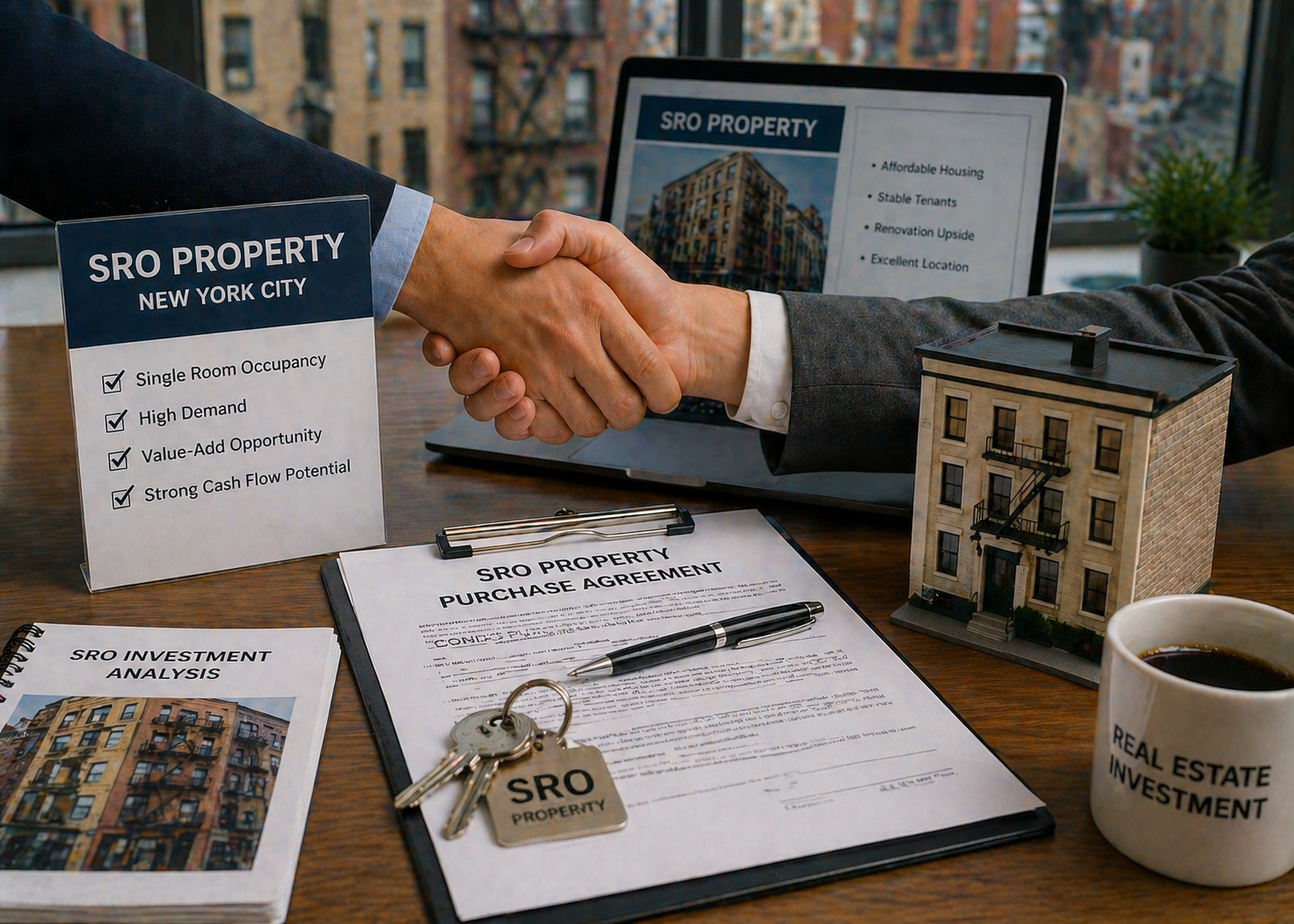
Occupied SROs require a different evaluation than vacant ones. If tenants hold occupancy agreements or leases, their rights under rent regulation laws affect what a new owner can do with the building. Rent stabilization status must be verified independently; it cannot be assumed based on current rent levels.
A Certificate of No Harassment may be required for SRO transactions where the owner plans to alter the number of units, add or remove kitchens or bathrooms, or change interior layouts. For SRO Multiple Dwellings, HPD must certify that no harassment of tenants occurred before DOB will accept permit applications. Properties in HPD's CONH Pilot Program face stricter documentation requirements and longer review periods.
Park Slope SRO Financing and Investment Considerations
SRO financing requires lenders comfortable with income-property underwriting and regulatory complexity. Conventional mortgage lenders often decline to finance properties where actual use does not match the COO or where open violations remain unresolved.
Common financing paths for Park Slope SROs:
DSCR loans. Lenders evaluate debt service coverage relative to net rental income. These are the most common financing vehicle for stabilized SRO properties with documented rent rolls and legal occupancy. Loan-to-value ratios typically reach 70% to 80% for stabilized income properties.
Bridge and hard-money loans. Available for properties requiring remediation or conversion, but at higher interest rates and stricter terms. Useful when the buyer plans to resolve violations, legalize units, or convert the property before refinancing into permanent financing.
FHA or state agency financing. Possible only if the property meets all legal, safety, and occupancy requirements. Most SRO properties in Park Slope do not qualify without remediation.
Investment strategy splits between two paths. Operating the building as a legal SRO or rooming house produces income valued through cap rates and gross rent multipliers. Converting to conventional apartments or a single-family home requires budgeting for permitting, architectural and engineering fees, LPC compliance (in the historic district), and potential CONH application. Renovation costs run higher in Park Slope's historic districts, where replacement materials and architectural details must match the original facade.
Specialized knowledge of zoning regulations is critical for SRO transactions. Most of Park Slope is zoned R6, with patches of R7A and R8B near Fourth Avenue. Zoning controls floor-area ratio, building height, and bulk, all of which constrain conversion plans.
Park Slope Areas Served for SRO Transactions
Stanley works with SRO buyers and sellers across Park Slope's distinct sub-neighborhoods, each of which presents different housing stock, zoning, and historic-district considerations:
Historic Park Slope: 7th Avenue corridor and Prospect Park West, where the densest concentration of landmark-designated brownstones affects renovation scope and timeline
North Slope: Above 9th Street to Atlantic Avenue, including properties near the Barclays Center and transit hubs along Atlantic and Flatbush Avenues
South Slope: Below 9th Street to 25th Street, where building stock transitions and zoning overlays shift closer to R7A in some blocks
Gowanus border: The 4th Avenue corridor, where R8B zoning patches and proximity to Gowanus rezoning areas create different conversion possibilities
Park Slope features over 1,400 eateries and is known for its iconic brownstones, but for SRO transactions, what matters is block-level zoning, historic-district boundaries, and the specific regulatory history of each building; some buyers also weigh transit access and connectivity to Manhattan as part of that review.
Frequently Asked Questions About Park Slope SRO Real Estate
How is an SRO property valued differently from a regular Park Slope brownstone?
SRO valuation depends on legal use, not layout or square footage. A building's COO establishes how many units exist legally and whether those units are apartments or rooming units. Income from legally permitted rooming units can be capitalized into value; income from unpermitted rooms cannot. Co-ops in Park Slope are priced between $575,000 and $1,695,000, and multi-family townhouses can exceed $6,000,000, but those figures reflect conventional legal use. An SRO's value must account for tenant status, regulatory history, open violations, financing availability, and what a buyer can realistically do with the property under its current and potential legal configuration.
What records should I review before making an offer on a Park Slope SRO?
Before making an offer, request or retrieve:
The current Certificate of Occupancy (legal unit count, unit types, kitchen and bathroom designations)
HPD registration and violation history (open violations, Alternative Enforcement Program status)
DOB records (alteration permits, stop-work orders, unsafe/vacate orders)
Tenant occupancy documentation (leases, occupancy agreements, duration of tenancy)
Rent stabilization status for each occupied unit
Historic district designation and any prior LPC applications or approvals
CONH history or eligibility if the building is classified as an SRO Multiple Dwelling
Can I get financing for an SRO property in Park Slope?
Yes, but through lenders experienced with income-property and SRO underwriting. Conventional residential lenders typically decline SRO properties. DSCR loans are the most common option for stabilized SRO buildings with documented income. Bridge and hard-money loans are available for properties requiring remediation. All lenders will require that the property's actual use matches its COO, that open violations are resolved or on a documented resolution path, and that rent rolls and tenant documentation are available.
What are the risks of buying an occupied SRO in Park Slope?
Occupied SROs carry tenant-protection obligations under NYC law. Tenants may hold rent-stabilized status. A Certificate of No Harassment may be required before any alteration permits are issued. If a buyer plans to convert the building, the CONH process can take months, and denial is possible. Rent regulation and occupancy restrictions limit how an owner can reposition the property. Stanley recommends that buyers work with qualified real estate attorneys to evaluate tenant rights and regulatory obligations before making an offer.
How long does it take to convert an SRO in Park Slope's historic district?
Timelines vary based on building condition, regulatory history, and scope of work. In the historic district, exterior alterations require LPC approval, which adds weeks to months depending on the scope. A CONH application, if required, can take several months. DOB permit review, plan approval, and construction follow. For a full SRO-to-apartment conversion in a landmark building, 18 to 36 months from initial filing to completion is a realistic range. Each property is different, and Stanley coordinates with architects and expediters to provide project-specific timelines.
Get Expert SRO Guidance in Park Slope
Park Slope SRO transactions involve regulatory, legal, and financial layers that do not exist in conventional Brooklyn real estate deals. Whether you are evaluating an SRO for purchase, preparing one for sale, or assessing conversion potential, the first step is understanding the property's legal status, regulatory history, and market position.
Stanley Montfort provides personalized consultations for Park Slope SRO buyers and sellers. His experience across decades of Brooklyn real estate, combined with deep familiarity with HPD, DOB, LPC, and SRO-specific regulations, helps clients avoid costly regulatory surprises and make informed decisions.
Phone: 1-646-970-1078 Email:[email protected] Address: 8 West 126th Street, New York NY 10027All co-owners generally must qualify if applying for a joint mortgage. Lenders evaluate each borrower's credit, income, and debt-to-income ratio. If one buyer has a lower credit score, it can affect the rate or approval for the entire group.
Down payment and closing cost allocation should match the ownership structure. If one buyer contributes 60% of the down payment, that should be reflected in ownership percentages and documented in a co-ownership agreement drafted by an attorney.
NYC classifies co ops and condos under Tax Class 2, with property values determined as if the buildings were rental properties. Available tax abatements tied to primary residence status apply to individual co-owners who occupy their units. A realtor familiar with Park Slope can help avoid common co op buying mistakes related to financial disclosure and board requirements.
What should co-buyers consider before making a Park Slope offer?
Many buyers focus on splitting the purchase price but overlook monthly carrying costs, infrastructure condition, and resale flexibility. Before making an offer, co-buyers should confirm:
Reserve fund balance and history of special assessments
Age and condition of roof, facade, plumbing, electrical, and heating systems
Board or association rules on subletting, renovations, and resale
Ownership structure options and their impact on title, taxes, and exit
How shared costs will be allocated if units differ in size, light, or outdoor access
A clear exit strategy, including buyout valuation methods and timing
How does reselling a co-owned Park Slope property work?
Resale requires coordination between all owners on timing, pricing, and showing access. In co ops, board approval is required for incoming buyers, which adds time and uncertainty. Condos typically allow more flexible resale.
If one co-owner wants to sell and others do not, the group needs a buyout mechanism already in place. Without one, disagreements over valuation, timing, and process can delay the sale or reduce the price. I help co-owners develop resale strategies that account for current market conditions, comparable sales in similar building types, and the specific ownership structure in place.
Investors planning partial exits should understand that selling an individual ownership share is more complex than selling a whole property. The buyer pool for fractional ownership interests is smaller, and pricing typically reflects that.
Start Your Park Slope Co-Ownership Search
If you're considering buying property together in Park Slope, the first step is evaluating whether your group's goals, finances, and timeline align with what the market offers. Stanley Montfort provides co-ownership buyer representation, property evaluation, and transaction strategy for groups purchasing in Park Slope, Brooklyn.
Schedule a consultation to discuss your shared ownership objectives and identify properties worth pursuing.
Phone: 1-646-970-1078 Email:[email protected]Address: 8 West 126th Street, New York NY 10027
Recent News & Realtor Advice
Stay in the loop on the latest events, news, & happenings in and around our community!
Upper West Side Townhouse Q2 2024 Market Report
On the Upper West Side, we observed a distinct trend that diverges from the citywide patterns. Speci…
Harlem Brownstone Q2 2024 Market Report
The Harlem brownstone market has seen an increase in sales activity since this time last year. In Q2…
Discover Your Dream Home: Explore Apartments for Sale on the Upper West Side
Are you searching for your dream home in one of New York City’s most sought-after neighborhoods? Loo…