
Downtown Brooklyn Co-ops Realtor
If you are buying or selling a co-ops in Downtown Brooklyn, the building you choose, the unit line within that building, and the alternatives available to competing buyers all shape what a property is worth. Stanley Montfort works as a Downtown Brooklyn co-ops realtor focused on high-rise and mid-rise condominium transactions across the neighborhood, from new development sponsor sales near Atlantic Terminal to established resale buildings closer to Brooklyn Heights and DUMBO. Whether you need a buyer's agent to compare two co-ops with similar asking prices but different carrying costs, or a listing agent to position your apartment against active competing inventory, Stanley provides the building-level and unit-level analysis that separates an informed decision from a guess.
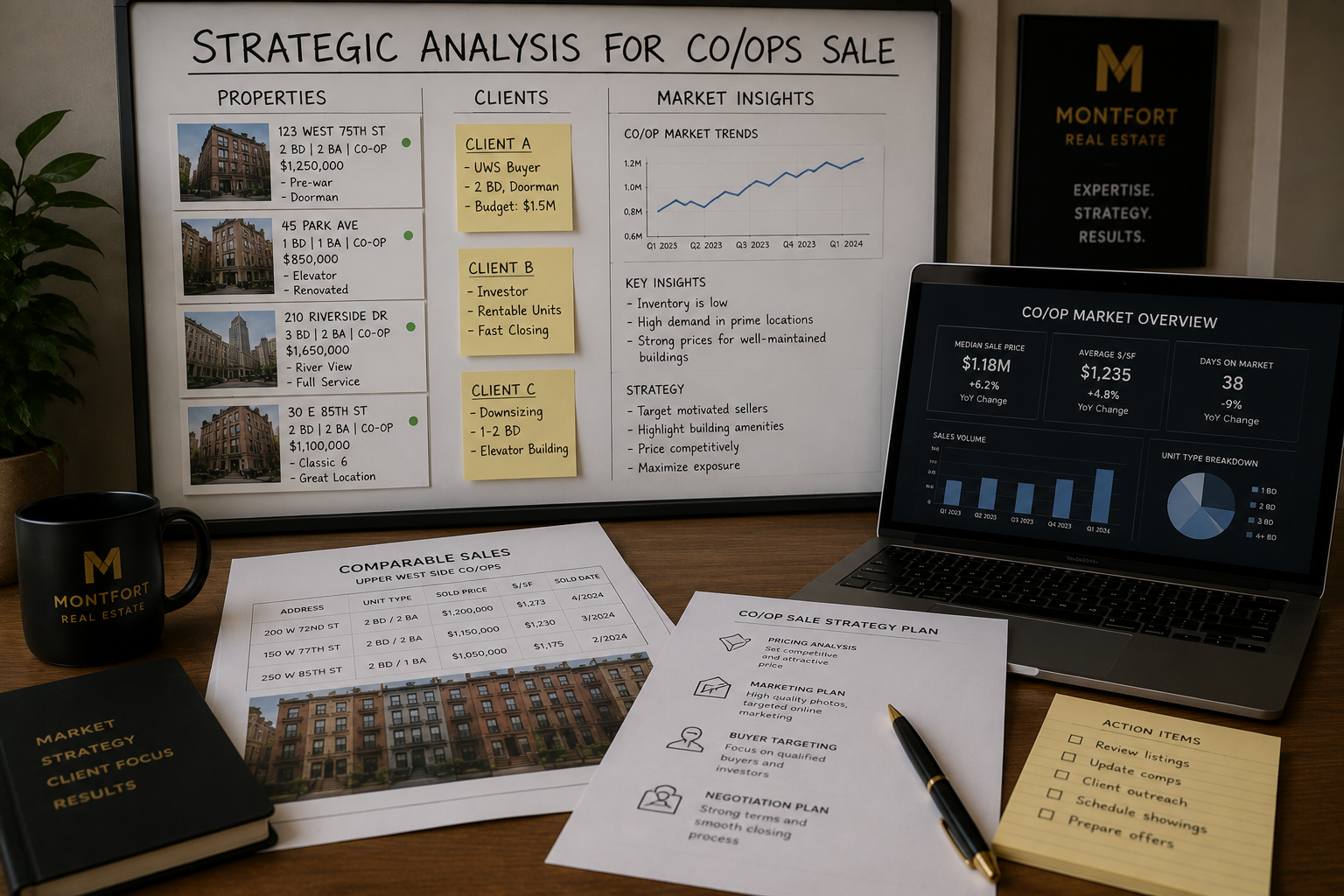
Why Downtown Brooklyn Trusts Stanley Montfort
Licensed real estate broker specializing in Downtown Brooklyn condos since 2015, with membership in the Real Estate Board of New York and access to New York's residential listing service data
Over 200 Downtown Brooklyn condo transactions completed across resale, new development, and sponsor sales
Certified in new development sales and resale condo valuation, with consistent top producer recognition from the Brooklyn real estate board
Average 14-day response time from initial consultation to delivered market analysis
Why Downtown Brooklyn Buyers and Sellers Choose Stanley Montfort for Co-ops
Selecting a Downtown Brooklyn condo realtor should come down to how that broker evaluates the specific apartment, the building it sits in, and the properties competing for the same buyer pool. Stanley's approach centers on three areas that directly affect price and outcome.
Same-building comparable sales analysis. One of the first things I review when comparing Downtown Brooklyn condos is whether recent transactions exist within the same building. A closing three floors below your unit on the same line provides better valuation evidence than a sale in a different tower, but only after adjusting for floor, exposure, views, and condition.
Unit line and floor premium expertise. Two units in the same tower can be very different properties. Stanley evaluates layout efficiency, window placement, natural light, bedroom separation, and how each line performs at resale across Downtown Brooklyn's major condominium buildings.
Building financial review and carrying cost comparison. Before recommending an asking price or advising a purchase, Stanley reviews reserve funds, assessment history, common charges, property tax obligations, and operating expense trends. Two condos at the same price point may cost $400 or more apart in monthly carrying costs once common charges and real estate taxes are factored in.
Our Downtown Brooklyn Co-ops Services
Buying a Condo in Downtown Brooklyn
Buying a condo in Downtown Brooklyn starts with understanding what you are comparing. Stanley provides a building and unit comparison analysis that goes beyond listing information provided on the MLS or through broker advertisements. The process includes:
Evaluating new development versus resale with total ownership cost calculations, including sponsor closing costs, concessions, common charges, and property taxes. Condos typically allow financing up to 90% of purchase price, which broadens buyer options compared to co ops, where boards in Brooklyn require a minimum down payment of 20% to 25%.
Due diligence coordination covering building financials, offering plans, and board minutes review. For context, co-ops make up nearly 80% of Brooklyn apartments, but Downtown Brooklyn features a mix of post-war co-op developments and high-rise condops alongside newer condominium towers. Stanley helps buyers understand which ownership structure fits their timeline and flexibility needs.
Price per square foot analysis adjusted for floor level, exposure, views, and layout efficiency. In Q2 2026, the median Downtown Brooklyn condo sale price reached approximately $1,947,500, with condos trading at roughly $1,449 per square foot. Those figures varied by building, unit line, and floor.
Selling a Downtown Brooklyn Co-ops
A seller's competition includes what buyers can purchase today, not what sold six months ago. Stanley builds a competitive market analysis using recent same-building transactions and active competing listings across Downtown Brooklyn.
Strategic pricing based on unit line, floor premium, and current buyer alternatives. If a comparable unit two floors above yours closed at $1,500 per square foot but your line has a different exposure and narrower living room, that closing is a starting point rather than a target.
Pre-listing preparation including condition assessment and staging recommendations. Finish quality matters, but layout efficiency and natural light matter more in buildings where buyers are comparing multiple active listings.
Marketing to qualified buyers through the MLS, compass and broker networks, and targeted advertising. Stanley ensures listing information reaches buyers actively searching Downtown Brooklyn condos for sale.
Downtown Brooklyn Condo Valuation
Valuation ties together individual property characteristics, building-level data, and competitive market positioning. Stanley's valuation work covers:
Same-building comparable sales analysis with adjustments for unit-specific characteristics including floor, line, exposure, views, layout, condition, and outdoor space
Cross-building comparison with competing Downtown Brooklyn condo developments at similar price points and carrying costs
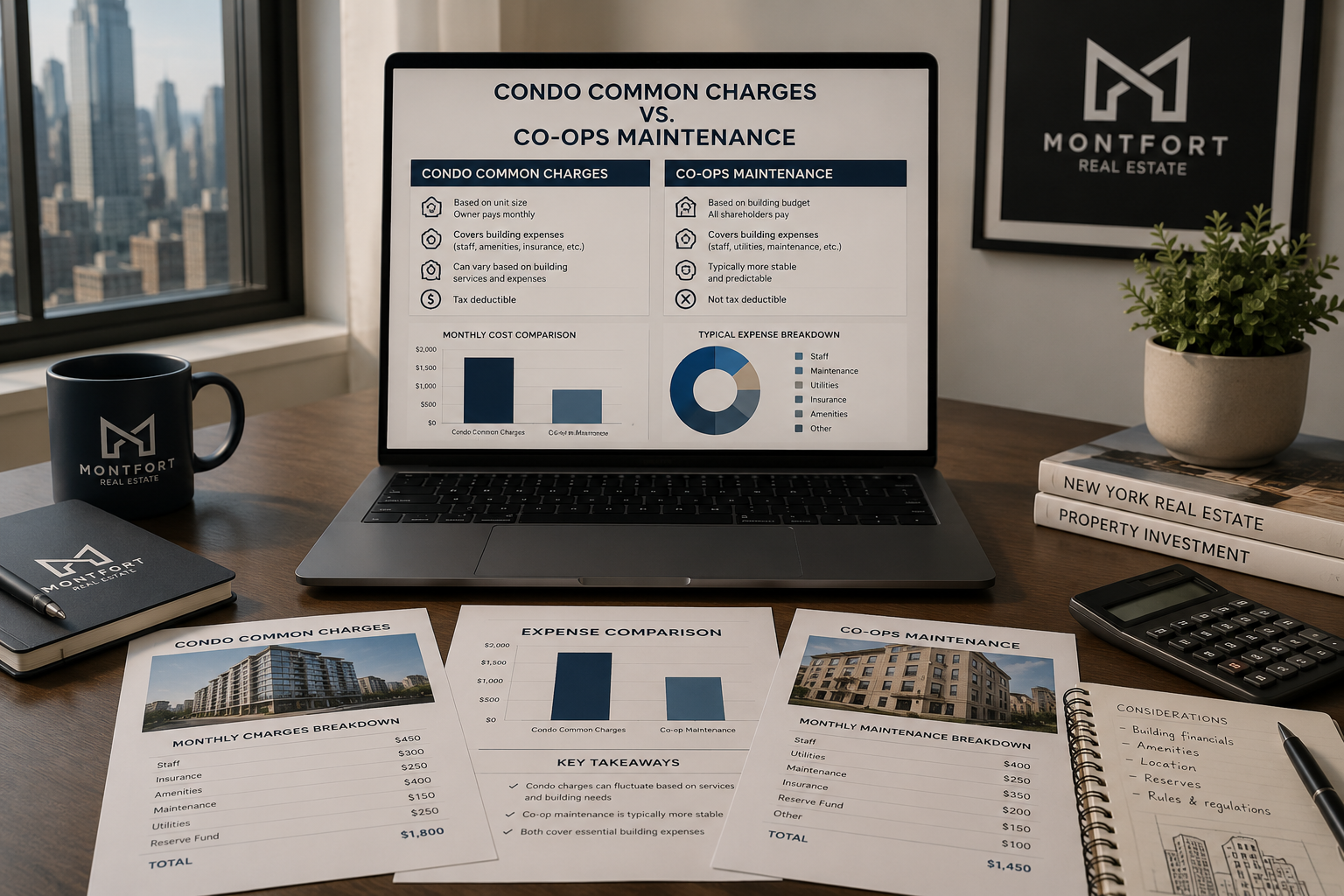
Common charges and carrying cost evaluation for affordability analysis; condos have separate real estate taxes paid by each owner, while co-op maintenance fees cover real estate taxes and mortgage interest in a single monthly payment
How Downtown Brooklyn Condos Are Valued
Same-Building Comparable Sales
Before paying a premium for a higher floor or a particular exposure, the most useful question is whether a recent transaction within the same building supports that premium. In Downtown Brooklyn's larger condominium towers, same-building sales often exist within six to twelve months of any given listing. Stanley reviews each comparable for unit line, floor level, exposure differences, renovation level, and transaction timing.
Layout efficiency and bedroom configuration also affect price per square foot. A two-bedroom unit with separated bedrooms and an efficient kitchen may achieve a higher PPSF than a unit reporting the same square footage but with a long hallway consuming usable space. Two apartments reporting 1,100 square feet in the same building can function quite differently depending on how that space is distributed.
Unit Lines and Floor Premiums
Different unit lines within the same condominium command different price points because they are, in practice, different apartments. One line may face south with unobstructed light and skyline views; another faces an adjacent tower and receives direct sunlight only in the morning. Window configuration, bedroom placement, closet depth, and kitchen layout all vary by line.
Floor level interacts with views, street noise, privacy, and surrounding buildings. A higher floor should command a premium only when the actual characteristics justify it. In certain Downtown Brooklyn towers, floors 15 through 25 may see little practical difference in views because an adjacent building tops out at floor 12; the meaningful view change occurs above floor 30. Stanley maps these breakpoints for each building rather than applying a generic percentage-per-floor formula.
Building Financials and Common Charges
Reserve fund analysis and assessment risk evaluation are part of every purchase recommendation Stanley provides. A building with a well-funded reserve and no deferred capital projects presents a different ownership proposition than one about to levy a special assessment for facade work or elevator modernization.
Common charge comparison across competing Downtown Brooklyn buildings reveals how amenities, staffing, and building age translate into monthly costs. A full-service building with a 24-hour doorman, fitness center, and pool will carry higher common charges than a mid-rise with a virtual doorman; the question is whether a specific buyer values those amenities enough to absorb the difference. Some Downtown Brooklyn condos benefit from 421-a tax abatements that reduce property taxes during the abatement period. Buyers should understand the current benefit, the scheduled expiration or phase-out, and the potential effect on future carrying costs. Stanley models these scenarios for each property under consideration.
Resale Condos vs New Development in Downtown Brooklyn
When comparing resale with sponsor inventory, the advertised asking price is only one component. Sponsor sales in new development buildings often include transfer taxes, working capital contributions, and other closing costs that the buyer pays, which can add 2% to 4% to the total acquisition cost. Resale transactions typically split closing costs differently, and the buyer benefits from established building financials, a track record of common charges, and a clearer picture of reserve fund adequacy.
Price per square foot between established buildings and new construction varies by development. Some newer towers in the Atlantic Terminal area or near MetroTech price at $1,400 to $1,600 per square foot at sponsor level; a resale unit in an established building nearby may trade at $1,200 to $1,400. The resale unit, however, may come with lower common charges, a confirmed tax situation, and no construction risk.
Building maturity also matters. In a resale condo, the amenity spaces are built, the common charges have stabilized, and the board has a financial track record. In new development, the offering plan projects expenses, but actual operating costs may differ once the building is fully occupied. Stanley compares both scenarios using total monthly ownership cost rather than sticker price alone.
Future resale competition deserves attention as well. A buyer purchasing in a new development should consider how many similar units will enter the market when other owners sell, and whether that supply will compress future pricing. In Downtown Brooklyn, where multiple large-scale condo towers delivered within the past decade, this is a practical concern rather than a hypothetical one.
Downtown Brooklyn Areas We Serve
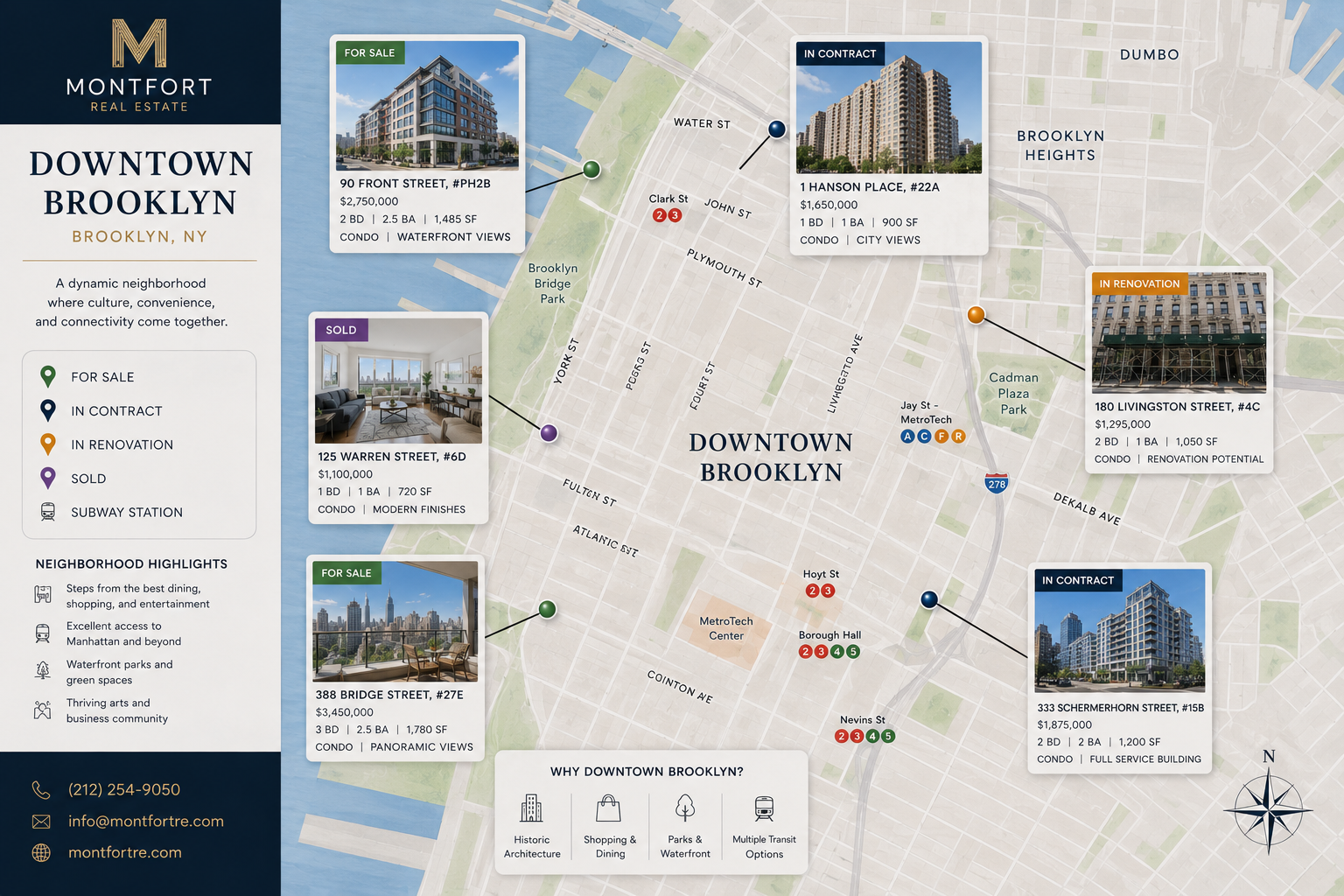
Stanley Montfort represents buyers and sellers across Downtown Brooklyn's condominium corridors, evaluating each micro-location through a real estate activity lens rather than as a neighborhood guide.
Fort Greene and surrounding condo developments near Brooklyn Academy of Music, where mid-rise condominiums compete with co ops for sale in older buildings along the tree-lined streets of park slope's border
DUMBO waterfront towers with Manhattan skyline and bridge views, where floor level and exposure create substantial price differences within the same building
Brooklyn Heights Promenade area high-rise condominiums, where proximity to the waterfront and surrounding building density affect light, privacy, and buyer demand
MetroTech vicinity mid-rise and high-rise condo buildings in Brooklyn NY, where transit access to Jay Street-MetroTech station influences commute flexibility and resale appeal
Atlantic Terminal area new development and established condo inventory, where proximity to the Barclays Center transit hub supports buyer demand but street-level activity varies block by block
Frequently Asked Questions About Downtown Brooklyn Co-ops
How do common charges compare between Downtown Brooklyn co-ops buildings?
Common charges reflect a building's staffing, amenities, insurance, maintenance obligations, and management efficiency. A full-service condominium managed by firms like Douglas Elliman or FirstService Residential may carry common charges of $1.00 to $1.50 per square foot monthly, while a smaller building with fewer amenities may charge $0.60 to $0.90. Stanley compares total monthly ownership cost, including common charges and separate property taxes, against competing buildings at similar price points. Co-op maintenance fees cover heat, hot water, and insurance in a single payment, which makes direct comparison between co ops and condos require careful accounting of what each monthly figure includes. Co-op closing costs are generally lower than condo costs, but the purchase process differs; co-op purchasing entails buying shares in a corporation that owns the building, not a deeded interest.
What should I know about floor premiums in Downtown Brooklyn towers?
Floor premiums are justified by measurable improvements in views, natural light, privacy, and noise reduction. In a 50-story Downtown Brooklyn tower, the jump from floor 8 to floor 20 may produce a meaningful change in all four variables. The jump from floor 35 to floor 40 may produce almost none if the skyline view is already unobstructed at floor 35. Stanley evaluates floor premiums on a building-by-building basis, accounting for surrounding structures and the specific unit line's orientation.
How do I compare sponsor sales with resale inventory?
Total acquisition cost analysis includes the purchase price, sponsor transfer taxes, working capital fund contributions, and immediate carrying charges. A sponsor unit priced at $1,500 per square foot with 3% in additional buyer-paid closing costs has a different effective cost than a resale unit at $1,450 with a standard closing cost split. Stanley also compares construction quality, warranty coverage, and move-in timeline against the established financials and immediate availability of resale units.
What building financials should I review before purchasing?
Reserve fund adequacy and recent assessment history are the two most immediate indicators of building financial health. A condominium with reserves below 10% of annual operating expenses may face pressure to levy assessments for routine capital work. Operating expense trends over three to five years reveal whether common charges are stable or escalating. Financial scrutiny is intense for co-op boards in prime Brooklyn locations; the co-op approval process includes a thorough financial review and interview, while condo boards typically exercise a right of first refusal rather than full buyer screening. Stanley reviews building financial statements as part of every purchase recommendation and coordinates with the buyer's attorney for detailed legal and accounting interpretation.
How does buying a co-op differ from buying a condo in Downtown Brooklyn?
Co-ops make up nearly 80% of Brooklyn apartments, and the co-op market in Brooklyn has approximately 780 to 800 listings for sale at any given time. Downtown Brooklyn co-ops make up a notable share of NYC housing stock, particularly in older buildings. Co-ops typically require a minimum 20% down payment, and prospective shareholders must submit a board package for approval. The Board of Directors screens applicants in person before approval, and buying a co-op involves passing strict financial and board review processes. Many co-ops require maintaining liquid cash post-closing to cover expenses, and foreclosures are rare in co-ops due to strict screening. Co-op closings provide a stock certificate instead of a deed, reflecting the share-based ownership structure. Co-ops are less flexible than condos with stricter rules on subletting and pets; subletting rules in co-ops can limit renting out units to specific times. Choosing a co-op agent should focus on their experience with board packages and financials. Co-ops typically offer more accessible entry price points compared to luxury new-development condos; in Q2 2026, Downtown Brooklyn co-ops had a median sale price of approximately $768,500 versus $1,947,500 for condos. Co-ops took a median 67 days to reach contract, while condos moved in approximately 27 days.
Get Expert Downtown Brooklyn Co-ops Guidance
Whether you are comparing two active listings in competing Downtown Brooklyn towers, preparing to sell a condo you have owned for five years, or evaluating a sponsor unit against resale alternatives, Stanley Montfort provides the building-level and unit-level analysis that supports a well-informed decision. Every consumer's consideration is different; reach out to discuss your specific apartment or search objectives.
Phone: 1-646-970-1078 Email:[email protected] Address: 8 West 126th Street, New York NY 10027
Recent News & Realtor Advice
Stay in the loop on the latest events, news, & happenings in and around our community!
Upper West Side Townhouse Q2 2024 Market Report
On the Upper West Side, we observed a distinct trend that diverges from the citywide patterns. Speci…
Harlem Brownstone Q2 2024 Market Report
The Harlem brownstone market has seen an increase in sales activity since this time last year. In Q2…
Discover Your Dream Home: Explore Apartments for Sale on the Upper West Side
Are you searching for your dream home in one of New York City’s most sought-after neighborhoods? Loo…