
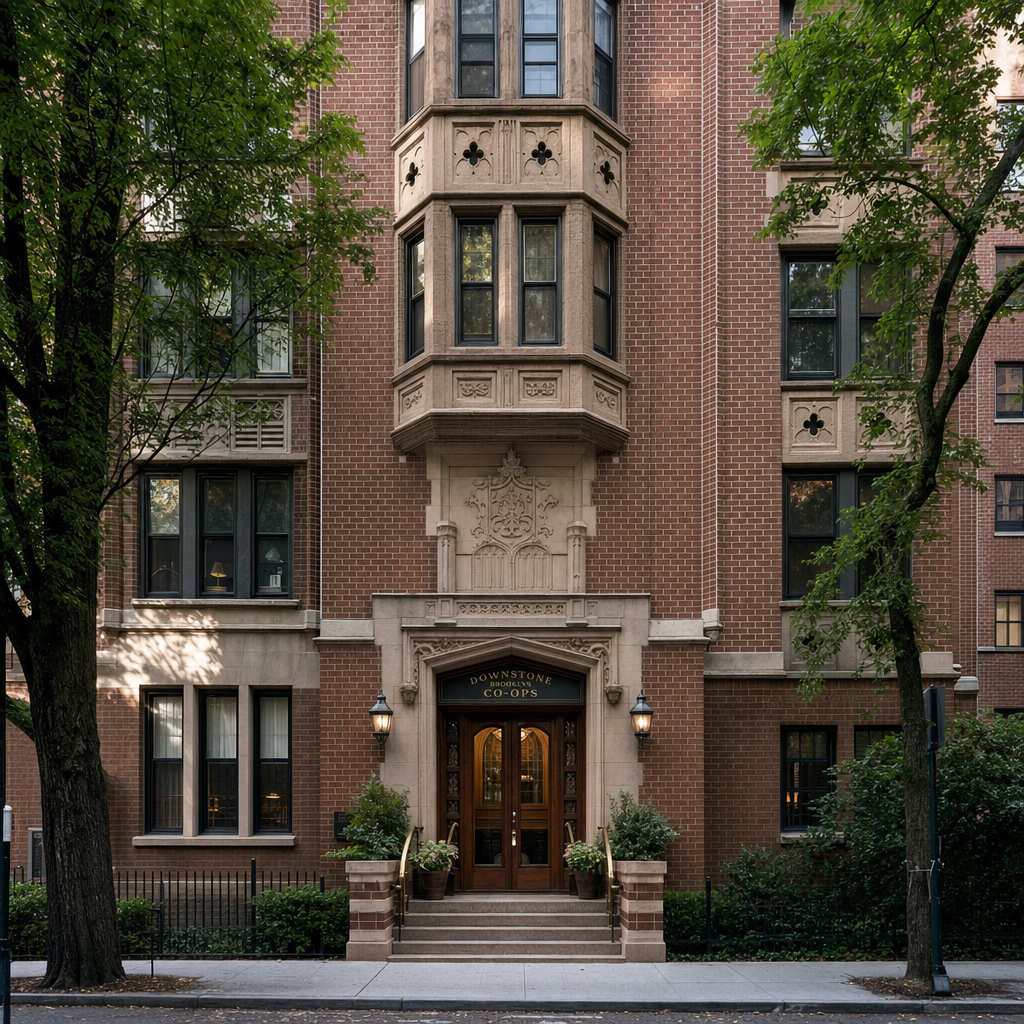
Most of what has been built in Downtown Brooklyn since the 2004 rezoning is condo towers. Its co-ops are a smaller, different market: mostly older buildings, priced on maintenance and board rules as much as on square footage.
For buyers, that often means more space for the money. It also means a board to satisfy and finances to read closely.
Stanley Montfort, a Licensed Associate Real Estate Broker with SERHANT, has handled co-op transactions since 2017, and has never had a co-op board application rejected.
Smooth transaction with limited risk
No pressure to over pay and buy within a certain time period
A team of people that will be with you even after the transaction is complete
Live listing data provided by OLR IDX. Need help? Contact us or log in to your customer account.
In Downtown Brooklyn you'll often compare a co-op and a condo a few blocks apart. The difference is in how you own the apartment:
Co-op: you buy shares in the corporation that owns the building. The board approves buyers, and monthly maintenance includes your share of the building's property taxes and underlying mortgage. Co-ops usually cost less to buy, and come with more rules on financing, subletting and renovations. Many co-ops cap financing at 80% of the price or less, but co-op share loans don't pay NYC's mortgage recording tax, so buyer closing costs are usually lower than for a condo.
Condo: you buy the apartment itself, with a deed. You pay common charges, plus your own property taxes separately. Condos usually allow more flexibility, at a higher purchase price. Condos can often be financed up to 90%.
The right choice depends on how long you plan to stay, whether you might rent the apartment out, how much you're putting down, and how you feel about a board review. Stanley walks through both with you, using real numbers for the specific buildings you're considering.
Check the building's rules first. Financing limits, down payment requirements, sublet policy and guarantor rules decide whether a building fits before price does.
Check whether the co-op is income-restricted. Some Brooklyn co-ops are HDFC buildings with income caps and resale limits. They can look like bargains, but they have different rules.
Read the financials. Reserve fund, underlying mortgage, maintenance increases, assessments and board minutes show whether a low price hides a coming bill.
Price from co-op comps. Offers are based on closed co-op sales with similar maintenance, not on condo towers down the street.
Assemble the board package. Financial statements, tax returns and references are checked for gaps before submission, then Stanley prepares you for the interview.
Pricing is set against closed co-op sales in comparable buildings, not the condo towers that dominate local listings.
Buyers are pre-screened against your building's financial requirements before you accept an offer.
Building documents are gathered early from the managing agent, so the buyer's attorney and lender aren't kept waiting.
Flip tax and transfer costs are calculated up front, so you know your net proceeds.
Audited financial statements (the last two years)
Reserve fund balance and trend
Underlying mortgage: balance, rate and maturity
Maintenance history and planned increases
Special assessments, past and proposed
Board minutes (the last two years)
Facade inspection (FISP / Local Law 11) status
Local Law 97 exposure for larger buildings
Whether the building is income-restricted (HDFC)
Sublet, pet, renovation and guarantor policies
Licensed Associate Real Estate Broker with SERHANT, in NYC real estate since 2017
100+ transactions and over $100 million in sales
Never had a co-op board application rejected
REBNY member
Background in law and the U.S. Navy, and a former VP at Citi, so financial documents get a close read
Responds within 24 hours
Downtown Brooklyn and the blocks around it: Brooklyn Heights, Boerum Hill, Fort Greene, Clinton Hill, DUMBO and Cobble Hill.
Neither is better for everyone: a co-op usually costs less to buy, while a condo gives you more flexibility. If you plan to stay for years and don't need to rent the apartment out, a co-op is often the better value. If you might sublet, buy with a guarantor, or sell within a few years, a condo is usually easier.
Co-ops usually sell for less because board approval, financing limits and sublet rules shrink the pool of buyers. Compare total monthly cost, maintenance against common charges plus property taxes, not just the purchase price, because maintenance already includes the building's taxes and underlying mortgage.
Yes. Most co-op buyers finance with a share loan, a mortgage secured by your shares and proprietary lease. The building usually caps how much you can finance, so check its maximum before you shop for a loan.
Yes, but indirectly. The building pays the property taxes and each owner's share is built into the monthly maintenance, which is why co-op maintenance looks higher than condo common charges. The portion of maintenance that covers property taxes and mortgage interest is usually tax-deductible.
Typically longer than a condo, often two to three months from accepted offer to closing, because board approval comes before closing. A complete board package and a building that meets often are what shorten the timeline.
Only if the building's sublet policy allows it. Many co-ops limit subletting by how long you've owned, how long the sublet lasts, or both, and some don't allow it at all. If renting out the apartment might matter to you, read the sublet policy before you make an offer.
An HDFC co-op is an income-restricted co-op: buyers must fall under income limits, and resale prices or profits may be capped. HDFC apartments can cost far less, but they're not a fit for every buyer, and the rules vary by building.
Considering a co-op in Downtown Brooklyn, or ready to sell one? Tell Stanley about the building, and he'll tell you what to check first.

 Posted on Google
Stanley Montfort represented me in the sale of my home in Hamilton Heights. He is professional in his approach and brings his warm, personable demeanor into all his interactions. I selected Stanley to represent me after doing a thorough analysis of realtors in the Hamilton Heights area looking at number of closed tra…
 Posted on Google
Stanley was great to work with. He worked with our schedule, took the time to understand our priorities, showed us a range of properties in different areas that could suit our needs and helped us strategize our approach. He was also a great resource in helping us find local connections for inspections, repairs, etc.…
 Posted on Google
Thank you for a streamlined process from start to finish ensuring the right place was found and secured without haste!
 Posted on Google
We had a great experience working with Stanley. He taught us a lot about the specific market we were looking in, which enabled us to make a very good decision on purchase of a new home.
 Posted on Google
Stanley was the dream real estate agent we didn’t know we deserved! From the beginning he was attentive to our curiosity to help us figure out what type of property we wanted - and could afford. Throughout the process he was a calm and patient presence in our lives, offering us sincere and sage perspectives to keep u…
 Posted on Google
Stanley is amazing! No one knows the Harlem market better than him, and his deep expertise was a tremendous resource. He taught me along the way how to spot 'red flags' and talked me out of making an offer on a place that seemed amazing but had, upon his close inspection, evidence of poor workmanship and lots of cut co…
 Posted on Google
Stan is extremely knowledgeable and professional. He also has the utmost patience! He helped me sell my home and purchase a condo at the same time. My home had all types of special contingencies but he was able to find me a buyer and get me very close to the price I wanted. I was very specific in terms of the property…
 Posted on Google
Stanley is the consummate professional! He made sure my listing has excellent and consistent foot traffic and quality candidates for our showings. This sale had some challenges, but Stanley never wavered. Ultimately we were successful and I’ll use him again and again for future real estate transactions.
Practical guides from Stanley Montfort on buying, selling, and pricing NYC homes.

How the co-op sale process works, including board review and the documents to prepare.

Request a free valuation that considers board requirements, building trends, and the market.

Estimate monthly payments and closing costs before you start your search.
Reach out for buyer representation, listing strategy, or a confidential valuation with Stanley Montfort.