
Chelsea Co-Ops Realtor: Expert Representation for Cooperative Apartments in Manhattan
Buying or selling a cooperative apartment in Chelsea requires a realtor who understands how co-op boards evaluate buyers, how building financials affect pricing, and why two apartments at the same price can carry ownership costs that differ by hundreds of dollars per month. There are currently 78 co-ops listed for sale in Chelsea, with co-op prices in Chelsea ranging from $349,000 to $12,900,000. Whether you're preparing a board package as a buyer or evaluating offer strength as a seller, Stanley Montfort provides the building-specific knowledge and transaction coordination that Chelsea cooperative apartments demand.
Call or email Stanley Montfort to discuss your Chelsea co-op purchase, sale, or valuation.
Why Chelsea Buyers and Sellers Choose Stanley Montfort
Licensed NYC real estate broker specializing in Manhattan cooperative transactions
Direct experience with Chelsea co-op board packages, buyer qualification screening, and building financial analysis
Responsive communication throughout every phase, from initial property selection through board approval and closing
Track record coordinating transactions across Chelsea's traditional elevator buildings, loft-style co-ops, and converted properties
Why Stanley Montfort Stands Out as Your Chelsea Co-Op Realtor
Navigating the co-op market requires an agent with specialized knowledge that goes beyond listing data and open house schedules. Co-ops involve strict financial vetting and board approval processes, and every building in Chelsea operates under its own set of financial requirements, sublet restrictions, renovation rules, and buyer qualification standards. Building-specific knowledge is critical when purchasing a co-op.
Before I recommend that a buyer pursue a Chelsea co-op, I review how the building's requirements fit the buyer's financial profile, how the cooperative's financials compare to similar buildings, and whether the apartment itself supports the buyer's goals for both living and future resale.
Building-level analysis, not just apartment tours. I evaluate reserve funds, maintenance trends, assessment history, underlying mortgage obligations, and operating expenses before presenting properties. Prospective buyers should investigate building financial health before purchase.
Board package coordination from day one. An effective agent should assist buyers in preparing a flawless board application package. I organize documentation, review financial narratives, and coordinate deadlines so nothing delays the approval timeline.
Seller pricing grounded in comparable evidence. For sellers, I analyze same-building sales, competing active listings, and the realistic buyer pool that the building's financial requirements create. Agent negotiation skills are particularly important in competitive markets where offer quality matters as much as price.
Chelsea Co-Op Real Estate Services
Buying a Co-Op in Chelsea
Potential co-op buyers should prioritize representation from agents with relevant expertise. The purchase decision involves three layers: the apartment itself, the cooperative corporation that owns the building, and whether the buyer can realistically satisfy that building's published requirements.
I guide buyers through each layer. Property selection starts with apartment suitability (floor level, exposure, layout, ceiling height, condition) and extends to cooperative financial health (reserves, maintenance trajectory, capital projects, assessments). Understanding financial requirements for co-ops is vital, and I screen building-specific down payment expectations, liquidity standards, debt-to-income thresholds, and financing restrictions before a buyer commits time to a property.
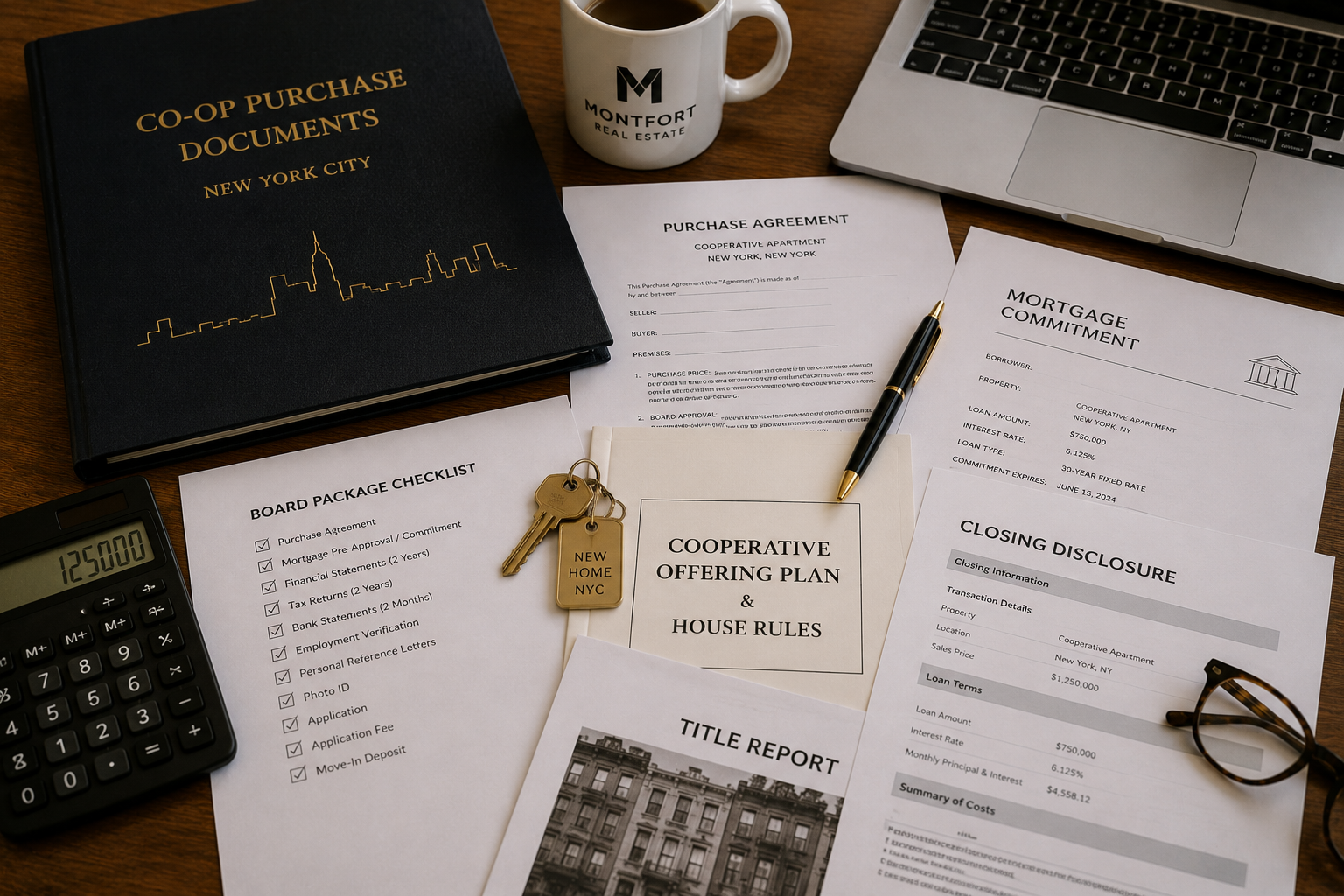
Co-op boards require strict financial disclosures from buyers. I coordinate the full board package, including tax returns, bank statements, reference letters, financial summaries, and cover letters addressing any anomalies. Deep financial disclosure is mandatory to secure co-op board approval, and a well-organized package reduces delays and improves the buyer's presentation.
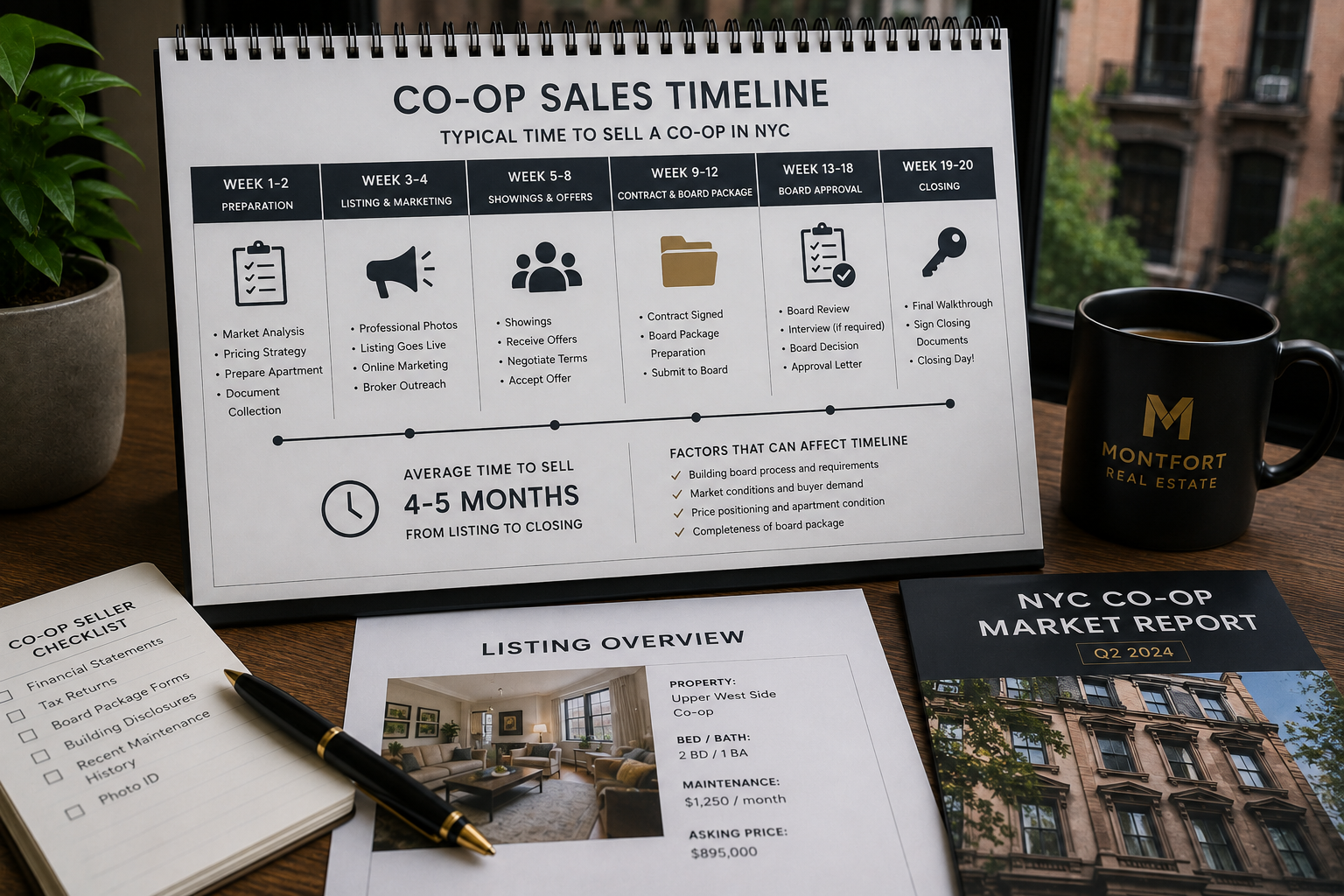
Selling a Chelsea Co-Op
For a co-op seller, the highest offer is not automatically the strongest transaction. A buyer whose financial profile falls short of the board's requirements wastes months of marketing time if the application is rejected.
When I list a Chelsea co-op for sale, pricing starts with same-building comparable sales adjusted for floor, exposure, condition, and renovation quality. I then evaluate competing active co-ops for sale and relevant condo alternatives to position the listing where it attracts qualified buyers. Marketing highlights both the apartment's features and the cooperative's strengths, including favorable sublet policies, healthy reserves, or recently completed capital improvements.
Offer evaluation goes beyond the purchase price. I assess each buyer's down payment, post-closing liquidity, income documentation, and employment stability to gauge board approval likelihood before recommending acceptance.
Chelsea Co-Op Valuation and Market Analysis
Two Chelsea apartments at the same listing price can have very different ownership costs. A unit with $2,400 monthly maintenance in a building carrying an underlying mortgage presents a different affordability equation than a unit with $1,600 maintenance in a debt-free cooperative, even if the asking prices are identical.
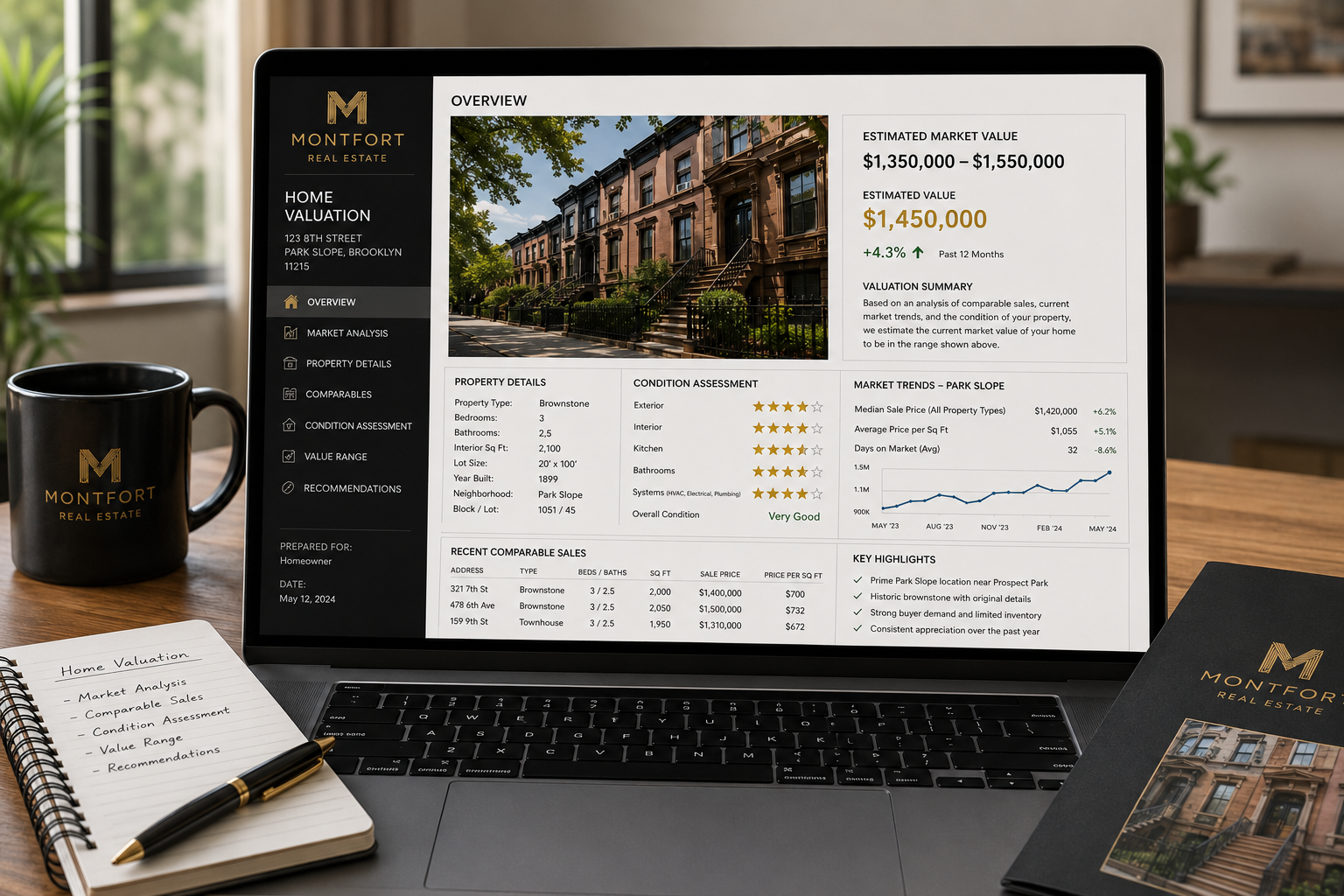
As of Q2 2026, the median sale price for Chelsea co-ops reached $922,000, rising 28.6% year-over-year, with median price per square foot near $1,000 for co-ops. Price per square foot varies by apartment size: studios and one-bedrooms average roughly $1,039 to $1,081 per square foot, while two-bedrooms average approximately $1,167, according to Douglas Elliman real estate data. Higher figures apply to units with superior exposure, high ceilings, or renovated finishes.
I use price per square foot only as supporting context. Same-building comparable sales, adjusted for apartment condition, layout, floor level, maintenance charges, assessments, and transaction timing, provide more reliable valuation guidance.
Understanding Chelsea's Co-Op Market
Chelsea has a diverse mix of pre-war and post-war co-ops spread across blocks from 14th Street to 30th Street, between Sixth Avenue and the Hudson River. Real estate professionals need to understand unique building rules in co-op transactions, because the cooperative housing stock here is not uniform.
Traditional Chelsea Co-Op Buildings
Established cooperative buildings in Chelsea include pre-war elevator buildings and mid-century properties with conventional apartment layouts: separate rooms, standard ceiling heights, and defined living spaces. These buildings tend to have longer financial track records, stable maintenance histories, and boards with well-documented buyer qualification standards.
Residents in traditional Chelsea co-ops often benefit from full-service operations. Chelsea co-ops include amenities like doormen and roof decks, and many established buildings offer laundry facilities, package rooms, and storage. Monthly maintenance covers building staff salaries, property taxes, insurance, and operating expenses. In some buildings, monthly maintenance covers gas and electricity costs as well.
Pricing in these buildings correlates closely with floor level, view, apartment condition, and light exposure. A renovated south-facing one-bedroom on a high floor in a financially healthy building will trade at a premium to a comparable unit on a lower floor with a north-facing courtyard view. Co-ops in Chelsea often feature spacious layouts and modern kitchens, particularly in units that have been thoughtfully renovated.
Chelsea Loft-Style Co-Ops
When evaluating a loft-style co-op, I look beyond architectural character to the practical details that affect daily living and resale. Converted industrial buildings offer high ceilings, open floor plans, and sometimes exposed structural elements. These features attract a specific buyer pool, but they also present considerations that conventional apartments do not.
Column placement can limit furniture arrangements. Deep floor plates in former warehouse buildings may reduce natural light in interior spaces. Window configuration varies widely; some converted units have oversized industrial windows with excellent light, while others face interior shafts. Bedroom layouts in open-plan units sometimes rely on temporary partitions or built-in walls that may not provide full sound separation.
Maintenance in converted buildings can run higher when the building's original industrial infrastructure required substantial upgrades for residential use. Renovation rules in loft co-ops vary. Buyers considering work should investigate alteration agreements, board approval procedures, wet-over-dry restrictions, and insurance requirements before assuming an apartment can be modified as envisioned.
Chelsea Co-Ops by Location
West Chelsea (west of Tenth Avenue, roughly 20th to 30th Streets): This area contains the highest concentration of converted loft-style co-ops. Buildings here reflect the neighborhood's industrial history, and apartments tend to feature open layouts and higher ceilings. Maintenance often reflects the cost of maintaining converted structural elements. Access to the High Line and Hudson River Park contributes to buyer demand, though competition with newer condo development in the area is a factor in pricing.
Traditional Chelsea blocks (between Seventh and Ninth Avenues, 14th to 23rd Streets): The densest cluster of conventional elevator co-ops. These blocks offer walkable proximity to subway lines and established retail. Building types range from six-story walk-ups to full-service high-rises. Price levels and maintenance charges vary block by block and building by building.
Sixth Avenue corridor and eastern Chelsea: Buildings along Sixth Avenue tend to offer more amenities and services, which translates to higher maintenance charges. Boards in these larger buildings sometimes impose stricter financial requirements. Buyers in this micro-market encounter direct competition from condo alternatives nearer the avenues. Chelsea condos had a median sale price of $2.3 million in Q2 2026, which means a co-op buyer comparing total monthly ownership cost at a similar price point must account for differences in financing, tax treatment, and building charges.
Chelsea Co-Op Buying Process
Financial Preparation and Qualification
Each co-op board may have unique expectations regarding financial liquidity after closing. Before submitting an offer, I verify building-specific requirements so buyers focus on properties where their financial profile is realistic.
Down payment: Building-specific requirements typically start at 20-25% of the purchase price. Some Chelsea co-ops require 30-50% or all-cash purchases. Boards often impose minimums higher than what a lender requires.
Post-closing liquidity: Many boards expect buyers to maintain 12-24 months of combined mortgage and maintenance payments in liquid assets after closing. This requirement varies by cooperative and can affect which properties are realistic for a given buyer's asset profile.
Debt-to-income ratio: Boards typically expect total housing costs plus other debts to stay between 25-30% of gross income. Self-employed buyers or those with irregular income patterns may face additional scrutiny.
Documentation: Tax returns for at least two years, bank and brokerage statements, proof of down payment source, employment verification, and personal and professional reference letters. The exact list varies by building.
Board Approval Process
Board interviews are an essential part of the co-op buying process. The timeline from accepted offer to board decision runs 2 to 8 weeks, plus additional time for scheduling and completing the interview.
I coordinate the full application package: organizing financial documents, drafting the cover letter, explaining any income gaps or anomalies, and ensuring everything the building's managing agent requires is submitted complete and on time. A NYC Council bill (Int. No. 1120-B) currently proposes to standardize co-op board application timelines, requiring boards to acknowledge receipt within 15 days and issue a decision within 45 days of receiving a complete application.
Effective buyer's agents should conduct due diligence before presenting an offer. I never guarantee board approval, but I can identify red flags in a buyer's profile early and help address them before the package is submitted.
Due Diligence and Building Analysis
One of the first things I review is whether the building's financial condition supports long-term ownership value. This includes:
Reserve fund levels relative to the building's age and capital needs
Recent and upcoming assessments: amount, purpose, duration, and how they affect monthly costs
Operating expense trends and maintenance charge history over the past three to five years
Underlying mortgage obligations and their amortization schedule
Sublet policy and its implications for future flexibility and resale demand
Renovation and alteration rules, including board approval procedures, work-hour restrictions, and insurance requirements
Different buildings in Chelsea may have specific sublet restrictions. A restrictive policy works well for an owner-occupant who values building stability but may be inappropriate for a buyer who anticipates needing rental flexibility within a few years.
Chelsea Co-Op Selling Strategy
Pricing and Market Positioning
Before recommending an asking price, I analyze same-building comparable sales first, then expand to genuinely comparable cooperatives in the immediate area. Q2 2026 data shows co-op transaction volume in Chelsea dropped roughly 29% compared to Q2 2025, which means sellers face a thinner buyer pool and need precise pricing to avoid extended time on market.
A Chelsea co-op seller competes with today's available alternatives, not only with previous sales in the building. I evaluate active listings in the same building and competing cooperatives, then consider relevant condo alternatives that overlap the likely buyer's budget. Maintenance charges affect affordability directly; a building with high maintenance narrows the pool of buyers who can meet the board's debt-to-income standards at a given purchase price.
Assessments require careful presentation. An active assessment does not automatically indicate a financially weak cooperative. Capital improvements funded through assessments can reflect proactive management. I help sellers frame assessments in the context of the work being performed and the building's overall financial trajectory.
Offer Evaluation and Negotiation
When multiple offers come in, I evaluate each buyer's complete financial profile, not just the dollar amount. A lower offer from a buyer with strong liquidity, clean documentation, and a straightforward income profile may close faster and with more certainty than a higher offer from a buyer whose debt-to-income ratio sits at the edge of the board's threshold.
I assess down payment source, post-closing reserves, employment stability, and any financing contingencies. For co-op transactions where the board can reject a buyer after contract signing, transaction certainty is a real component of offer value.
Chelsea Areas Served
14th to 23rd Streets, Seventh to Ninth Avenues: Traditional Chelsea co-op corridor with the highest density of conventional elevator buildings
West Chelsea (west of Tenth Avenue, 20th to 30th Streets): Loft-style and converted co-ops near the High Line and waterfront
Sixth Avenue corridor: Full-service co-op buildings with higher amenity levels and maintenance
South Chelsea (14th to 17th Streets): Overlap with the Flatiron and Union Square markets; a mix of walk-up and elevator co-ops
Adjacent Manhattan neighborhoods where Chelsea co-op expertise applies, including properties in new York's broader west side market
For example, the Vermeer co-op offers 1,900 square feet of living space with a full-time doorman and concierge. Residents have access to a landscaped roof deck, and the Vermeer includes a parking garage and bicycle storage. Buildings like this illustrate the range of what Chelsea cooperative apartments offer across different price points and locations.
Frequently Asked Questions About Chelsea Co-Ops
How much do I need for a down payment on a Chelsea co-op?
Most Chelsea co-ops require a minimum of 20-25% down. Certain buildings require 30-50%, and some accept only all-cash purchases. The cooperative's financial policies, not just the lender's requirements, determine the minimum. I verify each building's published requirements before a buyer submits an offer.
What are typical maintenance charges in Chelsea co-ops?
Maintenance varies widely by building type, services, and financial structure. Full-service buildings with doormen, elevators, and comprehensive staff carry higher monthly charges. In some older "affordable" cooperatives like Penn South, maintenance runs approximately $150 per room. In buildings with more services or an underlying mortgage, monthly charges are substantially higher. What maintenance covers matters as much as the dollar amount; in some buildings, monthly maintenance covers gas and electricity costs, while in others those are billed separately.
How long does the board approval process take?
Expect 2 to 8 weeks from application submission to a board decision, plus additional time for interview scheduling. The timeline depends on the building's board meeting schedule, the completeness of the application, and the time of year. A well-prepared, complete board package with no missing documents moves faster.
Can I rent out my Chelsea co-op apartment?
Sublet policies are set building by building. Some cooperatives prohibit subletting entirely, some allow it after a required ownership period, and others limit the percentage of units that can be sublet at any given time. Buyers who anticipate needing rental flexibility should verify the sublet policy before making an offer, because restrictions affect both use and future resale appeal.
Start Your Chelsea Co-Op Search
Stanley Montfort provides Chelsea co-op buyer representation, listing services, valuation, board-package coordination, and building-level due diligence for cooperative apartments across Manhattan. Whether you're buying your first co-op in Chelsea or preparing to sell, the right information about the apartment, the building, and the realistic buyer pool makes the difference between a smooth transaction and a stalled one.
Phone: 1-646-970-1078 Email:[email protected] Address: 8 West 126th Street, New York NY 10027
Recent News & Realtor Advice
Stay in the loop on the latest events, news, & happenings in and around our community!
Upper West Side Townhouse Q2 2024 Market Report
On the Upper West Side, we observed a distinct trend that diverges from the citywide patterns. Speci…
Harlem Brownstone Q2 2024 Market Report
The Harlem brownstone market has seen an increase in sales activity since this time last year. In Q2…
Discover Your Dream Home: Explore Apartments for Sale on the Upper West Side
Are you searching for your dream home in one of New York City’s most sought-after neighborhoods? Loo…