
Crown Heights Co-Ops — Expert Guidance for Buyers, Sellers & Investors
We'll guide you through the Crown Heights co-op buying process, helping you navigate board requirements, financial reviews, and avoid costly mistakes
Complete Guide to Buying Crown Heights Co-ops: Expert Buyer's Agent Insights
Expert Crown Heights Co-op Buying Services
Buying a co-op in Crown Heights is one of the smartest moves you can make in Brooklyn real estate right now-but only if you understand how the process actually works before you start touring apartments.
I'm Stanley Montfort, a buyer's agent specializing in Crown Heights co-op purchases. Since 2015, I've helped dozens of buyers navigate everything from board package preparation to interview coaching, financing hurdles, and closing coordination. My job isn't just to find you one apartment you like-it's to make sure you understand every financial and procedural detail so you can close with confidence.
Crown Heights has 20 co-op homes currently for sale, and well-priced units below $1 million move fast. Having an experienced agent in your corner who knows the local boards, the building financials, and the neighborhood block by block makes a real difference.
Why Crown Heights Co-ops Are Ideal for NYC Buyers
Crown Heights is one of Brooklyn's most compelling neighborhoods for co-op buyers, and the reasons go well beyond price. Here's what draws people in-and what keeps them here.
Genuine Affordability: Co-ops in Crown Heights typically cost 10–20% less than comparable condos. The median co-op asking price sits around $611,000, while condos in the same neighborhood average roughly $1.09 million. For buyers priced out of Park Slope or Manhattan, this neighborhood offers real value without sacrificing quality of life.
Strong Community Feel: Co-ops often feature a stronger sense of community among residents. Many Crown Heights buildings have long-term shareholders who take pride in their homes and actively participate in board governance. That translates into well-maintained buildings and neighbors who actually know each other.
Excellent Public Transit Access: Few Brooklyn neighborhoods match Crown Heights for subway access. The A, C, 2, 3, 4, and 5 trains all serve the area, giving residents direct connections to Manhattan, Downtown Brooklyn, and the rest of the city. Whether you work in Midtown or the Financial District, your commute is straightforward.
Rich Cultural Heritage: Located at the crossroads of Brooklyn's Caribbean, Jewish, and artistic communities, Crown Heights has a cultural depth you won't find in newer developments. The dining scene has expanded significantly in recent years, and the neighborhood's proximity to the Brooklyn Museum, Prospect Park, and the Brooklyn Botanic Garden adds daily quality-of-life benefits.
Diverse Architectural Styles: From classic pre-war walk-ups to mid-century elevator buildings and modern conversions, the housing stock in Crown Heights gives buyers genuine variety. Some buildings offer classic Brooklyn charm with original details, while others have been updated with contemporary amenities.
Lower Carrying Costs: Monthly maintenance fees in Crown Heights co-ops tend to run lower than luxury condo common charges while often including more services-property taxes, heat, hot water, building staff, and insurance are commonly bundled in.
Co-ops in Crown Heights offer a more affordable alternative to condo ownership without the trade-offs many buyers expect.
Crown Heights Co-op Buyer Types We Serve
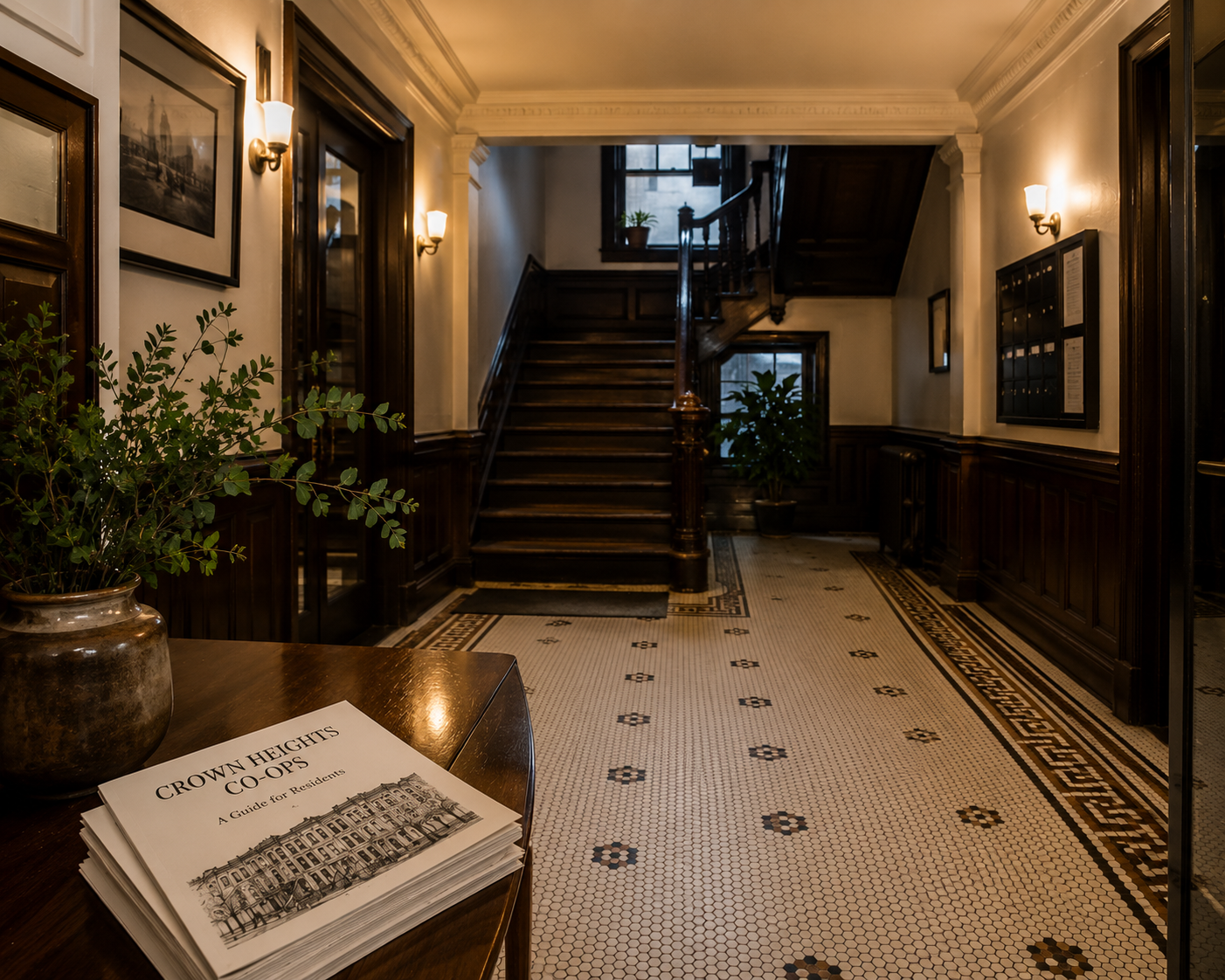
First-Time Homebuyers
Most of my first-time clients come in knowing they want to buy in Brooklyn but aren't sure whether a co-op, condo, or brownstone is the right fit. I walk them through the differences-apartment purchase in co-ops means buying shares in a corporation instead of real property, which changes how financing, taxes, and resale work. We cover board approval requirements early, build a financial preparation plan, and make sure down payment and closing cost expectations are realistic before we start looking at units.
One of the biggest differences buyers notice is that closing costs for co-ops are generally lower than for condos-there's no title insurance on the unit itself, for instance-which helps first-time buyers preserve more of their savings.
Growing Families
For families, the priorities shift toward space, school districts, and long-term flexibility. I help identify family-friendly buildings with community spaces, evaluate nearby schools and parks, and-critically-review subletting policies. Many buyers assume subletting is a given, but in Crown Heights co-ops, especially in older walk-ups or buildings with strict boards, sublet freedom is often quite limited for the first few years. If your plans might change in three to five years, we need to know the building's policies before you make an offer.
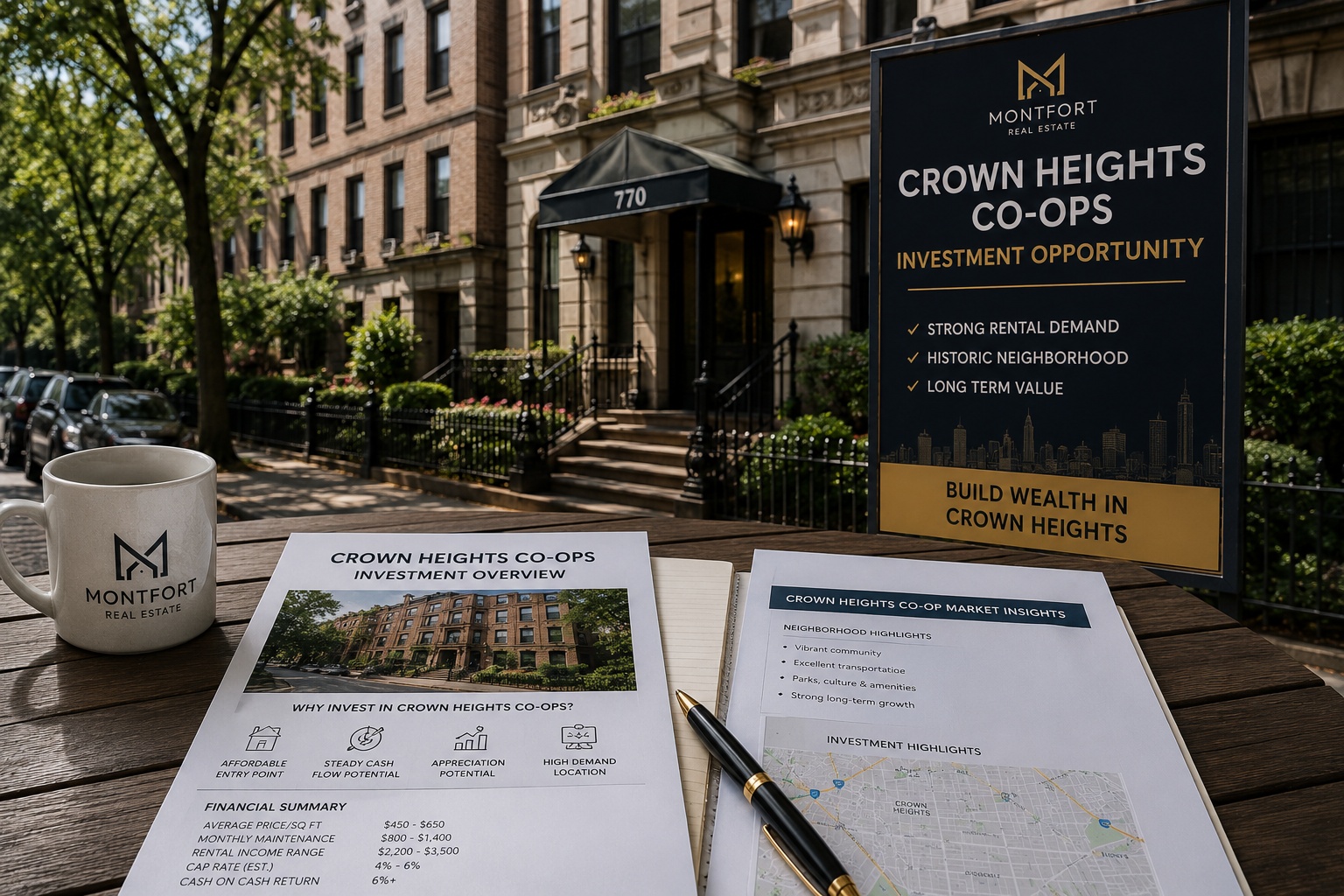
Investment-Minded Buyers
If you're thinking about future resale or rental potential, we focus on buildings with favorable flip tax structures, reasonable subletting rules, and strong financials. I pull the last three years of audited financial statements for every building we seriously consider. A building with a well-funded reserve and transparent maintenance fee history is a far better long-term investment than one with artificially low fees and a capital assessment looming.
Top 10 Things Every Crown Heights Co-op Buyer Must Know
Board approval takes 4–8 weeks-and requires complete financial disclosure. Co-op buyers must submit a comprehensive board package including financial documents such as tax returns, bank statements, and employment verification. Boards typically meet monthly, and incomplete packages cause the most common delays. One missing document can push your timeline back an entire month.
Debt-to-income ratios matter more than you think. Most boards want to see your monthly housing costs (mortgage plus maintenance) at or below 28% of gross income. Some buildings are stricter. A mistake I frequently see buyers make is assuming they qualify based on what a lender approves-boards often apply tighter standards than banks.
Post-closing liquidity requirements can surprise you. Many Crown Heights co-op boards require proof that you'll have 6–24 months of maintenance fees sitting in liquid assets after closing. Falling below the board's minimum leads to rejection even when the purchase price and down payment are perfectly acceptable.
Flip taxes range from 1–3% of the sale price. These aren't government taxes-they're building-imposed transfer fees set in the proprietary lease or offering plan. Each building's flip tax is different, and I always verify the exact structure before my clients make an offer. On a $500,000 sale, that's $5,000 to $15,000.
Subletting restrictions can limit your flexibility for years. Co-ops often impose restrictions on subletting and renovations. Many buildings require you to live in the apartment as your primary residence for two to five years before subletting is even an option, and then they may cap the duration or require board approval for tenants.
Maintenance fees cover far more than you might expect. Monthly maintenance fees in co-ops cover property taxes and building maintenance, plus heat, hot water, building staff salaries, insurance, and sometimes an underlying building mortgage. One of the first things I review when clients ask me to assess a Crown Heights co-op is how many shares are allocated to the unit-that often tells you more about maintenance fees than square footage alone.
Co-ops typically require a down payment of 20% to 30%. Unlike condos, where 10% down is sometimes possible, co-op boards and lenders generally expect at least 20–25% down. All-cash offers or larger down payments strengthen your application significantly.
The board interview is a crucial part of the co-op approval process. Co-op boards may require a board interview before final approval for buyers. These typically last 15–30 minutes and involve three to five board members. How you present yourself-both financially and personally-can tip marginal cases. I coach every client through building-specific preparation.
Building financials reveal what the listing won't tell you. When evaluating a co-op, I always pull audited financials, check the reserve fund size, look for litigation or upcoming façade work, and examine whether maintenance increases have been consistent and well communicated. Commissioning a professional inspection can uncover potential future costs in co-ops that aren't visible during a walkthrough.
Crown Heights moves fast under $1 million. Only about 18% of active listings in Crown Heights are co-ops. Well-priced units attract competitive multiple offers within a week. Median days on market across all property types is about 48 days, but attractively priced co-ops often sell faster. You need to be financially and board-package ready before you start touring.
Crown Heights Co-op Buying Process
Step 1: Financial Preparation and Pre-Approval
Before we look at a single apartment, I run a complete financial assessment with every client. We review income, debts, savings, and credit to determine not just what a lender will approve, but what co-op boards in your target buildings will accept.
You'll need to secure a pre-approval letter from a co-op experienced lender-not all mortgage companies understand co-op financing, and using the wrong one can cost you time. We organize tax returns, bank statements, investment account statements, and employment verification letters early so the board package comes together quickly when you find the right unit.
Co-ops generally have stricter ownership rules than condos, and financial preparation is where the process is won or lost.
Step 2: Building and Unit Selection
This is where local expertise matters most. We tour available units, but I'm simultaneously evaluating the building's financials, board requirements, proprietary lease terms, house rules, and subletting policies. A beautiful apartment in a building with a depleted reserve fund or a history of special assessments isn't a good buy.
I review the proprietary lease carefully-it governs your rights and obligations including what repairs you're responsible for, renovation rules, pet policies, and noise restrictions. Many buyers underestimate the importance of reading these documents before making an offer.
We also assess maintenance fee breakdowns and look for upcoming capital improvement plans. A mistake I frequently see buyers make is assuming that because the maintenance seems reasonable now, it won't jump because of upcoming capital work or low reserve funds.
Step 3: Offer Submission and Board Package Preparation
Once we identify the right unit, we submit a competitive offer with appropriate contingencies and a realistic timeline. Then we immediately begin assembling your board package-financial statements, reference letters, employment verification, and personal statements.
I coordinate directly with the building's managing agent to confirm submission deadlines and format requirements. Different buildings have different expectations, and a polished, complete package submitted on time signals to the board that you're a serious, organized buyer.
Step 4: Board Approval and Closing
The board interview is where many buyers feel the most anxiety, but with proper preparation, it becomes straightforward. I provide building-specific coaching-what the board typically asks, how to discuss your finances clearly, and what to avoid volunteering. Boards cannot ask about protected classes including race, religion, national origin, marital status, sexual orientation, or disability.
After approval, we coordinate the closing timeline with your attorney, lender, and the building's managing agent. The co-op buying process takes two to four months on average from accepted offer to closing, though well-prepared buyers sometimes close faster.
Crown Heights Co-op Success Stories
"Stanley helped us understand why our first board application was rejected and built a stronger package for our second attempt. We closed on a beautiful two-bedroom in a pre-war building three months later. His knowledge of what specific boards look for made all the difference."– David and Maria R., Crown Heights Co-op Owners
"As a family of four, we needed space and a neighborhood where our kids could grow up. Stanley identified buildings with community gardens and playgrounds, walked us through the school district options, and prepared us for the board interview so thoroughly that the whole process felt manageable."– The Thompson Family, Crown Heights
"I had no idea what a board package even was when I started looking. Stanley educated me on everything-from how maintenance fees work to what post-closing liquidity means. I went into my interview confident, and I got approved on the first try."– Keisha L., First-Time Buyer
"Stanley's analysis of building financials saved us from buying into a co-op that had a major façade assessment coming. He steered us toward a building with strong reserves and a reasonable flip tax. That kind of guidance is worth every penny."– Michael T., Investment Buyer
Frequently Asked Questions
What's the difference between Crown Heights co-ops and condos?
The fundamental difference is ownership structure. When you buy a co-op, you're purchasing shares in a corporation that owns the building-you receive a proprietary lease granting you the right to live in your unit. With a condo, you own your apartment outright as real property.
This distinction affects everything. Co-ops require board approval; condos typically have only a right of first refusal. Co-ops charge maintenance fees that bundle property taxes, building services, and sometimes utilities; condos charge separate common charges plus individual property taxes. Co-ops generally have stricter subletting restrictions, while condos offer more rental flexibility.
Strict board approval processes in co-ops help ensure financial stability across the building-which is actually a benefit for long-term owners, even though it adds complexity to the buying process.
| Feature | Co-op | Condo |
|---|---|---|
| Ownership | Shares in a corporation | Real property deed |
| Board Approval | Required, including an interview | Usually right of first refusal only |
| Down Payment | Typically 20–30% | Often 10–20% |
| Subletting | Restricted; board approval required | Generally more flexible |
| Purchase Price | Typically 10–20% lower than comparable condos | Generally higher |
| Closing Costs | Generally lower | Higher (title insurance, mortgage recording tax) |
| Monthly Costs | Maintenance (includes property taxes) | Common charges + separate property taxes |
How long does the Crown Heights co-op buying process take?
From accepted offer to closing, plan for 60–90 days. Here's how the timeline typically breaks down:
Week 1–2: Attorney review, contract signing, deposit
Week 2–4: Board package preparation and submission
Week 4–8: Board review, interview scheduling, and decision
Week 8–12: Closing coordination
Factors that extend the timeline include incomplete documentation, boards that only meet monthly (especially during summer or December), slow references, and lender delays. One question I always encourage clients to ask early is when the board's next meeting is scheduled-that single date often determines your entire timeline.
What are typical maintenance fees in Crown Heights co-ops?
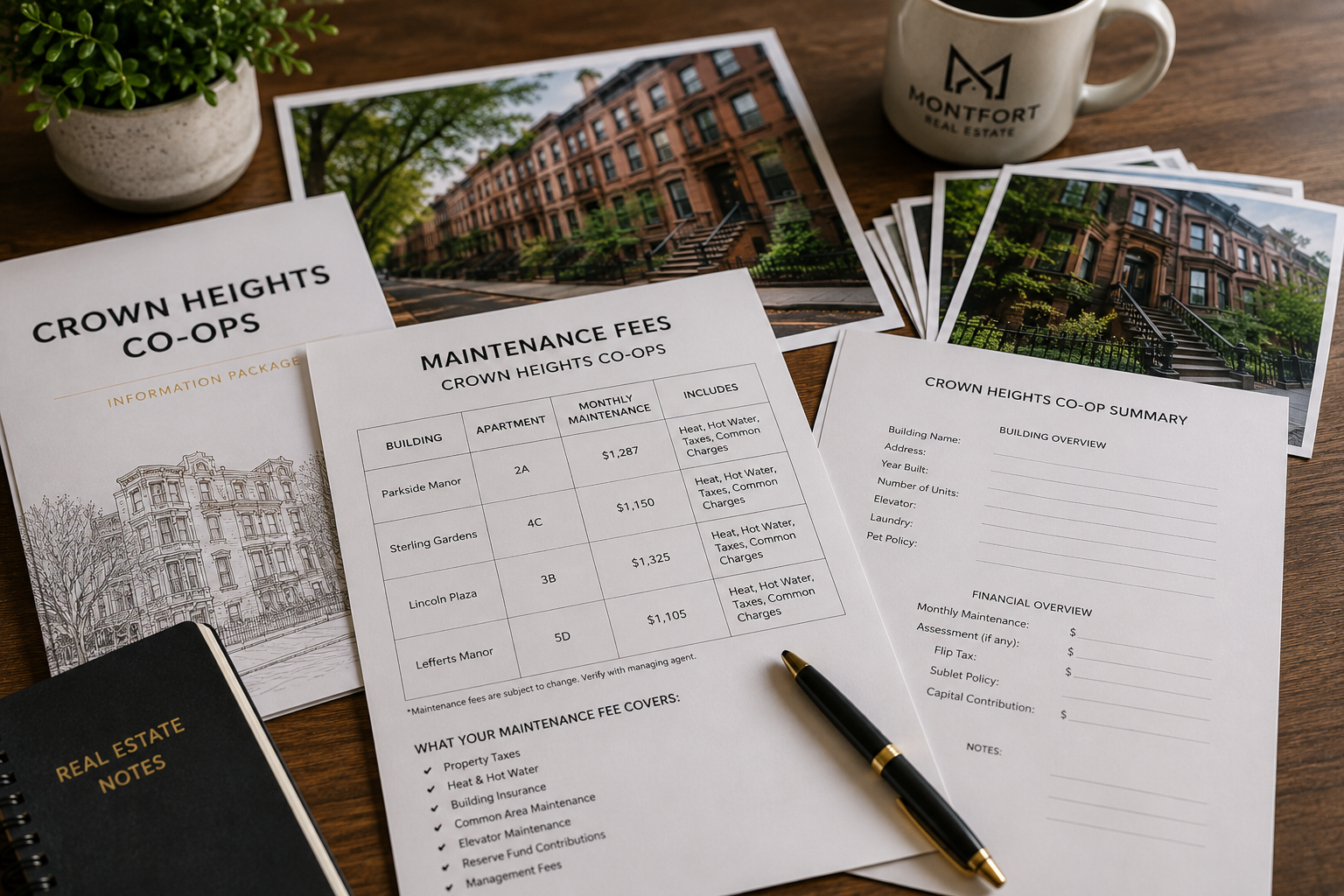
Maintenance fees vary significantly based on the number of shares allocated to your unit, the building's amenities, staff levels, and whether the building carries an underlying mortgage. Studios and one-bedrooms in Crown Heights walk-ups might run $400–$800 per month, while larger units in elevator buildings with doormen can exceed $1,200.
What's included matters as much as the number. Most Crown Heights co-op maintenance fees cover property taxes, heat, hot water, water, building insurance, staff salaries, and common area maintenance. Some buildings also include gas or electricity.
When evaluating whether a fee is reasonable, I look at whether increases have been consistent (3–5% annually is typical) or erratic, and whether the building has adequate reserves. A low maintenance fee with a depleted reserve fund is a red flag, not a bargain.
Can I rent out my Crown Heights co-op?
Most Crown Heights co-ops restrict subletting to some degree. Common policies include:
A waiting period of one to three years after purchase before subletting is permitted
A cap on how many units in the building can be sublet simultaneously
Board approval required for any sublease tenant
Maximum sublet duration (often one to two years at a time)
A subletting fee paid to the building
HDFC co-ops have strict income eligibility requirements for buyers and may have additional subletting limitations. If rental income is part of your financial plan, we review the building's specific subletting policy in the proprietary lease before you make an offer.
What about Crown Gardens and affordable co-op options?
Crown Gardens is one of the most notable affordable co-op developments in Crown Heights. Crown Gardens contains 240 middle-income co-op homes and offers co-ops priced from $19,222 to $48,030. The development opened in 1973 and features a 15-story tower. Crown Gardens has 240 middle-income homes available through a waitlist process-applications for Crown Gardens' waitlist close on December 1, 2025.
Crown Gardens is part of the Mitchell-Lama program, which started in the 1950s for affordable housing. These programs have specific income eligibility requirements and resale restrictions that differ from market-rate co-ops. If you're interested in affordable co-op options, I can walk you through the eligibility requirements and application process.
Start Your Crown Heights Co-op Purchase
Schedule Your Expert Consultation
Whether you're a first-time buyer trying to understand how co-op boards work, a growing family searching for the right neighborhood fit, or an experienced buyer looking for strong building financials-I can help you navigate the Crown Heights co-op market with confidence.
Here's what you get when we work together:
Personalized market analysis based on your budget, lifestyle, and timeline
Building-specific guidance including financial statement review, proprietary lease analysis, and board reputation assessment
Board package preparation and interview coaching tailored to your target building
Complete support from first showing through closing day
Crown Heights co-ops offer real value for people who enter the process prepared. Let me help you get there.
Phone: 1-646-970-1078 Email:[email protected]
Recent News & Realtor Advice
Stay in the loop on the latest events, news, & happenings in and around our community!
Upper West Side Townhouse Q2 2024 Market Report
On the Upper West Side, we observed a distinct trend that diverges from the citywide patterns. Speci…
Harlem Brownstone Q2 2024 Market Report
The Harlem brownstone market has seen an increase in sales activity since this time last year. In Q2…
Discover Your Dream Home: Explore Apartments for Sale on the Upper West Side
Are you searching for your dream home in one of New York City’s most sought-after neighborhoods? Loo…