
NYC Condo Free Home Valuation — Discover Your Property's True Market Value
Get an accurate condo valuation backed by current market data, helping you understand your property's true value and maximize your potential return when it's time to sell
SMOOTH TRANSACTION
With limited risk throughout the buying process.
NO PRESSURE
No pressure to overpay or purchase within a specific timeframe.
ONGOING SUPPORT
A dedicated team that remains available even after the transaction is complete.
Free NYC Condo Home Valuation - Expert Market Analysis by Stanley Montfort
If you own a condo in New York City and you're thinking about selling-or simply want to know what your unit is actually worth-the number you see on a free home value estimator tool online is almost certainly wrong. NYC condos are unlike any other residential property in the country. Your unit's value depends on dozens of factors that no automated valuation model can see: the building's financial health, your floor level and exposure, common charges, amenity quality, and what sophisticated buyers are actually paying in your specific building right now. I'm Stanley Montfort, and I provide free, no-obligation condo valuations across Manhattan, Brooklyn, Queens, and the Bronx-detailed assessments built on real comparable sales, in-person inspection, and building-level analysis that online tools simply cannot replicate.
Why NYC Condo Owners Trust Stanley Montfort
Licensed NYC real estate agent specializing in condo sales across Manhattan, Brooklyn, Queens, and the Bronx since 2015
Over 500 successful condo transactions with an average of 97% of asking price achieved
Certified Residential Market Analyst (CRMA) with deep expertise in building-level evaluations
Free valuations delivered within 24 hours, including a detailed report with supporting market data
Why Choose Stanley Montfort for Your NYC Condo Valuation
Many condo owners start their research with an instant home valuation-entering their address into one of the major real estate portals and getting a number back in seconds. That number is a general estimate at best. Online home valuations provide a good starting point, but they rely on public data and algorithmic averaging. They can't walk through your lobby, examine your kitchen finishes, assess your building's reserve fund, or factor in the view from your 14th-floor living room.
When I perform a customized comparative market analysis, I'm evaluating your condo the same way a serious buyer would-identifying every strength, weakness, and opportunity before recommending a price.
Building-specific expertise over algorithmic guesses: I review your building's financials, amenity condition, management quality, and recent transaction history-factors that automated tools miss entirely. Unique property features often go unnoticed by automated tools, but they're exactly what drives buyer offers.
In-person inspection, not remote assumptions: A complete visual inspection reveals details no algorithm captures. I assess natural light, noise levels, renovation quality, layout efficiency, and condition. Professional appraisals consider recent renovations and property condition-and so does every informed buyer.
Real-time local market conditions: I track current buyer sentiment, inventory trends, and negotiation spreads across NYC neighborhoods daily. Local market conditions significantly influence home value estimates, and what was true three months ago may not hold today.
Honest, strategic guidance: My goal is to give you the most accurate assessment of your home's actual market value-not to inflate a number to win your listing. An accurate estimate protects you from underpricing and from sitting on the market too long.
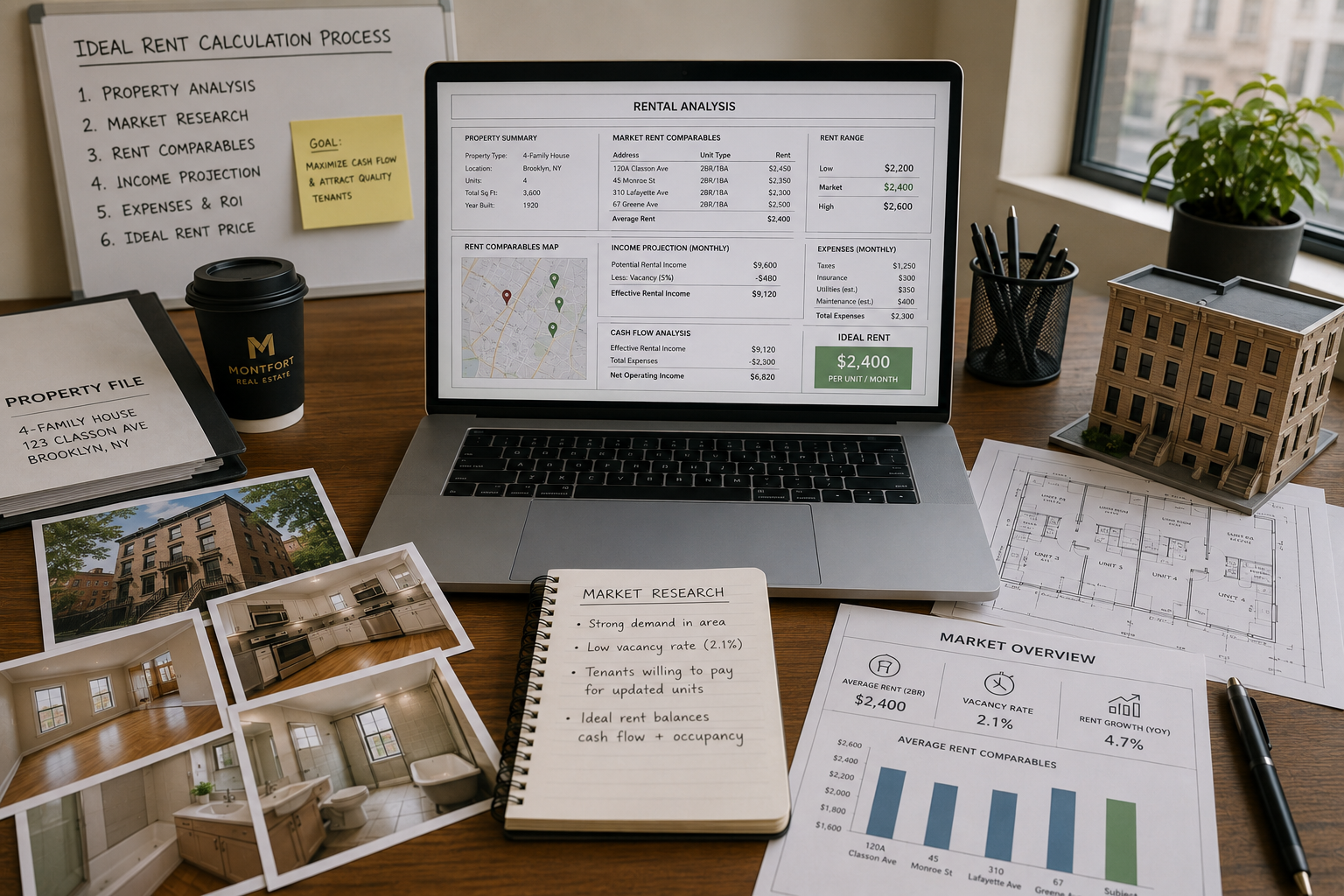
What a Professional NYC Condo Valuation Includes
Building Assessment and Amenity Analysis
One of the first things I review is the building itself-not just your unit. In NYC, your building's reputation, financial health, and amenities can move your condo's value by hundreds of thousands of dollars in either direction.
I evaluate doorman service, fitness center quality, roof deck access, courtyard and outdoor spaces, storage facilities, and common area condition. Research published in the Journal of Housing Economics has shown that shared amenities like meeting rooms, event spaces, and landscaped courtyards can add 6–16% to resale value when other variables are held constant. But not all amenities contribute equally. Overbuilt or underused amenities can actually increase common charges without meaningfully boosting what buyers will pay.
Building financial health is a critical-and often overlooked-factor. I look at the reserve fund, assessment history, upcoming capital projects, and overall management quality. According to Camelot's Q1 2026 NYC Market Report, buildings trading above their neighborhood median price per square foot consistently demonstrate disciplined financial management. Factors such as building reputation and recent sales can significantly affect property value.
I also assess building age, recent improvements (lobby renovations, elevator modernization, façade work), energy efficiency, and staff quality. Camelot observed that in one building, a lobby renovation and amenity upgrade added over $800,000 in building value within 24 months-proof that non-unit improvements materially impact what your condo is worth.
Unit-Specific Evaluation
After the building, I turn to your unit. This is where a professional's opinion diverges most dramatically from what an online valuation tool can tell you.
I assess:
Floor level and views: Higher floors with unobstructed views and favorable exposures (south or west-facing in Manhattan, for instance) consistently command premiums. Buyers pay for natural light and skyline, park, or waterfront views.
Layout and square footage: Efficient layouts-fewer wasted hallways, well-proportioned rooms, corner units with multiple exposures-increase value per square foot. I verify actual usable interior space, since NYC measurements can vary between offering plans and reality.
Renovation quality and condition: High-quality finishes, modern kitchens and bathrooms, updated HVAC systems, and smart home features can add significant value. Home improvements can increase value by 1%–10%, depending on scope, quality, and neighborhood expectations. However, too many improvements beyond what the market supports can mean you won't recover costs.
Unique features: In-unit washer/dryer, private outdoor space, dedicated storage, and pet-friendly policies matter enormously in NYC. StreetEasy's analysis found that units under $2.5M with in-unit washer/dryer sold at approximately a 14.1% premium. Private terraces and patios yield even larger premiums in higher price tiers.
Market Analysis and Comparable Sales
A home valuation determines your condo's current market value by grounding it in what buyers are actually paying-not what sellers are hoping for.
I pull recent closed sales from the past 3–6 months, starting within your building. When same-building comps aren't available, I expand to similar buildings in your neighborhood-matching building class, age, amenities, and maintenance level. Comparative Market Analysis uses recent sales of similar homes and adjusts for differences in floor, view, renovation, and condition.
Beyond recently sold properties, I analyze active listings to assess current competition and supply. Absorption rate-how quickly units sell in your building-is a leading indicator of what offers may look like. I also adjust for market momentum: interest rates, macroeconomic shifts, and neighborhood developments (new transit, infrastructure projects, rezoning) all affect where values are heading.
A free CMA is often available from NYC real estate agents when considering selling, and mine goes well beyond a basic sales comparison-it includes building-level scoring, amenity analysis, and carrying cost context.
How My Condo Valuation Process Works
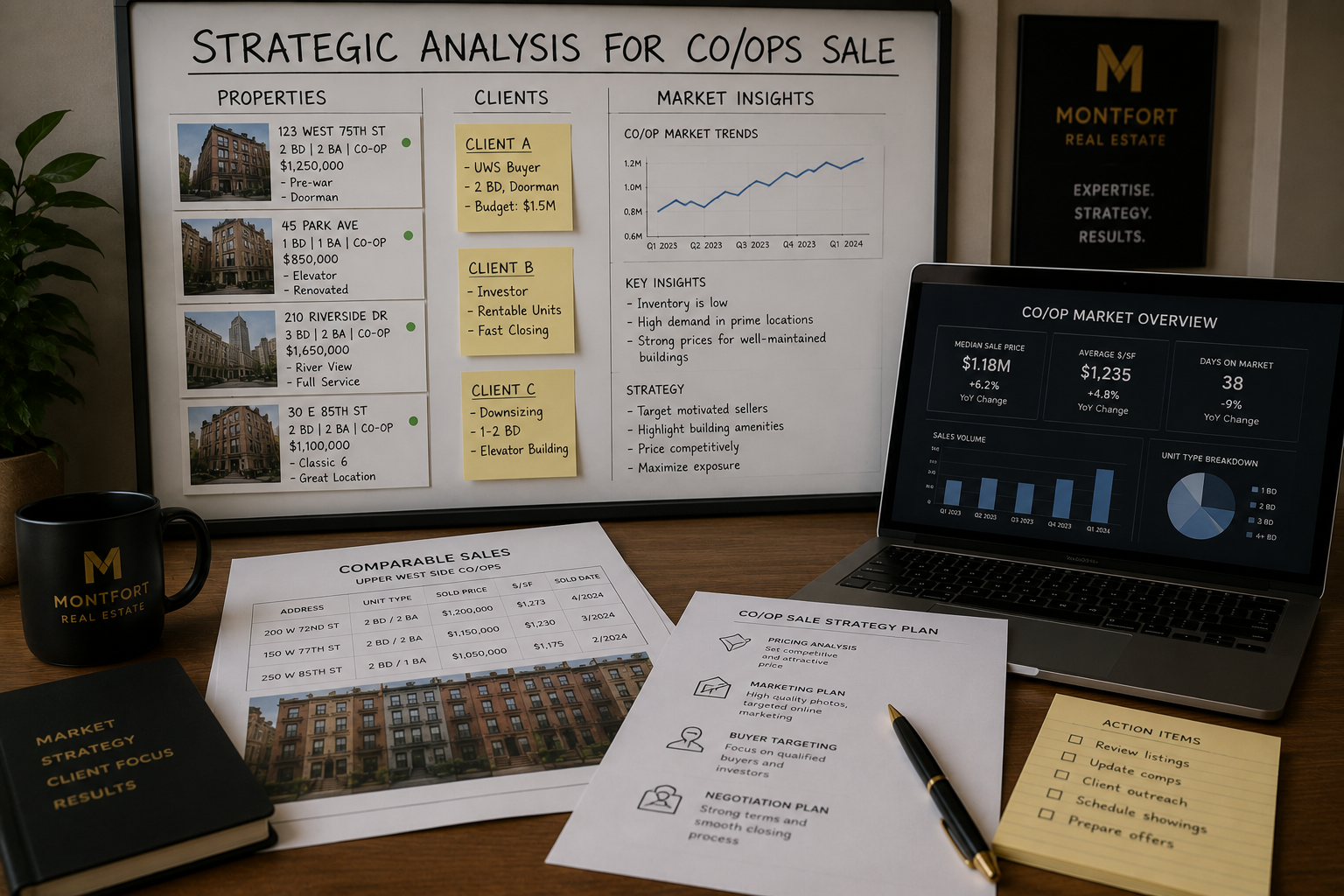
Step 1: Initial Property Review
The process begins with a phone or video conversation. I ask about your building name, unit floor, view and exposure, approximate square footage, recent renovations, monthly common charges, property taxes, and any special features like a balcony, terrace, or storage unit. I also want to understand your goals-are you exploring a sale, considering refinancing, or simply curious about how much equity you've built?
This conversation helps me prepare for a focused property visit and ensures I'm researching the right comparable sales and building data before I arrive.
Step 2: Comprehensive Property Evaluation
I conduct an in person appraisal-level inspection of your unit and your building. Inside your condo, I evaluate condition, layout, finishes, natural light, noise, and storage. In the building, I assess common areas, amenity condition, lobby presentation, staff, and security. Curb appeal can enhance a home's perceived value, and in NYC, that extends to your building's lobby, hallways, and exterior.
Simultaneously, I research comparable sales across multiple databases, review building financials and offering plans, and analyze current market trends including inventory, days on market, and pricing patterns in your neighborhood.
Step 3: Detailed Valuation Report
Within 24 hours, you receive a written valuation report that includes:
Per-square-foot comparisons from recent sales in your building and comparable buildings
Active listing analysis showing current competition
Building-level assessment covering amenities, financials, and condition
Recommended asking price range with supporting rationale
Notes on what adds or subtracts value-and what, if anything, could increase your price before listing
I walk you through the findings in a follow-up call, answer every question, and explain my pricing recommendations. This is an educational consultation, not a sales pitch. Whether or not you choose to list with me, you'll walk away with valuable knowledge about your property's worth.
Why Online Condo Estimates Fall Short in NYC
Many condo owners are surprised to learn just how far off online estimates can be-especially in a market as complex as New York City.
Automated Valuation Models analyze public data for estimates: tax records, deed transfers, square footage, neighborhood demographics, and recent sale prices. They're fast, free, and convenient. HomeLight's estimator generates estimates in under two minutes. Zillow's Zestimate has a median error rate of 1.83% for active listings nationally. But in NYC's condo market, even that margin understates the problem significantly.
Here's why online home valuation falls short for NYC condos:
| Factor | Online Estimate | Professional Valuation |
|---|---|---|
| Unit Condition & Renovations | Assumes average condition | In-person evaluation of the property's actual condition |
| Building Amenities | Often overlooked or given limited weight | Evaluated based on quality, usability, and market value |
| Common Charges & Assessments | Rarely factored into the estimate | Analyzed as carrying costs that influence buyer demand and pricing |
| Views & Exposure | Typically not captured | Evaluated based on floor level, orientation, and natural light |
| Building Financial Health | Not available | Reserve funds, assessment history, and financial statements reviewed |
| Tax Abatements (421-a, J-51) | Often omitted | Included when calculating the property's effective carrying costs |
| Renovation Quality | Not visible | Assessed for workmanship, materials, design, and market appeal |
Home value estimates can vary by 5–10% from actual market value even in typical markets. In NYC's luxury and non-standard segments, the gap can be far wider. The NYC Comptroller's office has documented extreme divergences: units at 220 Central Park South recently sold at over $10,000 per square foot, while NYC Department of Finance valuations for those same units were approximately $404 per square foot. Property assessment values in NYC are calculated under a special methodology required by state law, using comparable rental buildings rather than actual buyer behavior-creating systemic disconnects between assessed values and what the market will pay.
Public records can be inaccurate about 20% of the time, and online estimators can vary by 5–10% from actual market value even in the best case. For a $1.5 million Manhattan condo, that's a potential $75,000–$150,000 error. That's not a rounding difference-it's a pricing mistake that can cost you months on the market or leave tens of thousands of dollars on the table.
The NYC Department of Finance publishes property assessment information for NYC properties, but condominium market values for tax purposes differ from actual market prices. Relying on assessed value-or any single automated number-as your listing price is one of the most common and costly mistakes I see.
Factors That Impact NYC Condo Values
Building-Specific Characteristics
When evaluating a condo, I always start with the building. In NYC, your building's profile can be as important as your unit itself.
Doorman service, amenities, and reputation: A well-known address with strong management, quality doorman service, and practical amenities (gym, roof deck, children's playroom, bike storage) commands a measurable premium per square foot. Buildings designed by notable architects or located along Central Park, the waterfront, or in historically prestigious neighborhoods carry additional cachet. According to industry analysis, everyday amenities that ease daily life-security, fitness facilities, well-maintained common spaces-drive more buyer value than ostentatious "amenity theater" that goes largely unused.
Common charges, assessments, and building financials: High common charges reduce net buyer attraction. If your building has extravagant amenities with correspondingly high carrying costs, buyers will factor that against your asking price. Upcoming capital assessments (façade work, roof replacement, elevator modernization) can depress offers significantly. Conversely, buildings with healthy reserve funds, responsible boards, and low deferred maintenance trade at premiums. One question I always discuss with homeowners: do you know your building's current reserve fund balance and whether any major assessments are planned?
Tax abatements: Programs like 421a and J-51 affect your effective carrying costs and can make your unit substantially more attractive-or less, if the abatement is expiring. Necessary refinancing lenders and mortgage companies will also scrutinize these details.
Location and Neighborhood Dynamics
Location significantly influences a home's market value-and in NYC, "location" operates at the micro-neighborhood level, not just the borough level.
Proximity to subway lines, parks, schools, restaurants, and commercial conveniences drives desirability. Commute times matter. Views of Central Park, the Hudson River, the East River, or the skyline carry premiums that vary by floor and exposure.
Neighborhood trends and planned development also shape value. Rezoning, new transit projects, and incoming commercial or residential developments can raise values rapidly-but oversupply in certain zones creates risk. I track these dynamics across every neighborhood I serve, because what's happening three blocks from your building can change what buyers are willing to pay.
Manhattan Core south of 96th Street trades at significantly higher price per square foot relative to outer boroughs. But even within Manhattan, there are dramatic differentials-Central Park South versus Lower East Side, for example. Home values fluctuate based on local supply and demand, and the patterns differ neighborhood by neighborhood.
Unit Features and Condition
Floor level, views, and exposures: Buyers pay meaningful premiums for higher floors with unobstructed views and south or west-facing exposures. Corner units with multiple exposures are consistently in higher demand. Units overlooking parks, waterfronts, or iconic skyline views command the strongest premiums.
Renovations, layout, and storage: Well-executed home improvement projects-modern kitchens, spa-quality bathrooms, hardwood floors, smart home systems-can materially increase value. But I always caution owners: the quality and taste of the renovation matters as much as the investment. Over-personalized or overly trendy finishes can actually narrow your buyer pool.
Layout efficiency drives value per square foot. Fewer wasted hallways, well-proportioned rooms, and good flow between living spaces matter. Storage-walk-in closets, built-ins, dedicated storage units-is disproportionately valuable in NYC, where space is at a premium.
Condition: A unit that is move-in ready will always outperform one that needs work, especially for buyers stretching to purchase. The gap between "freshly painted and clean" and "needs a full renovation" can be $100–$300+ per square foot in Manhattan.
Current NYC Condo Market Insights
Understanding current market trends is essential before listing. Here's what I'm seeing across NYC as of mid-2026:
Strong demand, especially in the $1M–$2M range. In Manhattan, June 2026 saw 1,150 signed contracts-up 13% year over year. The $1–$2M price band rose 22% YoY, and units under $1M were up 10%. Median days on market dropped to about 105 days, roughly a week faster than last year.
Resale condo prices at record levels. Manhattan resale condos hit a median price of $1.525 million in Q1 2026, up 13% from Q1 2025, according to R New York's quarterly summary. Median price per square foot for resale condos was approximately $1,409, down slightly (~2%) from the prior year-suggesting price growth is being driven by larger or more premium units rather than across-the-board PPSF increases.
City-wide condo strength. Through September 2025, NYC condo sales rose roughly 10% year-over-year to more than 9,000 sales. Active condo listings rebounded to approximately 14,000, though inventory remains about 3% below pre-pandemic averages. Across the broader metro area, OneKey MLS reported condo median price of $545,000 in April 2026 (up 9% YoY), compared to co-op median price of $290,000 (down 3%)-confirming strong buyer preference for condos.
New development inventory declining. New development inventory has fallen for 11 consecutive quarters, pushing more demand toward resale condos. This is favorable for existing condo owners considering a sale.
Buyer preferences shifting. Post-COVID, buyer priorities have evolved. Practical amenities, proximity to transit, and unit condition now outweigh ostentatious amenity packages. Interest rates remain a headwind, but the combination of limited inventory and sustained demand is supporting values in most neighborhoods. Sellers who time their entry and prepare their units thoughtfully are seeing the strongest results.
What NYC Condo Owners Say
"Stanley's valuation was $120,000 higher than what two online tools suggested-and we sold within 3% of his recommended asking price. His understanding of our building's financials and the Upper East Side market was invaluable."
Upper East Side condo owner
"I appreciated how thorough the process was. Stanley walked through every factor affecting our unit's value, from the building's reserve fund to the light in our living room. No online valuation tool can do that."
Brooklyn Heights client
"We were about to list at a price based on an instant home valuation enter from a popular website. Stanley showed us comparable sales in our building that told a very different story. We listed higher and sold in 45 days."
Midtown West condo seller
"As an investor, I need a precise valuation-not a guess. Stanley's detailed report included building financials, PPSF comparisons, and market projections that no value estimator online could match."
Long Island City investor
NYC Areas I Serve
I provide free condo valuations and real estate services across New York City's most active condo markets:
Manhattan: Upper East Side, Upper West Side, Midtown East, Midtown West, Chelsea, Gramercy, Financial District, Tribeca, SoHo, East Village, West Village, Harlem, Washington Heights
Brooklyn: Brooklyn Heights, DUMBO, Park Slope, Williamsburg, Downtown Brooklyn, Prospect Heights, Carroll Gardens, Cobble Hill, Greenpoint, Bushwick
Queens: Long Island City, Astoria, Forest Hills, Flushing, Rego Park, Jackson Heights
Bronx: Riverdale, Concourse Plaza, Mott Haven, Kingsbridge
Each neighborhood has its own local market trends, buyer demographics, and building dynamics. Whether you're in a prewar doorman building on the Upper West Side or a new development in Long Island City, I bring neighborhood-specific expertise to every valuation performed.
Frequently Asked Questions
How accurate are your condo valuations compared to online estimates?
Online home valuation tools are a good starting point, but they typically rely on public records and algorithmic models that can miss critical factors. Online estimators can vary by 5–10% from actual market value. My valuations incorporate in-person inspection, building financial analysis, amenity evaluation, and real-time comparable sales-producing the most precise valuation possible. Appraisers consider recent sales of comparable homes, and so do I, but I also factor in the subjective market perception that drives what buyers actually offer: views, light, condition, building reputation, and current buyer sentiment.
How long does a free condo valuation take to complete?
From initial contact to completed detailed report, most valuations are delivered within 24 hours. The process includes a phone consultation (15–20 minutes), an in-person property visit (30–45 minutes), and my research and analysis. Factors that may extend the timeline include difficulty accessing comparable sales data for unusual buildings or units, or scheduling the property visit around your availability.
What information do you need for an accurate valuation?
To provide the most accurate assessment, I'll need:
Building name and property address
Unit floor, number of rooms, and approximate square footage
Monthly common charges and property taxes
Any tax abatements (421a, J-51, or other)
Recent renovations or home improvements completed
Special features: balcony, terrace, storage, parking, in-unit laundry
Your goals and timeline (selling, refinancing, or informational)
Additional documentation-such as your building's most recent financial statement, offering plan amendment, or board minutes noting capital projects-improves accuracy further. The more I know about your building's financial health and your unit's condition, the more confident we can both be in the final number.
Do you charge for condo valuations even if I don't list with you?
No. My condo valuations are completely free with no obligation. I view every valuation as an educational consultation-you'll walk away understanding your home's value, what drives it, and what you could do to improve it, regardless of whether you decide to sell or which local real estate agent you ultimately work with. Message and data rates may apply for text communication, but the valuation itself costs nothing. Whether you're looking to search luxury presence home options, explore how much equity you've built, or assess whether refinancing makes sense given your lender's ability to appraise your unit, this consultation gives you the foundation you need.
Get Your Free NYC Condo Valuation Today
If you're considering selling, curious about your condo's current market value, or exploring whether you have enough equity for a home equity line or refinancing, I'd welcome the opportunity to provide a thorough, no-obligation valuation. As a top local agent specializing in NYC condos, I bring the building-level expertise and real estate transactions experience that no automated tool or free valuation instant result can match.
Every condo deserves to be evaluated individually-based on its location, building characteristics, condition, market demand, and consideration recent sales in the immediate area. That's exactly what I deliver.
Stanley Montfort · Phone: [phone number] · Email: [email address] · Serving Manhattan, Brooklyn, Queens & The Bronx
Phone: 1-646-970-1078 Email: [email protected] Address: 8 West 126th Street, New York NY 10027
Recent News & Realtor Advice
Stay in the loop on the latest events, news, & happenings in and around our community!
Upper West Side Townhouse Q2 2024 Market Report
On the Upper West Side, we observed a distinct trend that diverges from the citywide patterns. Speci…
Harlem Brownstone Q2 2024 Market Report
The Harlem brownstone market has seen an increase in sales activity since this time last year. In Q2…
Discover Your Dream Home: Explore Apartments for Sale on the Upper West Side
Are you searching for your dream home in one of New York City’s most sought-after neighborhoods? Loo…