
We’ll guide you through the Upper East Side co-op buying process by evaluating building policies, financial health, and board requirements to help you secure the right home with fewer risks

Smooth transaction with limited risk
No pressure to over pay and buy within a certain time period
A team of people that will be with you even after the transaction is complete
Live listing data provided by OLR IDX. Need help? Contact us or log in to your customer account.
Buying or selling a cooperative apartment on the Upper East Side requires careful planning that goes far beyond finding an attractive unit or setting an asking price. Every co-op transaction involves three distinct components-the apartment itself, the cooperative corporation that owns the building, and the buyer's financial profile relative to that building's published requirements. When any one of these elements is misaligned, a deal can stall or collapse entirely, regardless of how strong the purchase price appears on paper.
Stanley Montfort works with buyers and sellers across the Upper East Side co-op market, providing the building-specific expertise that this process demands. If you're considering purchasing a cooperative apartment or preparing to list one, contact Stanley to discuss your objectives, financial parameters, and the specific buildings or neighborhoods you're evaluating.
Deep experience closing co-op transactions across every Upper East Side micro-market, from Fifth Avenue pre-wars to Yorkville walk-ups
A record of never having had a co-op board application rejected
Building-specific knowledge of financial requirements, sublet policies, financing limits, and board expectations across established cooperatives
Responsive consultation-buyer financial readiness assessments and listing evaluations delivered promptly so clients can act on time-sensitive opportunities
Choosing the right agent is essential for successful transactions in Upper East Side cooperatives, where each building operates under its own financial standards and governance policies. Stanley Montfort evaluates every potential purchase or sale through the lens of apartment quality, cooperative corporation health, and buyer suitability-a framework that prevents clients from investing time and resources into transactions unlikely to close.
Comprehensive building evaluation. Before recommending that a buyer pursue an Upper East Side co-op, Stanley reviews the building's financial statements, reserve fund levels, maintenance trajectory, assessment history, and published buyer requirements. A property may fit the buyer's purchase budget but still be an unrealistic target if the building's liquidity expectations or financing restrictions don't align with that buyer's profile.
Pre-war and established co-op expertise. Upper East Side co-ops are often housed in historic pre-war buildings with distinctive architectural characteristics-high ceilings, formal layouts, original details, and service configurations-that directly influence valuation, renovation feasibility, and buyer demand. Stanley connects these features to practical ownership considerations rather than treating them purely as aesthetic attributes.
Board package coordination and buyer preparation. Co-op applications often require extensive financial documentation, and the approval process can include interviews with co-op boards. Stanley guides clients through documentation assembly, timeline management, and interview preparation, drawing on knowledge of how specific buildings have evaluated applications in prior transactions. Co-op interview preparation is crucial for buyers navigating buildings with particularly exacting boards.
Micro-market fluency. The Upper East Side market spans several distinct sub-neighborhoods, and Stanley's expertise across Lenox Hill, Carnegie Hill, Yorkville, and the avenues means clients receive guidance calibrated to each area's inventory, pricing, buyer requirements, and competitive dynamics.
Agents help identify the best co-op opportunities for buyers, but on the Upper East Side, that search must account for far more than apartment features. Stanley's buyer representation begins with understanding your financial profile and purchase objectives, then matching you with buildings where your qualifications realistically align with published requirements.
Co-ops require buyers to purchase shares in a corporation rather than acquiring a deed to real property (as condos provide upon purchase). This ownership structure means the cooperative's financial health, board policies, and governance directly affect your monthly costs, renovation options, subletting flexibility, and resale value.
Stanley evaluates each potential purchase across apartment condition, floor level, exposure, layout, natural light, and views alongside maintenance charges, building financials, financing restrictions, post-closing liquidity expectations, sublet policies, and renovation rules. Comprehensive financial reviews are essential to meet co-op standards before an offer is submitted.
Negotiation strategies extend well beyond purchase price. A buyer with strong liquidity, minimal financing contingencies, and a clean board package may present a more compelling offer than one offering a higher dollar amount with a weaker financial profile. Stanley helps buyers understand and leverage these dynamics.
For sellers, Stanley develops pricing strategies grounded in same-building comparable sales and building-specific factors that influence what a realistic buyer will pay. When comparing two apartments in different cooperatives, differences in maintenance, assessments, financing policies, and buyer requirements can create meaningful valuation gaps that simple price-per-square-foot calculations miss.
Marketing an Upper East Side co-op effectively means targeting potential buyers who can actually pass the building's board approval process. Stanley evaluates incoming offers not only on price but on buyer financial strength, financing structure, liquidity, and the probability of a smooth board review. For a co-op seller, the highest offer is not necessarily the strongest transaction.
Real estate agents offer insights into pricing strategies and negotiation tactics-but in the co-op context, those insights must be informed by building-level data. Recent same-building sales, unit line, floor level, condition, maintenance trajectory, and current assessments all factor into Stanley's recommended asking price.
Co-op valuation on the Upper East Side demands nuance. Over the past 12 months, UES co-ops recorded a median sale price of approximately $1,268,972, averaging roughly $1,002 per square foot, with units selling at about 97% of asking price.
But these aggregate figures mask enormous building-to-building variation. A boutique Yorkville cooperative like 448 East 87th Street has seen recent sales averaging approximately $723 per square foot, while pre-war buildings on Fifth Avenue or Park Avenue command substantially higher PPSF alongside greater maintenance costs and more restrictive financial requirements.
Stanley's comparative market analysis incorporates maintenance charges, reserve fund levels, assessment history, underlying building mortgage obligations, financing policies, and buyer eligibility criteria alongside the traditional apartment-level adjustments for floor, exposure, condition, and layout.

One of the first things Stanley reviews with every prospective buyer is whether the building's published financial requirements align with the buyer's actual financial position. A buyer can afford the asking price without necessarily being the right financial fit for the building. This distinction is crucial and frequently overlooked.
The apartment + cooperative corporation + buyer framework:
Apartment evaluation: Condition, layout, ceiling height, floor level, natural light, exposure, views, renovation quality and history, room proportions, storage, and service areas. Pre-war apartments may offer gracious proportions and original details but can also present renovation complexities including alteration agreement requirements, wet-over-dry restrictions, and building-specific work schedules.
Cooperative corporation analysis: Building financial health-reserve funds, operating budget, maintenance history, shareholder delinquency rates, underlying mortgage obligations, special assessment frequency and duration, insurance considerations. Each building on the Upper East Side has different financial health and policies, and these differences materially affect monthly costs, financing availability, and resale.
Buyer suitability: Down payment capacity, post-closing liquidity, income verification, debt-to-income ratio, credit profile, and whether the purchase is intended as a primary residence, pied-à-terre, or investment. Strict debt-to-income ratios are common in Upper East Side co-ops, with many boards expecting housing costs to remain below 25–28% of gross income.
Building regulations can affect financing and subletting in co-ops, so Stanley ensures buyers understand these constraints before becoming emotionally or financially committed to a particular apartment. Some buildings permit substantial financing while others require larger down payments or impose restrictive lending standards-this is building-specific rather than a universal Upper East Side rule.
Identifying hidden costs is essential in co-op transactions. Beyond the purchase price, buyers should budget for closing costs (attorney fees, application fees, appraisal), required post-closing reserves, and ongoing maintenance that often includes property taxes and utilities. A realtor specializing in Upper East Side co-ops should understand these financial profiles thoroughly.
Co-op closings typically take 45 to 75 days or longer-substantially more than the 30 to 60 days typical for condo closings-primarily due to board review timelines.
Before recommending an asking price, Stanley analyzes recent same-building sales alongside comparable cooperative apartments that realistic buyers at the same price level would consider. Adjustments account for unit line, floor level, exposure, views, apartment condition, renovation quality, and layout. But building-level factors matter just as much: current maintenance, recent or pending assessments, financing requirements, sublet policies, and the building's reputation among buyers and lenders.
Pricing strategy considerations:
Same-building comparable sales provide the strongest valuation anchor when sufficiently recent and genuinely comparable
Maintenance per square foot relative to similar buildings directly influences buyer demand and perceived value
Buildings with healthy reserve funds, no underlying mortgage, and stable maintenance histories typically support stronger pricing
Active assessments or recent maintenance increases require transparent disclosure and may affect buyer perception
Offer evaluation beyond price:
When evaluating offers, Stanley considers the complete picture. A slightly lower offer from a cash buyer with strong liquidity, clean financials, and no financing contingencies may represent a meaningfully stronger transaction than a higher offer dependent on financing with marginal reserves. Sellers benefit from understanding that many co-ops have stringent approval processes for buyers, and offer quality must account for board approval probability.
Marketing to qualified buyers who meet building financial requirements narrows the audience but increases the probability of successful closings. A realtor can also expedite the acquisition of off-market co-op listings, connecting sellers with pre-qualified buyers through professional networks.
Flip taxes, where applicable, can reduce seller net proceeds. Responsibility and calculation vary by building-some impose the cost on the seller, others on the buyer-and the expense should factor into both pricing strategy and negotiation.
Navigating board criteria is fundamental for Upper East Side co-op purchases. The approval process is what distinguishes cooperative transactions from virtually every other type of residential real estate, and Stanley's role in preparing clients for this process directly influences outcomes.
Board package preparation:
Board packages must include detailed financial statements and reference letters along with 2–3 years of tax returns, W-2s or 1099s, recent bank and brokerage statements demonstrating both down payment funds and required reserves, a personal financial statement, professional and personal reference letters, and commitment letters from attorneys and lenders. Co-op boards require detailed financial documentation for approval, and disorganized or incomplete packages invite delays or rejection.
Gift funds may be acceptable in some buildings but require proper documentation and often must be "seasoned"-present in accounts for 60–90 days prior to application.
Timeline management:
Assembling the package typically takes 1–3 weeks. Board review and interview scheduling add another 2–6 weeks or more. Lender underwriting often runs in parallel. Total time from executed contract to board approval to closing can stretch to 4–8 weeks beyond package submission.
Interview preparation:
Realtors should prepare clients for potential board interview questions, which may address intended use (primary residence versus pied-à-terre), renovation plans, financial stability, and general background. Stanley draws on building-specific insights to help clients anticipate the tone and focus of particular boards. Knowledge of building-specific requirements can streamline the co-op purchase process significantly.
Approval processes can include interviews with co-op boards that assess not only finances but perceived compatibility with the building's community. Co-ops foster a community-oriented living environment, and boards evaluate whether prospective shareholders align with that orientation.
The Upper East Side is not a single co-op market. Location, building type, price level, maintenance, buyer requirements, and competitive inventory vary substantially across micro-markets. Stanley's local expertise in each area helps identify building-specific personalities and requirements that generic market data cannot capture.
Lenox Hill (roughly 60th to 72nd Streets): Dense cooperative inventory ranging from modest post-war buildings to prestigious doorman co-ops. Proximity to transportation and the convenience of Lexington Avenue shopping create strong buyer demand. Buildings along the avenues tend toward higher maintenance and more formal board processes, while side-street cooperatives may offer more flexibility on financing and buyer requirements.
Carnegie Hill (roughly 86th to 96th Streets): Known for its schools, family-oriented community, and concentration of pre-war co-op buildings with generous apartment layouts. Carnegie Hill cooperatives frequently attract buyers seeking larger apartments-classic sixes, sevens, and larger combinations-and board requirements tend to reflect the neighborhood's emphasis on owner-occupancy and long-term residency.
Fifth Avenue and Park Avenue: Synonymous with sophistication and among Manhattan's most recognized residential addresses. Co-ops along these avenues often feature pre-war architecture, full-service staffing, and access to Central Park views. Financial requirements are frequently among the most conservative on the Upper East Side-down payments of 30–50% are common, with some buildings restricting financing significantly or requiring all-cash purchases for certain unit types. Maintenance charges reflect extensive building services and staffing.
Yorkville and Eastern Upper East Side: Smaller co-op buildings, more moderate maintenance, and generally more permissive financial policies characterize much of Yorkville. Buyers seeking value relative to western UES addresses will discover meaningful opportunities here-apartments with lower price-per-square-foot, buildings offering more flexibility on financing, and a neighborhood with its own distinct appeal and growing amenity base. However, boards in individual Yorkville buildings can still maintain conservative standards, so building-specific research remains essential.
Madison Avenue and Lexington Avenue Corridor: A midline between prestige addresses and the more affordable eastern blocks. Properties along this corridor benefit from transportation access, shopping, and restaurant proximity. Post-war buildings here may feature modernized units with updated layouts and slightly higher maintenance, while pre-war buildings offer the architectural character and room proportions that define the neighborhood's amenities and residential appeal.
Residents across every UES micro-market enjoy proximity to cultural landmarks like Central Park, the Metropolitan Museum of Art, and dozens of galleries and institutions that contribute to the area's enduring appeal.

Building financials represent one of the most consequential-and most frequently under-analyzed-elements of a co-op purchase. Stanley reviews building financial documents with every client, connecting the numbers to practical ownership and resale implications.
Maintenance charges: Monthly maintenance fees often include property taxes and utilities (frequently heat and hot water), building staff compensation, insurance, common-area upkeep, reserve fund contributions, and debt service on any underlying building mortgage. The critical question isn't simply "how much is maintenance?" but "what does the buyer receive for this monthly cost, and how does it compare with genuinely similar buildings?"
A building with $2,200/month maintenance that includes heat, hot water, a 24-hour doorman, live-in superintendent, and healthy reserve contributions may represent better value than a building charging $1,600 with fewer services and deferred maintenance.
Reserve funds: A well-funded reserve relative to the building's operating budget and capital needs signals responsible fiscal management. Weak reserves may indicate vulnerability to special assessments or deferred maintenance, and some lenders will limit financing in buildings with inadequate reserves.
Special assessments: A current assessment is not automatically a red flag. Buyers should understand its purpose (facade repair, elevator modernization, lobby renovation, roof replacement), duration, monthly amount, and whether it reflects proactive building management or deferred maintenance catching up. For sellers, active assessments may affect buyer perception, monthly ownership costs, and marketability.
Underlying building mortgage: Some cooperative corporations carry mortgage debt on the building itself. This obligation is reflected in shareholders' maintenance charges. Buildings with little or no underlying mortgage may offer greater financial stability and can be more attractive to both lenders and buyers.
Delinquency and operating trends: Shareholder delinquency rates, maintenance increase frequency, and operating expense trends over the past several years all inform Stanley's assessment of a building's financial trajectory.
Co-ops often require 25% to 50% down payments and significant post-closing liquidity, but the specific requirements vary building by building. Stanley ensures that buyers understand these expectations before investing time in property tours, negotiations, and application preparation.
Down payment requirements: Baseline down payments in many Manhattan co-ops start at 20–30%, but prestige Upper East Side buildings frequently require 30–50% down. Co-ops often require 20 to 30 percent down payments as a minimum, with luxury buildings and certain purchase types (investors, pieds-à-terre, LLC purchases) facing higher thresholds or outright restrictions.
Post-closing liquidity: UES co-op boards frequently require buyers to demonstrate 12 to 24 months of mortgage plus maintenance payments in liquid assets remaining after closing. This is in addition to the down payment and closing costs. Some very conservative buildings push toward the upper end of that range. Post-closing liquidity planning is essential and can materially affect which buildings are realistic targets for a given buyer.
Financing limitations: Not every building permits the same level of financing. Some cooperatives limit the ratio of financed units in the building, restrict financing for certain purchase types, or require larger down payments than lenders might otherwise mandate. Furthermore, not every lender will finance every building-lenders may avoid cooperatives with underlying mortgages, low reserve levels, or high delinquency rates.
Income and debt-to-income requirements: Boards and lenders calculate total monthly housing cost as mortgage payment plus monthly maintenance. Debt-to-income ratios that comfortably pass are often around 25–28% of gross income, but more conservative boards set even lower thresholds. Full income verification via tax returns, W-2s, and 1099s is standard.
Co-ops provide a sense of security through strict buyer vetting, but those same standards mean buyers must be thoroughly prepared. A realistic financial assessment early in the search prevents wasted effort and positions buyers to move confidently when the right apartment appears.
Stanley Montfort provides buyer representation, listing services, and co-op valuation across the complete Upper East Side, from 59th Street to 96th Street between Fifth Avenue and the East River.
With 141 homes sold in the Upper East Side last month and 610 co-ops listed for sale, the market remains active and competitive. Stanley's coverage includes:
Lenox Hill – from 60th to 72nd Streets
Upper East Side core – 72nd to 86th Streets along the avenues and cross streets
Carnegie Hill – 86th to 96th Streets
Yorkville – eastern blocks from approximately 79th to 96th Streets
Fifth Avenue, Park Avenue, Madison Avenue, and Lexington Avenue corridors
Each area presents distinct property types, cooperative building characteristics, price levels, and buyer requirements. Upper East Side properties maintain strong long-term investment potential across these micro-markets, and Stanley's building-specific expertise ensures clients receive guidance tailored to the particular cooperative they're evaluating. Many co-ops impose strict subletting rules and limitations that vary by neighborhood and building-understanding these nuances matters whether you're buying your dream home or considering future flexibility.
Requirements vary significantly. Some cooperatives accept 20% down with 12 months of post-closing reserves, while others demand 40–50% down with 24 months of liquid assets after closing. Financing permissions, debt-to-income thresholds, subletting policies, and alteration rules also differ building by building. Successful transactions often depend on building-specific insights of the realtor-Stanley researches each building's published requirements and recent approval patterns before advising clients to proceed.
Beyond the down payment, buyers should budget for closing costs (attorney fees, application fees, appraisal, mansion tax where applicable), post-closing liquidity reserves (typically 12–24 months of mortgage plus maintenance in liquid assets), and ongoing monthly maintenance. Sellers should account for broker commissions, flip taxes where applicable, staging costs, and any repair or preparation work. Co-op transaction costs are generally higher than many first-time co-op buyers expect.
Key documents include the building's last 2–3 years of audited financial statements
, the current operating budget, reserve fund size and trajectory, any underlying building mortgage and its amortization schedule, shareholder delinquency rates, and the history of special assessments (frequency, amount, and duration). Stanley reviews these documents with every buyer client, connecting the financial data to practical ownership cost and resale implications.
Boards and sellers both evaluate buyer financial strength. A strong offer typically comes from a buyer with a high down payment, significant post-closing liquidity, minimal financing contingencies, a clean and complete board package, strong credit, and alignment with the building's published criteria. Offer timeline flexibility and a buyer's ability to handle the board interview process confidently also contribute. In many cases, a slightly lower offer with superior financial backing is more attractive than a higher offer with marginal qualifications.
Co-op closings typically take 45 to 75 days or longer from executed contract, compared with 30 to 60 days for most condo transactions. The additional time reflects board package assembly (1–3 weeks), board review and interview scheduling (2–6+ weeks), and the coordination required between attorneys, lenders, and building management. Stanley manages this timeline proactively to minimize delays.
Upper East Side properties maintain strong long-term investment potential, supported by the area's enduring desirability, limited new construction, quality of life, access to cultural landmarks, excellent schools, and robust buyer demand. However, individual building financial health, maintenance trajectory, and policy characteristics influence specific units' appreciation and resale performance. Stanley helps buyers evaluate both current value and long-term ownership propositions.
Whether you're beginning your search for an Upper East Side cooperative apartment, preparing to list a co-op for sale, or evaluating a specific building's financial requirements and buyer criteria, Stanley Montfort provides the building-level expertise and market knowledge this process demands. Real estate agents provide expertise in the Upper East Side market-but co-op transactions require a depth of building-specific insight that goes well beyond standard residential brokerage.
Contact Stanley to discuss your property interests, financial parameters, or sale objectives. Every conversation begins with understanding your specific situation rather than a generic pitch.

 Posted on Google
Stanley Montfort represented me in the sale of my home in Hamilton Heights. He is professional in his approach and brings his warm, personable demeanor into all his interactions. I selected Stanley to represent me after doing a thorough analysis of realtors in the Hamilton Heights area looking at number of closed tra…
 Posted on Google
Stanley was great to work with. He worked with our schedule, took the time to understand our priorities, showed us a range of properties in different areas that could suit our needs and helped us strategize our approach. He was also a great resource in helping us find local connections for inspections, repairs, etc.…
 Posted on Google
Thank you for a streamlined process from start to finish ensuring the right place was found and secured without haste!
 Posted on Google
We had a great experience working with Stanley. He taught us a lot about the specific market we were looking in, which enabled us to make a very good decision on purchase of a new home.
 Posted on Google
Stanley was the dream real estate agent we didn’t know we deserved! From the beginning he was attentive to our curiosity to help us figure out what type of property we wanted - and could afford. Throughout the process he was a calm and patient presence in our lives, offering us sincere and sage perspectives to keep u…
 Posted on Google
Stanley is amazing! No one knows the Harlem market better than him, and his deep expertise was a tremendous resource. He taught me along the way how to spot 'red flags' and talked me out of making an offer on a place that seemed amazing but had, upon his close inspection, evidence of poor workmanship and lots of cut co…
 Posted on Google
Stan is extremely knowledgeable and professional. He also has the utmost patience! He helped me sell my home and purchase a condo at the same time. My home had all types of special contingencies but he was able to find me a buyer and get me very close to the price I wanted. I was very specific in terms of the property…
 Posted on Google
Stanley is the consummate professional! He made sure my listing has excellent and consistent foot traffic and quality candidates for our showings. This sale had some challenges, but Stanley never wavered. Ultimately we were successful and I’ll use him again and again for future real estate transactions.
Practical guides from Stanley Montfort on buying, selling, and pricing NYC homes.

How the co-op sale process works, including board review and the documents to prepare.

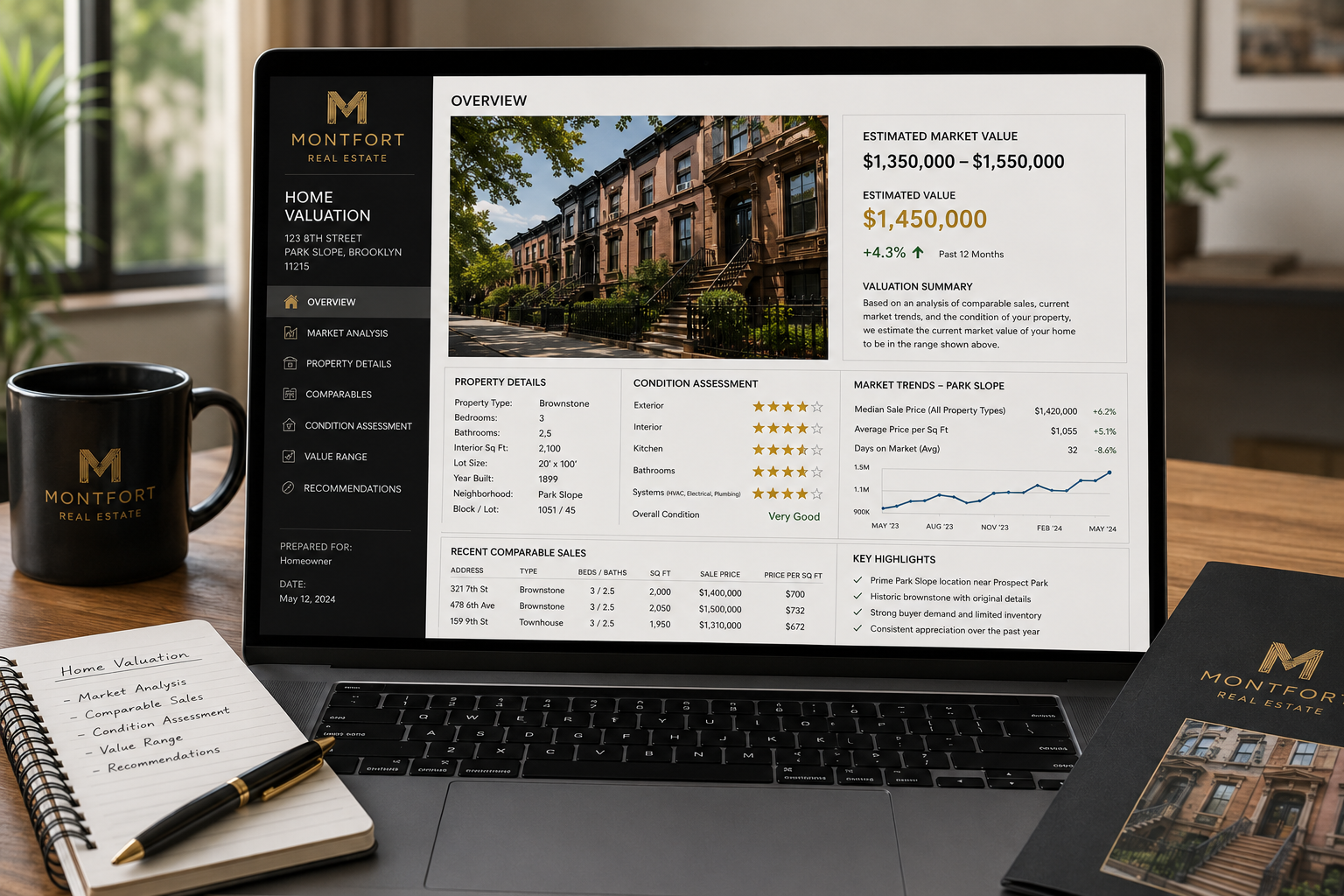
Request a free valuation that considers board requirements, building trends, and the market.
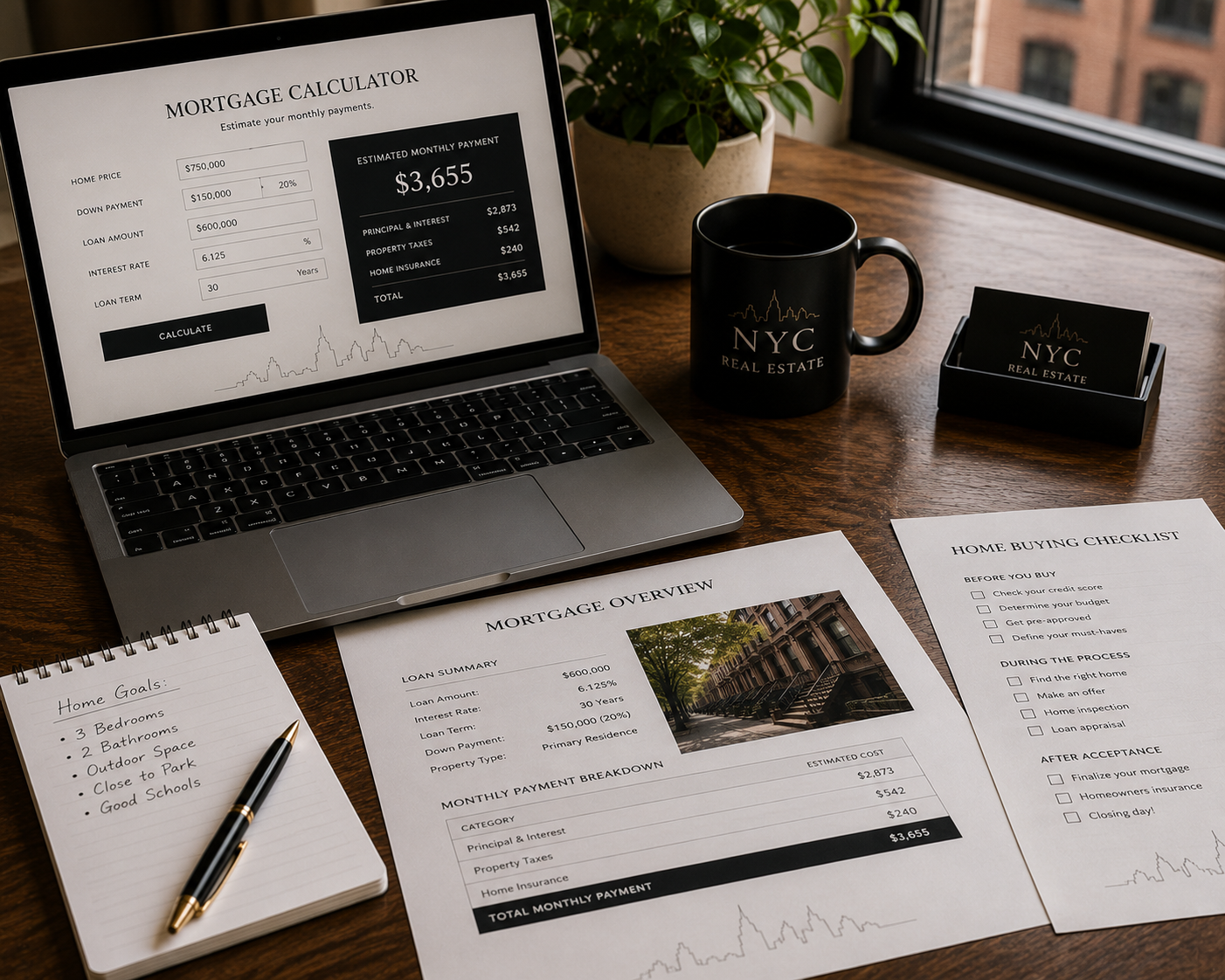
Estimate monthly payments and closing costs before you start your search.
Reach out for buyer representation, listing strategy, or a confidential valuation with Stanley Montfort.