
We’ll help you find the right Upper East Side condo by reviewing building finances, amenities, and ownership costs so you can avoid costly surprises and buy with confidence

Smooth transaction with limited risk
No pressure to over pay and buy within a certain time period
A team of people that will be with you even after the transaction is complete
Live listing data provided by OLR IDX. Need help? Contact us or log in to your customer account.
Whether you're evaluating a resale two-bedroom against a sponsor unit in a new development, trying to understand why two apartments in the same building closed at dramatically different prices per square foot, or preparing to list your Upper East Side condo at the right number, the decisions ahead of you are building-specific, unit-specific, and financial. Upper East Side condominiums require specialized real estate professionals who understand not just the neighborhood but the individual buildings, unit lines, carrying costs, and competing alternatives that shape every transaction. Stanley Montfort provides that level of analysis for buyers and sellers across the Upper East Side condo market.
Contact Stanley Montfort to discuss your Upper East Side condo purchase or sale - request a consultation or a building-specific market analysis today.
Specialized focus on Upper East Side condo real estate - resale, new development, sponsor sales, and condo conversions
Deep transaction experience across Lenox Hill, Carnegie Hill, Yorkville, and the Fifth Avenue and Park Avenue corridors
Building-level financial analysis on every recommendation - reserve funds, assessments, common charges, and property taxes reviewed before any offer or listing price is set
Responsive availability for time-sensitive condo decisions, including competitive offer situations and new development releases
One of the first things I review when evaluating an Upper East Side condo isn't the asking price - it's the total monthly cost of ownership and how the building's financial health supports or undermines the investment. That distinction matters more on the east side than almost anywhere else in Manhattan.
Building-level and unit-level analysis tied to accurate valuations. Two similarly sized condos on the same block can differ by hundreds of dollars per square foot based on floor level, exposure, views, layout efficiency, common charges, and building reputation. Stanley pulls same-building comparable sales and adjusts for every variable that affects what a unit is actually worth - not just what it's listed at.
Same-building comparable methodology over neighborhood averages. The median listing price in Upper East Side is $1.7M and the price per square foot is $1.4K, but those numbers describe a market of roughly 1.6K condos for sale with enormous variation. A price per square foot figure means little without comparing the specific unit line, floor, and exposure against recent closings in the same building.
New development vs resale evaluation tied to informed purchase decisions. When comparing a resale with new development, the analysis extends beyond finishes. Sponsor terms, closing costs, property tax projections under NYC's current Class 2 property-tax rate of 12.439% for tax year 2026, common charges on brand-new amenity packages, and future competition from remaining sponsor inventory all factor into the complete acquisition cost.
Carrying cost transparency tied to total ownership understanding. High common charges can significantly affect monthly condo expenses. A luxury tower with full amenities might carry $2,800/month in common charges plus taxes for a one-bedroom, while a boutique building a few blocks east might total $1,275/month. Stanley calculates the total monthly costs of a condo purchase, including taxes and fees, so clients compare real numbers rather than asking prices alone.

Stanley Montfort provides comprehensive condo representation services across every phase of buying, selling, and evaluating Upper East Side condos for sale - from initial market analysis through closing coordination.
Buyer representation covers property search, building analysis, comparable evaluation, negotiation, and closing coordination for first-time condo buyers, upgraders from co-ops, and investors entering the Upper East Side market. A realtor can assess building-level risks related to condo purchases - from underfunded reserves to upcoming facade work - that most buyers wouldn't identify on their own. Realtors can also provide access to off-market listings in UES, expanding the search beyond public portals. The typical outcome: finding the right unit at a fair price with full building due diligence completed before you commit.
Seller representation includes pricing strategy grounded in same-building and comparable sales, staging guidance, targeted marketing, and buyer negotiation. Real estate commissions typically range from 5–6% of the sale price, and Stanley's role is to ensure your net proceeds reflect what your apartment and building actually justify in the current market. Condos in Upper East Side sell for 98% of the asking price - but that statistic only holds when the asking price is set correctly from the start. Upper East Side homes average 79 days on the market; strategic positioning can significantly improve that timeline.
Valuation services include same-building sales analysis, price per square foot evaluation adjusted for floor, exposure, layout, and condition, plus a full carrying costs assessment covering common charges, property taxes, assessments, and insurance. Many buyers compare asking prices before comparing total monthly costs - and many sellers price based on what they want rather than what the data supports. Stanley's market analysis corrects both tendencies with building-specific data.
For buyers considering both new and existing inventory, Stanley evaluates sponsor terms, construction quality, amenity packages, projected common charges, property tax abatements or lack thereof, closing cost structures, and how the new development competes against resale alternatives at comparable price points. A recently converted condominium is not necessarily a newly constructed building - buyers need to evaluate the underlying systems, renovation scope, and capital needs rather than assuming everything is new.
Upper East Side condo purchases involve enough financial, legal, and building-level complexity that understanding the process is itself a decision-driver - especially for buyers new to Manhattan or transitioning from co-op ownership.
During our first meeting, we establish your budget, building preferences, location priorities, and non-negotiables. We discuss whether you're targeting new development condos, resale inventory, or both. We review current market conditions - active for-sale listings decreased by 18.78% month-over-month as of the latest data, meaning inventory shifts can happen quickly. From there, I set up a custom search and begin with initial building recommendations matched to your criteria.
This is where the real work happens. At the building level, I review financial statements and current common charges of the condo building, check the building's reserve fund and financial health before purchasing, identify any current or anticipated special assessments, and evaluate the age and rules of the building. At the unit level, I analyze comparable sales within the same building, assess floor level, exposure, natural light, views, layout efficiency, outdoor space, and renovation quality. Consider the age and rules of the building when purchasing a condo - condos generally have more relaxed rules than co-ops, but even though UES condos are easier to board-approve than co-ops, there is still an application process that requires preparation.

A good agent can help structure competitive offers for real estate transactions based on comparable evidence rather than guesswork. Strategy development draws on same-building sales, competing inventory, market velocity (median days on market is 79 days, up 1.11% year-over-year), and the seller's circumstances. Realtors help negotiate purchase prices in competitive markets - and equally important, they identify when a price is already fair. Stanley coordinates with your attorney, lender, and managing agent through board application and closing.
Understanding local neighborhood nuances is crucial when buying in UES. The Upper East Side spans roughly 59th to 96th Streets between Fifth Avenue and the East River, but it is not one uniform market. Here's how the condo landscape differs across micro-markets.
Lenox Hill, roughly 60th to 76th Streets, contains the highest concentration of luxury condo towers alongside established prewar conversions. Price per square foot tends toward the upper range of the neighborhood. Proximity to subway lines affects convenience and desirability - Lenox Hill benefits from strong access to the 4, 5, 6 subway lines and the Second Avenue Q line. Common charges in full-service towers here often reflect extensive amenity packages. Buyer demand remains consistently strong for well-renovated, high-floor units with park or city views.
Carnegie Hill (roughly 86th to 96th Streets) offers more boutique condos, townhouse conversions, and smaller-scale buildings. Buyers here typically value layouts, charm, school proximity, and quieter residential streets. Choose between quieter residential avenues and livelier commercial streets - this distinction matters block by block in Carnegie Hill. Prewar conversions carry potential Local Law 11 facade concerns; UES prewar buildings often face $30,000–$60,000 assessments per unit for facade repairs. Common charges vary widely depending on building size and amenity level.
Yorkville (east of Lexington Avenue, roughly 76th to 96th Streets) offers comparatively lower price per square foot with a mix of condo conversions and newer development. First, Second, and Third Avenues are busier and noisier compared to other avenues in UES, which affects unit desirability based on exposure and floor level. Transit access improved significantly with the Second Avenue Q line. This area represents strong value for square footage, particularly in newer buildings east of Second Avenue. The median rent price in Upper East Side is $5.2K per month, up 11.83% year-over-year - Yorkville's relatively lower purchase prices make the buy-vs-rent calculation particularly relevant here.
Fifth Avenue-adjacent condos command the highest premiums on the Upper East Side, driven by Central Park proximity, views, and address prestige. But I evaluate these as valuation variables rather than automatic premiums. A low-floor, north-facing unit on Fifth Avenue may offer less natural light and a more obstructed view than a high-floor unit two blocks east. Building quality, exact block position, common charges, and comparable transactions should all be considered before assigning a location premium. Limited new development due to historic district constraints keeps supply tight.
Park Avenue offers wide, tree-lined blocks and a concentration of prewar condo conversions and postwar towers. Lexington Avenue provides more variety in building age and price point. The contrast between the two corridors - sometimes just one block apart - can mean $200–$400 per square foot in price difference for comparable unit sizes. Building variety here is substantial, and same-building comparables become essential.
East of Third Avenue toward the river, price points drop further, with more boutique condo buildings and smaller-scale developments. Monthly carrying costs tend to be lower, making these buildings attractive for buyers prioritizing value per square foot over amenity packages. Proximity to subway lines affects convenience - eastern locations are farther from the Lexington Avenue line but closer to the Q, which has reshaped accessibility in this corridor. Upper East Side rental listings fell by 28.35% year-over-year, tightening the rental market and making ownership in these value-oriented areas increasingly compelling.
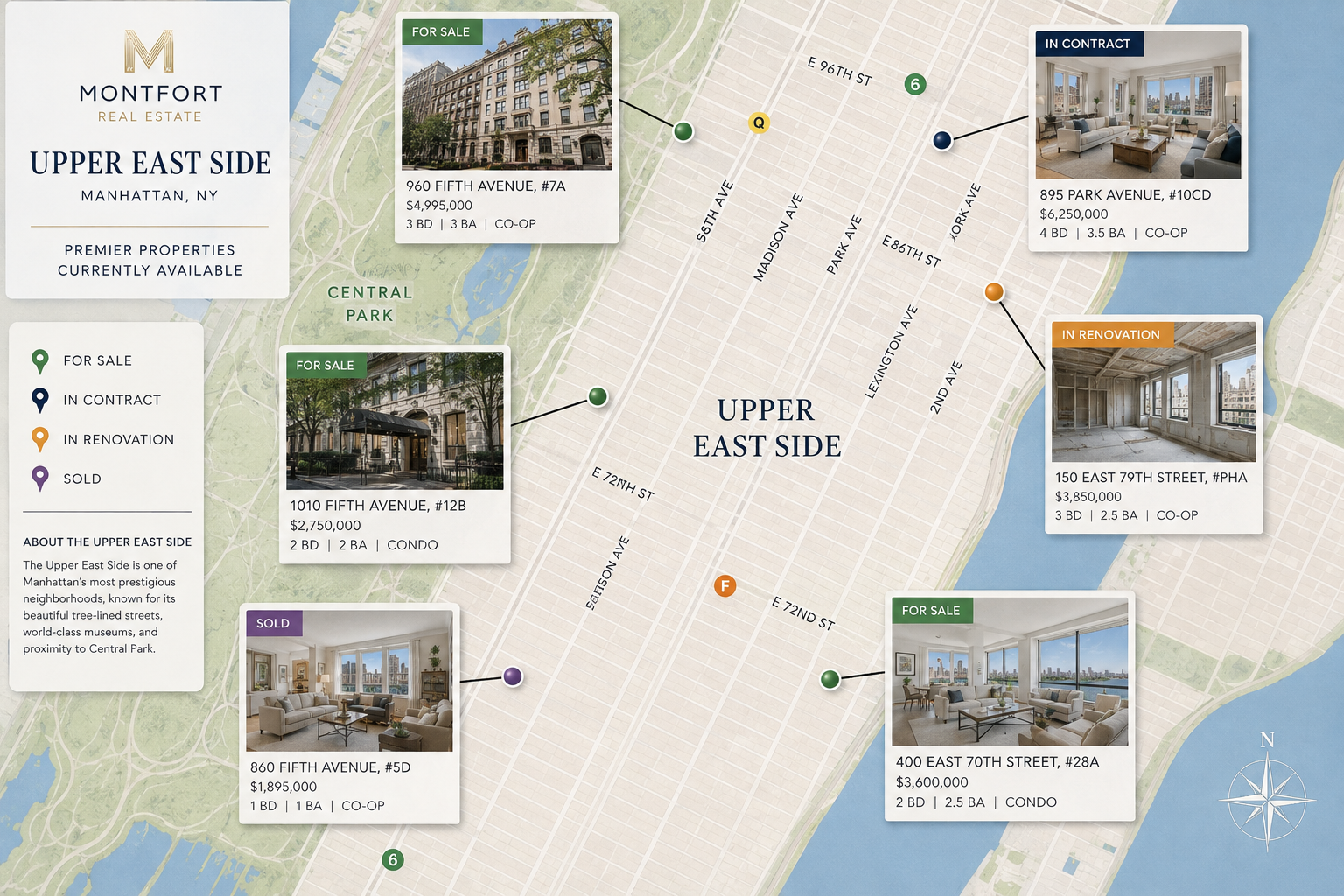
I begin with same-building sales - recent closings of comparable unit lines in the same condominium. From there, I adjust for floor level, exposure, views, layout efficiency, outdoor space, renovation quality, and current carrying costs. The price per square foot in Upper East Side is $1.4K as a broad median, but that number encompasses everything from a studio in a walkup conversion to a penthouse on Fifth Avenue. One mistake I frequently see condo buyers make is treating neighborhood-wide PPSF as a reliable indicator for a specific building. It isn't. Two units with identical reported square footage in the same building can close at dramatically different prices depending on their line, floor, light, and condition.
New development condos come with sponsor terms, often higher closing costs (buyers typically cover the sponsor's transfer tax and sometimes the seller's attorney fees), new finishes, and full amenity packages - but also higher common charges, unproven resale history, and potential sponsor control of the board until enough units are sold. Resale condos offer established buildings with known financials, proven resale performance, and often lower monthly carrying costs, but may need renovation and carry deferred capital work. When two units in the same building sell at different prices, it's often because one is a sponsor unit with premium finishes and the other is a resale requiring updates. The comparison should extend beyond finishes to total acquisition and carrying costs over a realistic ownership horizon. New condo launches are fewer on the UES compared to other Manhattan districts due to historic district restrictions and limited new build parcels, which means sponsor inventory often moves quickly.
They're central to the purchase decision. Common charges on UES condos typically range from $0.80 to over $2.00 per square foot per month. A luxury tower one-bedroom might carry approximately $2,800/month in combined common charges and taxes, while a boutique building unit might total $1,275/month. That's a $1,500/month difference - equivalent to roughly $270,000 in additional purchase price at current mortgage rates. Before recommending an asking price or advising on a purchase, I review the building's audited financials, reserve fund balance, recent and anticipated assessments, operating budget trends, and any pending capital projects. An assessment doesn't automatically signal a weak building - well-managed buildings levy assessments for planned capital improvements - but buyers need to understand the amount, purpose, duration, and responsibility.
Yes. An experienced Upper East Side condo buyer's agent provides building analysis and due diligence coordination that goes well beyond what listing descriptions reveal. I evaluate the building's financial condition, verify comparable sales, assess carrying costs, identify risks - from aging infrastructure to upcoming facade work - and structure offers based on data rather than listing price alone. Many firms operate in this market - you'll see names like Douglas Elliman, Compass, Nest Seekers, Berkshire Hathaway HomeServices, and brokerages including Peter Ashe and Rose Associates representing various properties. The question isn't whether to have representation - it's whether your agent understands the building-level and unit-level variables that determine whether a specific condo is worth its asking price.
If you're buying or selling an Upper East Side condo, the next step is a conversation about your specific apartment or purchase objectives - not a generic property search. Stanley Montfort provides the building-level analysis, same-building comparable methodology, and carrying cost transparency that Upper East Side condo transactions demand.

 Posted on Google
Stanley Montfort represented me in the sale of my home in Hamilton Heights. He is professional in his approach and brings his warm, personable demeanor into all his interactions. I selected Stanley to represent me after doing a thorough analysis of realtors in the Hamilton Heights area looking at number of closed tra…
 Posted on Google
Stanley was great to work with. He worked with our schedule, took the time to understand our priorities, showed us a range of properties in different areas that could suit our needs and helped us strategize our approach. He was also a great resource in helping us find local connections for inspections, repairs, etc.…
 Posted on Google
Thank you for a streamlined process from start to finish ensuring the right place was found and secured without haste!
 Posted on Google
We had a great experience working with Stanley. He taught us a lot about the specific market we were looking in, which enabled us to make a very good decision on purchase of a new home.
 Posted on Google
Stanley was the dream real estate agent we didn’t know we deserved! From the beginning he was attentive to our curiosity to help us figure out what type of property we wanted - and could afford. Throughout the process he was a calm and patient presence in our lives, offering us sincere and sage perspectives to keep u…
 Posted on Google
Stanley is amazing! No one knows the Harlem market better than him, and his deep expertise was a tremendous resource. He taught me along the way how to spot 'red flags' and talked me out of making an offer on a place that seemed amazing but had, upon his close inspection, evidence of poor workmanship and lots of cut co…
 Posted on Google
Stan is extremely knowledgeable and professional. He also has the utmost patience! He helped me sell my home and purchase a condo at the same time. My home had all types of special contingencies but he was able to find me a buyer and get me very close to the price I wanted. I was very specific in terms of the property…
 Posted on Google
Stanley is the consummate professional! He made sure my listing has excellent and consistent foot traffic and quality candidates for our showings. This sale had some challenges, but Stanley never wavered. Ultimately we were successful and I’ll use him again and again for future real estate transactions.
Practical guides from Stanley Montfort on buying, selling, and pricing NYC homes.
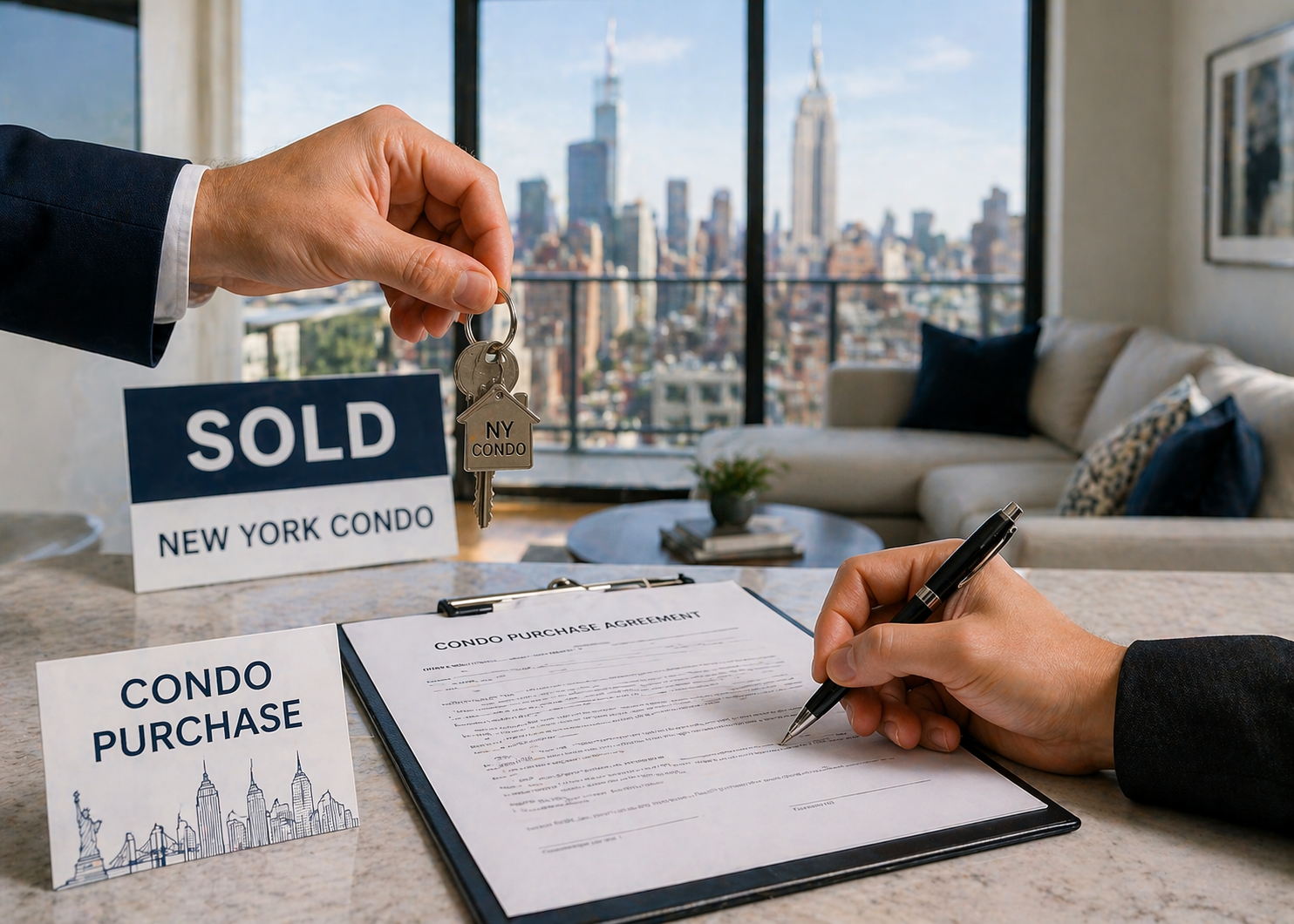
A step-by-step guide to the NYC condo buying process.

How to prepare, list, and sell a NYC condo, from listing to closing.
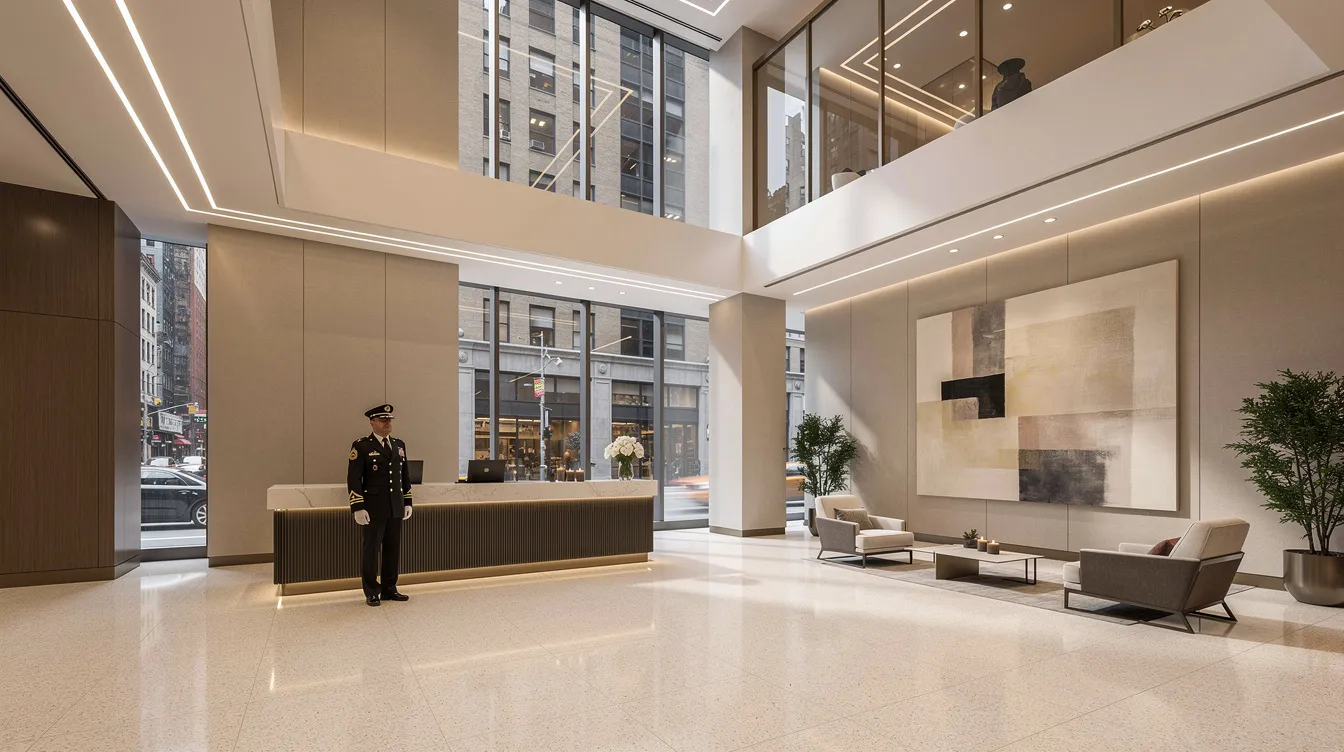
Request a free valuation of your condo based on current market data.
Reach out for buyer representation, listing strategy, or a confidential valuation with Stanley Montfort.